Índia
Gal Costa
1973
Rankings
Why This Album Matters
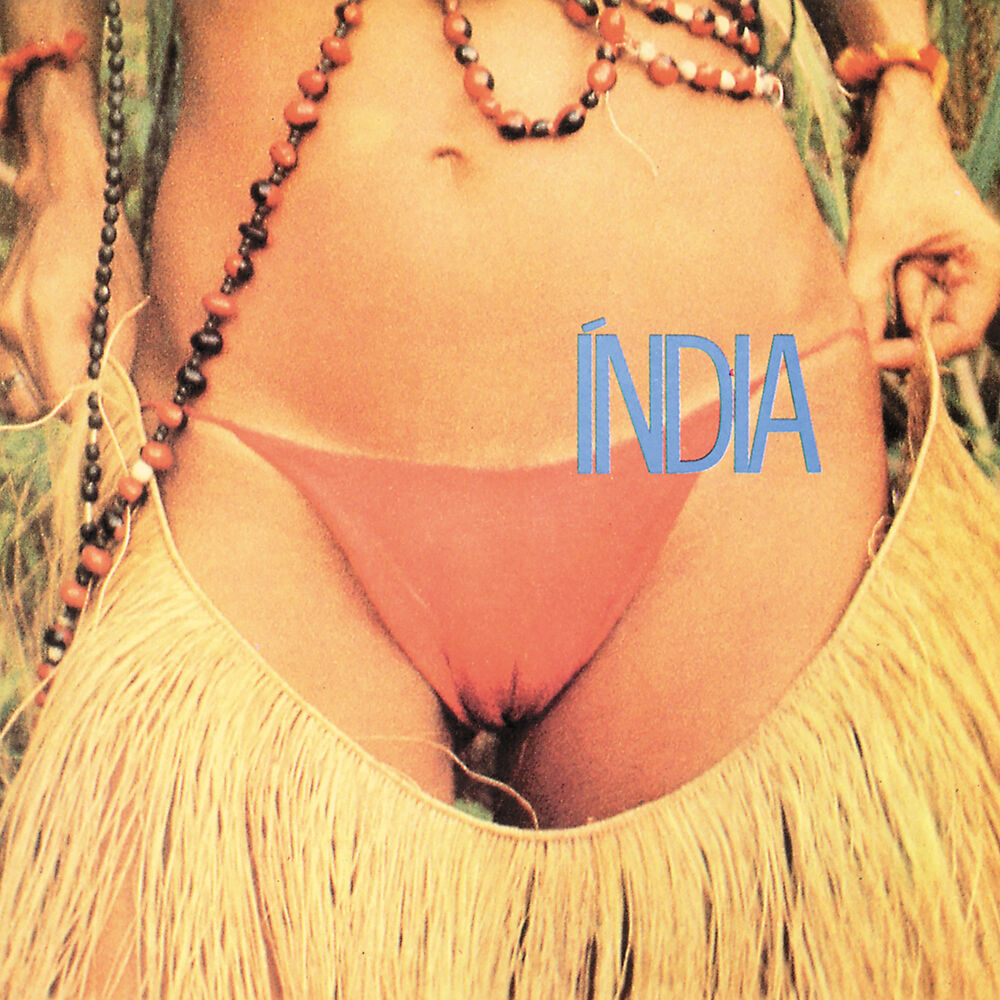
Índia, released in July 1973, is one of the most emblematic and daring works of Gal Costa's career, marking a period of creative effervescence and confrontation in the Brazilian music scene. The album stands out for its audacity in mixing diverse sounds, from pop avant-garde to folklore and "brega" popular songs, challenging the aesthetic and ideological conventions of the time. Its unique sound is a fusion of elements of Brazilian popular music with modern, often experimental arrangements, which paved the way for many branches of alternative music that would follow. In addition to the sonic revolution, Índia caused an immediate cultural and political impact due to its controversial cover. The image of Gal Costa, semi-naked, in red bikini briefs and, on the back cover, dressed as an indigenous woman with her breasts exposed, provoked censorship from the Brazilian military dictatorship, resulting in the LP being sold wrapped in a black wrapper. This attitude of Gal and the album's aesthetic conception itself, which traversed between the popular and the experimental, the regional and the cosmopolitan, cemented Índia as a work not only musically rich, but also a manifesto of artistic and expressionistic freedom in a period of strong repression.
Context
The release of Índia in 1973 occurred during one of the most repressive periods of the military dictatorship in Brazil, when censorship and "ideological and musical patrols" were at their peak. The country lived under the aegis of Institutional Act Number Five (AI-5), which made any artistic manifestation with a libertarian or defiant character a potential target. In this scenario, Gal Costa was already recognised as one of the most avant-garde voices of MPB, a muse of Tropicalismo who did not hesitate to break aesthetic and behavioural barriers. Índia emerged directly from the success of a show of the same name, which Gal had been presenting throughout Brazil, following the same structure as its predecessor, "Gal a Todo Vapor", which also generated an album. The artistic direction of Waly Salomão, a constant and visionary partner of Gal, was crucial for the conception of both the show and the album, cementing Gal's image as an artist who navigated between psychedelic pop and radical experimentation, always with a strong dose of Brazilianness.
Recording
The production of the album Índia was in the charge of Guilherme Araújo, with studio direction by Edú Mello e Souza, while the musical direction was credited to Gilberto Gil. The technical credits reveal a constellation of talents who contributed to the album's innovative sound. Luigi Hoffer, Marcus Vinicius, and Ary Carvalhaes were responsible for sound engineering and mixing, ensuring the technical quality of the recording. The album featured orchestral arrangements by Rogério Duprat, notorious for his revolutionary work in Tropicalismo, and by Arthur Verocai, who arranged tracks such as "Pontos de Luz" and "Presente Cotidiano". A true orchestra of talented musicians participated in the sessions, including Dominguinhos on accordion, Toninho Horta on electric guitar, Gilberto Gil on acoustic guitar and 12-string guitar, as well as Roberto Menescal on acoustic guitar in "Desafinado" and Tenório Jr. on organ in "Volta". This multidisciplinary collaboration and the excellence of the musicians and producers were fundamental to the sonic richness of Índia.
Songs
Índia is a musical mosaic that traverses diverse influences, from MPB classics to poetic experimentations and forays into the world of folklore and regional music. The album revisits songs that became famous in Gal's voice, such as "Volta" by Lupicínio Rodrigues and "Desafinado" by Tom Jobim and Newton Mendonça, giving them new arrangements. However, the central point of its daring lies in the re-recording of the Paraguayan guarânia "Índia", a sertanejo classic that had been popularised by the duo Cascatinha e Inhana. Gal, an icon of Rio de Janeiro's intellectual scene, dared to interpret a song considered "tacky" by many, modernising it with an orchestra directed by Rogério Duprat. Other notable tracks include "Presente Cotidiano", by Luiz Melodia, which also suffered censorship and could not be broadcast on radio, and compositions with a strong influence from concrete poetry, such as "Relance" and "Pontos de Luz". The album also embraces folklore with the song "Milho Verde", demonstrating Gal Costa's breadth in absorbing and reinterpreting the most diverse Brazilian musical manifestations. The eclectic selection and Gal's courage in embracing seemingly opposing genres confirm the avant-garde nature of the work.
Legacy
Índia established itself as one of the best-selling albums in Gal Costa's career, achieving great commercial success despite the controversies and censorship imposed by the military dictatorship. The album cover, which boldly displayed the singer, was a landmark in the history of Brazilian musical iconography, generating substantial sales even after it was sold covered by a black wrapper due to censorship. The controversy surrounding the cover art and tracks like "Presente Cotidiano" only increased the album's visibility and cultural impact. Years later, in 2015, Gal Costa celebrated the liberation of the LP's original artwork, which could be re-released without the censorship imposed in 1973, a symbolic gesture that highlighted the album's importance as an icon of resistance. Índia's legacy lies not only in its sales success and the overcoming of censorship, but also in its ability to influence generations of artists, demonstrating that the mixing of genres, experimentation, and visual daring can coexist with artistic excellence and popular appeal, cementing it as a seminal work of MPB.
Tracks
Credits
Rogério Duprat
Arthur Verocai
Mario Tavares
Guilherme Araujo
Edu Mello e Souza
Dominguinhos
Luiz Alves
Robertinho Silva
Toninho Horta
Roberto Menescal
Gilberto Gil
Tenorio Jr., Wagner Tiso
Chacal
Chico Batera
Luigi Hoffer, Marcus Vinicius
Joaquim Figueira
Edinizio Ribeiro
Antonio Guerreiro, Mario Luiz T. De Carvalho
Podcasts

Brazuca Sounds · Leandro Vignoli
In episode #55 we celebrate the album "Índia", released by Gal Costa in July 1973. The album’s controversial cover was banned by the Brazilian military regime upon its release, but that was just one of the reasons it became so iconic. Gal Costa distanced herself from the Tropicália movement in "Índia" (like all her peers before her), showcasing a more stripped-down sound, influenced by folk (and f
Brazuca Sounds on Patreon · Leandro Vignoli
In episode #55 we celebrate the album "Índia", released by Gal Costa in July 1973. The album’s controversial cover was banned by the Brazilian military regime upon its release, but that was just one of the reasons it became so iconic. Gal Costa distanced herself from the Tropicália movement in "Índia" (like all her peers before her), showcasing a more stripped-down sound, influenced by folk (and f

Vinilteca · José Ono Junior e Guilherme Colpani
Em 1973, Gal Costa começava a trilhar seu caminho na MPB depois de alguns anos de muito tropicalismo e rock'n roll. Ainda com um pé na contracultura da geração do desbunde, ela lançaria "Índia", um álbum que se tornaria um clássico da sua carreira envolto em problemas com a censura do regime militar. A Vinilteca é um projeto que nasceu no YouTube em 2016 e migrou para o rádio e para o podcast, c

Somos Todos Malucos · António Raminhos
É um dos rostos mais conhecidos da música portuguesa. Tem um novo EP com 4 músicas um original e 3 versões, GNR, Gal Costa e Stevie Wonder, e que se chama Mensagens de Amor. Fez o seu primeiro coliseu de Lisboa e dia 24 de Fevereiro faz o do Porto! Posto isto, quem diria que vem falar de um tema que já devia ter passado por esta casa: PHDA Perturbação de Hiperatividade e Défice de Atenção. Somos
Videos
Gal Costa - Índia (1973): A História Por Trás da Capa Censurada
Vinilteca
Films


Gal - from Tropicalism to the Present Day
2006
The film has Gal's career as its guiding principle, drawing a parallel with the movement of which the singer was the muse and one of the main interpreters, and reaching the present day.
Gal Costa: Programa Ensaio
2005
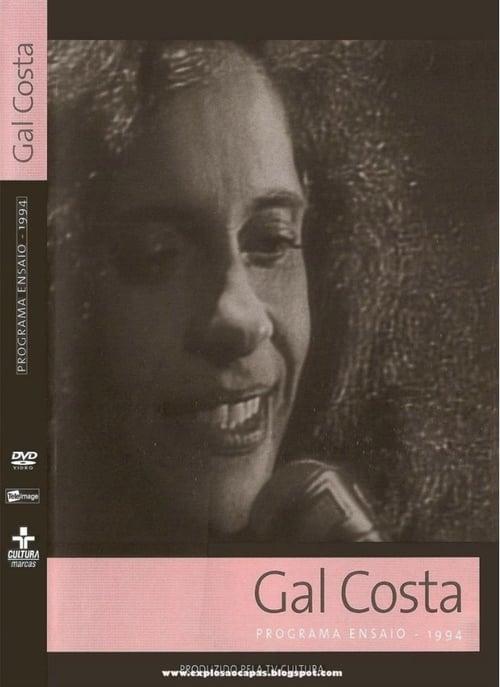
In this DVD, recorded in 1994, the Bahian singer, MPB diva, grants a long interview, where she talks about her career, the Tropicalismo movement, her musical partners and composers during more than 35 years on the road. Gal performs great hits, accompanied by Luiz Brazil (guitar), Jacques Morelenbaum (cello) and Marçal (percussion).
Books

Analyses
Índia – Wikipedia
Wikipedia, the free encyclopaedia
Álbum Índia de Gal Costa: Música, Censura e a Tanga Vermelha
veidoblogue.com.br
Gal Costa's album Índia (1973) is a landmark of MPB and Tropicália, celebrated both for its sophisticated sound and its historic cover censored by the military dictatorship. In this article, we explore the technical specifications, the classic tracks, and the controversy of the red thong hidden beneath the blue plastic.
Índia: Do Grito Tropicalista ao Suspiro da MPB
sextafeiraumdisco.substack.com
Since the late 1960s, Gal Costa established herself as one of the most powerful and influential voices in Brazilian music. Her fifth studio album, "Índia", released in 1973, is a political and artistic act that defined her legacy as a defiant and essential star.
Especial safra brasileira/ 1973, parte 4: O romantismo e o senso ...
teoriacultural.com.br
What will be assessed is Brazil and Brazilian music, which, years earlier, experienced a period of great quality, diversity, and productivity, as in 1972. The fourth album to be discussed in this special is Gal Costa's iconic 'Índia'.
"Índia", de Gal Costa, completa 50 anos - Magazine Qobuz
qobuz.com
Brazilian and sensual, the album was a watershed moment in the singer's career and is marked by its cover, in addition to its eclectic repertoire and the stellar cast accompanying her on the recordings. In 1973, Gal Costa was experiencing the Tropicália hangover.