Legal
Gal Costa
1970

Rankings
Why This Album Matters
Legal, Gal Costa's album released in 1970, represents a crucial moment of transition in the singer's career, consolidating her artistic identity post-Tropicália. The album is a vibrant amalgam of psychedelic rock, MPB, and pop elements, demonstrating Gal's versatility during a period of intense cultural and political effervescence in Brazil. It emerges with a unique electric atmosphere, showing an artist who, although deriving from tropicalist experimentalism, was already exploring new paths and asserting herself as a singular musical force. Although sometimes considered one of the most underrated works of her classic phase, its importance lies precisely in this multiplicity of styles and the audacity to explore different soundscapes. This work not only solidifies Gal's voice as one of the most potent and adaptable in the Brazilian scene but also marks her debut as a composer with the track "Love, Try and Die". Legal is a portrait of the artist's restlessness at 25, where she navigates between rocks, baiões, frevos, and bossas with an uninhibited and innovative attitude, characteristics that would see her span decades as one of the country's greatest interpreters. The album is a bridge between the more radical Gal and the muse of 'desbunde' (a countercultural movement), revealing an artist in full evolution and challenging expectations.
Context
The release of Legal in 1970 occurred during one of the darkest periods in Brazilian history, under the aegis of Institutional Act Number Five (AI-5) of the military dictatorship, which had been in force for just over a year. In this context of repression, censorship, and forced exile of great names like Caetano Veloso and Gilberto Gil, Gal Costa took on the role of carrying the standard of Tropicalismo and counterculture, almost single-handedly, in Brazil. The artist, who had spent New Year's Eve 1969 to 1970 with Caetano and Gil in London, felt the burden of the "squareness" and physical anguish imposed by the regime. In this "Years of Lead" scenario, music and art became forms of resistance, often through coded messages and subtexts. The album's very title, "Legal", can be interpreted as a subtle protest or an irony in relation to the dictatorship, besides being a slang term of the era for something "cool" or a reference to her own artistic name. Legal, therefore, is not just a musical album, but a document of its time, reflecting the need to create and resist in an environment of oppression, with Jards Macalé, one of the arrangers, commenting that they tried to do their best in that climate of military dictatorship.
Recording
The production of Legal was directed by Manoel Barenbein, with the talented Ary Carvalhaes, João Moreira, and Mazzolla on recording engineering, all carried out at Estúdio CDB. The album's technical sheet reveals a significant musical collaboration, with the basic arrangements handled by Lanny Gordin and Jards Macalé, who imprinted an electric and innovative sound onto the record. The orchestral arrangements, in turn, were elaborated by Chiquinho de Moraes, adding layers of sophistication and diversity to the themes. The band accompanying Gal consisted of prominent musicians, including Norival on drums, Claudio on bass, and Lanny Gordin on guitar. Chiquinho de Moraes also contributed piano to the track "Love, Try and Die". The special appearances are a separate chapter, with Erasmo Carlos, Tim Maia, Jards Macalé, Lanny Gordin, and Nana Caymmi lending their talents to the vocals on the track "Love, Try and Die", creating a memorable chorus of voices. The album's visual conception is also notable, with the cover signed by the renowned visual artist Hélio Oiticica. Considered by critics as one of Gal Costa's most artistic covers, it is a collage that, according to some, may have camouflaged images of protest or of someone disappeared during the military dictatorship, adding a layer of meaning and resistance to the work.
Songs
Legal features an eclectic repertoire that demonstrates Gal Costa's ability to navigate various genres and moods, with songs that would become iconic in her voice. The album opens with a rock version of "Eu Sou Terrível", by Roberto and Erasmo Carlos, which seems to continue the sonic radicalisation of Gal's previous psychedelic album, showcasing her more vigorous and pioneering facet. Other highlights include "Língua do P" and "Mini-Mistério", both compositions by Gilberto Gil, which reflect the lyrical and melodic inventiveness of the era. "London, London", by Caetano Veloso, is one of the album's most iconic songs, a hymn of melancholy and hope that deeply resonates with the exile and political tensions of the period. The re-recording of "Falsa Baiana", by Geraldo Pereira, reveals a Gal who revisits the roots of samba with an interpretation that harks back to the delicacy of bossa nova, and the song would persist on later albums. The album also features "Hotel das Estrelas" and "The Archaic Lonely Star Blues", collaborations by Jards Macalé and Duda Machado, which contribute to the diverse atmosphere. A singular moment on the album is "Love, Try and Die", Gal Costa's first composition, in partnership with Jards Macalé and Lanny Gordin. This track, with vocal contributions from Erasmo Carlos, Nana Caymmi, Tim Maia, and Jards Macalé, is a testament to the experimentation and artistic collaboration that marked the era. "Deixa Sangrar (Carnaval 1971)", by Caetano Veloso, is another highlight, being the first of many frevo-inspired songs Gal would record, and a playful nod to The Rolling Stones' song "Let It Bleed", showing the intelligence and good humour present on the album.
Legacy
Legal was a commercially successful album for Gal Costa, with the single "London, London" reaching number one on the best-sellers chart in Rio de Janeiro and 13th position in São Paulo in 1970, demonstrating immediate popular acceptance. Critically, the album is often praised for its audacity and for capturing a moment of transition and reinvention for the artist. Allmusic magazine, for instance, awarded it 4 out of 5 stars. Considered by Assucena Assucena from the band As Bahias e a Cozinha Mineira as a "brilliant, contemporary, and unsettling" work, Legal solidified Gal Costa's image as a "muse of counterculture" during the turbulent "Years of Lead" of the military dictatorship. The album, with its mix of genres and challenging artistic stance, paved the way for the iconic show and live album Fa-Tal - Gal a Todo Vapor, released the following year, which is widely recognised as one of the greatest live albums in the history of Brazilian music. Thus, Legal remains a fundamental album in Gal's discography, not only for its immediate impact but for its enduring artistic and cultural relevance.
Tracks
Credits
Jards Macalé, Lanny Gordin
Chiquinho De Moraes
Manoel Barenbein
Erasmo Carlos, Jards Macalé, Lanny Gordin, Naná Vasconcelos, Tim Maia
Claudio Bertrami
Norival Ricardo D'Angelo
Lanny Gordin
Chiquinho De Moraes
Ary Carvalhaes, João Moreira, Mazzola
Helio Oiticica
Podcasts

QUER QUE EU RESENHE? · André Marx
Em sua resenha da semana, André Marx fala sobre o disco mais subestimado da fase clássica da maravilhosa cantora Gal Costa. O disco LeGal, que faz 50 anos neste 2020. Sejam bem-vind@s ao Canal/Podcast QUER QUE EU RESENHE? e esperamos que vocês gostem.
Videos
Gal Costa - LeGal (1970) | ALBUM REVIEW
QUER QUE EU RESENHE?
Films

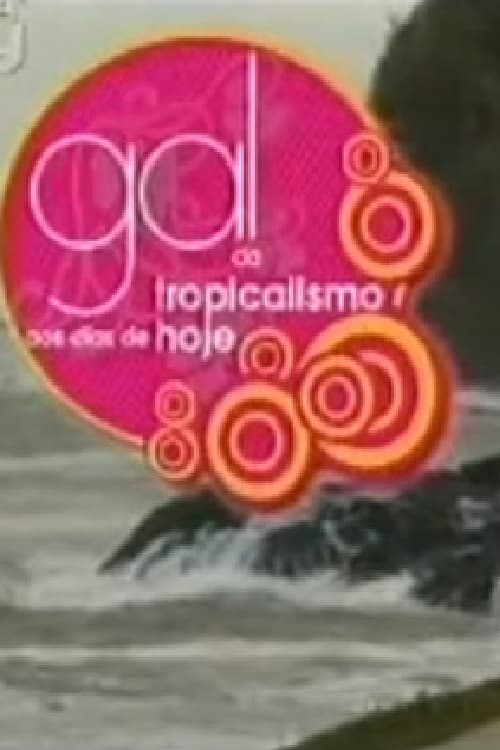
Gal - from Tropicalism to the Present Day
2006
The film has Gal's career as its guiding principle, drawing a parallel with the movement of which the singer was the muse and one of the main interpreters, and reaching the present day.
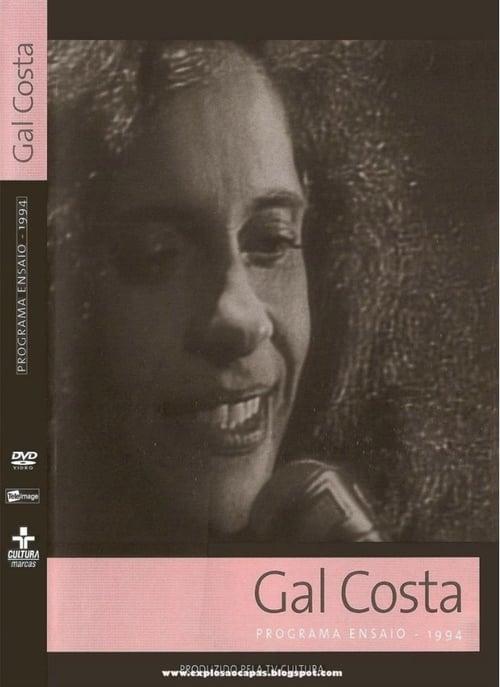
Gal Costa: Programa Ensaio
2005
In this DVD, recorded in 1994, the Bahian singer, an MPB diva, gives a long interview where she talks about her career, the Tropicalia movement, her musical partners and composers during over 35 years in the business. Gal performs great hits, accompanied by Luiz Brazil (acoustic guitar), Jacques Morelenbaum (cello) and Marçal (percussion).
Books
Analyses
Legal – Wikipedia
Wikipedia, the free encyclopaedia

Zero G Sound : Gal Costa - Legal (1970) - Blogger
zerosounds.blogspot.com
Zero G Sound Montag, 17. Januar 2022 Gal Costa - Legal (1970) On "Legal", the follow-up to her extremely bombastic self-titled release, Gal Costa retains only some of the fire and experimentation, instead opting to return to more accessible and subdued arrangements.

Musicology: Gal Costa - Legal 1970
madshoesmusicology.blogspot.com
Gal Costa - Legal 1970 On Legal, the follow-up to her extremely bombastic self-titled release, Gal Costa retains only some of the fire and experimentation, instead opting to return to more accessible and subdued arrangements.
Album: Legal. Artist/Band: Gal Costa. Year: 1970.
staimusic.com
Review "Legal" is a testament to Gal Costa's enduring artistry, showcasing her distinctive vocal style and her ability to convey deep emotional resonance through her music. The sound is rich and layered, with Costa's voice soaring above intricate instrumentation that blends traditional Brazilian music with modern rock influences. The album strikes a balance between lyrical introspection and ...

MUSICA&SOM: Gal Costa - "Legal" (1970)
tabernanovostempos.blogspot.com
Part of this revolution, however, is celebrating an anniversary alongside her: the artist's brilliant album "Legal", from 1970, which marks 50 years since its release. The context in which "Legal" was launched, however, was anything but festive, which further enhances its merits.