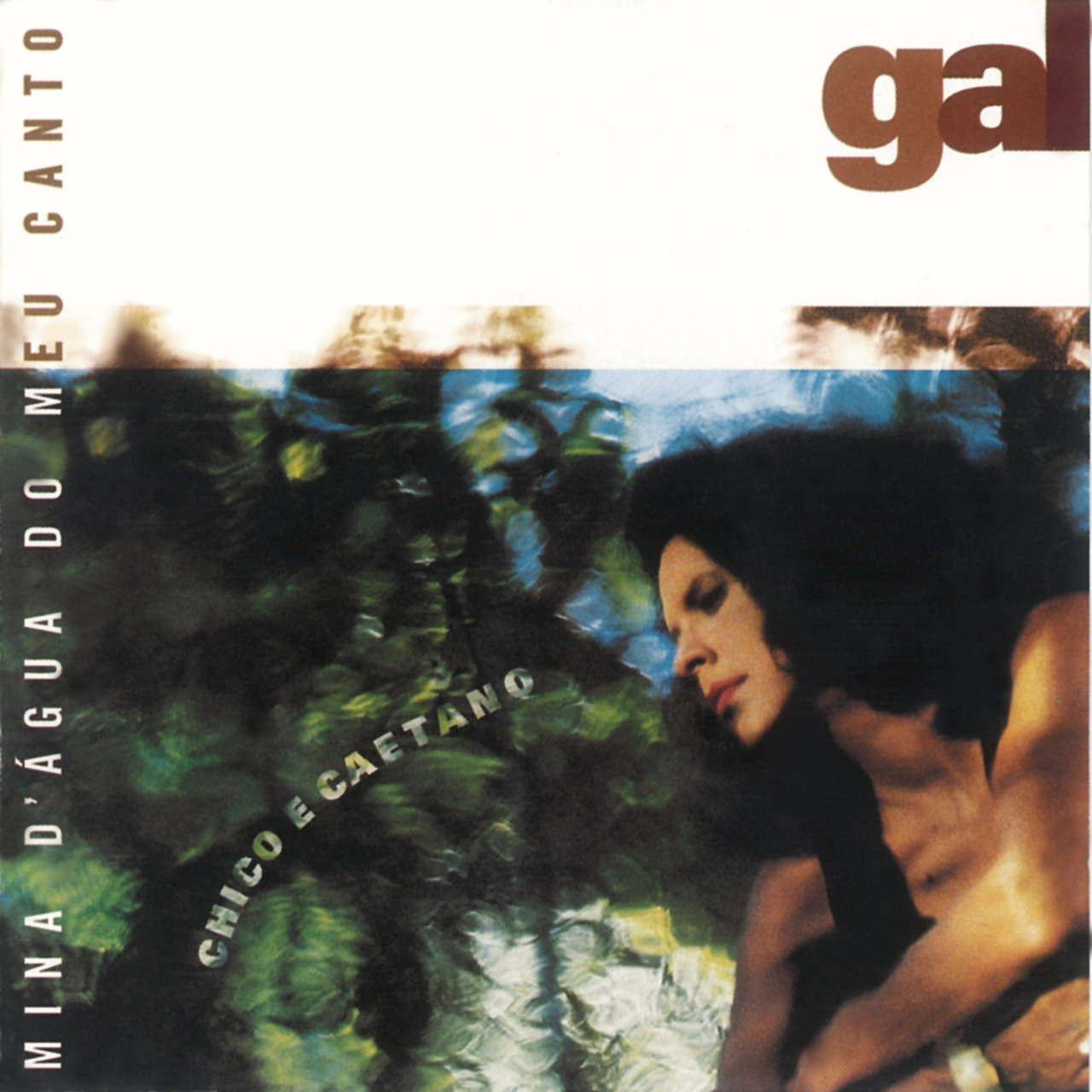
Mina D'água do Meu Canto
Gal Costa
1995
Rankings
Why This Album Matters
Released in April 1995, Mina D'água do Meu Canto is Gal Costa's twenty-fifth album and stands out as a landmark in her discography due to the exclusivity of its repertoire. All seventeen tracks that comprise the work are signed by two of the greatest poets and composers of Brazilian music: Caetano Veloso and Chico Buarque. This refined curation gives the album a unique lyrical and melodic unity, elevating it to a celebration of the art of these masters through Gal's unmistakable voice. The album represents a moment of seeking a 'freshness of singing', where Gal Costa revisited classics and explored the purity of her interpretation, searching for the essence of the 'Maria da Graça' of her early years, a self-confessed admirer of João Gilberto. Away from the experimentations of previous works, such as O Sorriso do Gato de Alice (1993), Gal opted for a deep dive into consecrated songs, reaffirming her status as one of the greatest interpreters of Música Popular Brasileira and consolidating her position as an 'MPB diva' with the 'assurance of great voices'.
Context
The release of Mina D'água do Meu Canto in 1995 occurred during a period of transition in Gal Costa's career. Following the boldness and mixed reception of her previous album, O Sorriso do Gato de Alice, which was characterised by a more avant-garde and experimental approach, Gal directed this new work towards a repertoire of greater popular appeal and recognition. Although the 1990s presented challenges in the phonographic market for some established artists, Gal Costa used this album to revisit and reinterpret the musical universe of Caetano Veloso and Chico Buarque, which proved to be a strategic move. The eponymous show, which premiered simultaneously with the CD, also functioned as an indirect homage to the recently deceased Tom Jobim, placing the project in a context of reverence for the great names of MPB.
Recording
The recording process for Mina D'água do Meu Canto took place between December 1994 and February 1995, with some sources indicating a start in November 1994 and completion in January 1995. The album's production was overseen by the renowned cellist and conductor Jaques Morelenbaum, who was also responsible for the musical arrangements. Morelenbaum's arrangements are described as chamber-like, with an orchestral tendency, contributing significantly to the album's elegant and refined sound. The recording sessions were carried out in various studios, including Cia. Dos Técnicos Studios, Estúdios Da Som Livre, and Estúdio Discover. A curious and notable detail of the album is the participation of the playwright Gerald Thomas on the track "Língua". His contribution consists of a philosophical discourse in German, which was recorded via satellite directly from New York, adding an experimental and cosmopolitan element to the song.
Songs
The album Mina D'água do Meu Canto features seventeen songs, totalling approximately 65 minutes in duration, all composed by Caetano Veloso and Chico Buarque. The repertoire is a deep dive into the work of these two giants of MPB, with Gal Costa imprinting her particular interpretation on each melody and lyric. Among the best-known tracks, classics such as "Odara", "Atrás da Porta" (a partnership between Chico Buarque and Francis Hime), "Cajuína", "O Ciúme", "A Rita", "Quem Te Viu, Quem Te Vê" and "Língua" stand out, all by Caetano or Chico. The song "Futuros Amantes", composed by Chico Buarque, gained significant visibility by being included in the soundtrack of the popular Rede Globo soap opera "História de Amor". Another emblematic track is "Como um Samba de Adeus", a partnership between Caetano Veloso on melody and Chico Buarque on lyrics, which functions as a homage to Tom Jobim. Gal Costa demonstrates her versatility by revisiting works like "Atrás da Porta", which had already received iconic interpretations from other great singers, seeking to offer her own reading of the song. The track "Língua", by Caetano Veloso, represented an 'unusual challenge' for Gal due to its less melodic and more spoken structure, especially with the participation of Gerald Thomas.
Legacy
Mina D'água do Meu Canto achieved expressive commercial success, selling over 150,000 copies in Brazil. Beyond sales performance, the album played a crucial role in solidifying Gal Costa's image as a timeless diva of Música Popular Brasileira, celebrated for her vocal assurance and interpretive ability. The album's success extended to the stage, with the eponymous tour achieving great acclaim. The show "Mina D'água do Meu Canto" reached New York, where tickets for the performance at Carnegie Hall sold out a week in advance, demonstrating Gal Costa's international prestige and that of Brazilian music. Although some contemporary analyses pointed to a certain creative 'accommodation' compared to more experimental phases of her career, the album was widely praised for its beauty and musical correctness, consolidating Gal as an interpreter with a serene and powerful voice.
Tracks
Credits
Jaques Morelenbaum
Luiz Brasil, Ronaldo Barcellos, Ronaldo Correa, Zepa
Raphael Rabello
Luiz Brasil
Sidinho Moreira
Armando Marçal, Sidinho Moreira
Eduardo Morelenbaum
Armando Marçal
Luiz Brasil
Luiz Brasil
Sidinho Moreira
Alceu De Almeida Reis, Iura Ranevsky, Jaques Morelenbaum, Marcio Mallard
Antonio De Bonis, Gal Costa, Paula Morelenbaum
Eduardo Morelenbaum, Lúcia Morelenbaum, Paulo Sérgio Santos
Eduardo Morelenbaum
Armando Marçal, Sidinho Moreira
Denner Campolina, Pedro Ivo, Zeca Assumpção
Armando Marçal
Sidinho Moreira
Sidinho Moreira
Jurim Moreira
Pedro Ivo
Luis Carlos Justi
Andréa Ernest Dias, David Ganc, Marcelo Martins
Pedro Ivo
Sidinho Moreira
Armando Marçal
Sidinho Moreira
Luiz Brasil
Phillip Doyle
Paulo Calasans
Sidinho Moreira
Sidinho Moreira
Armando Marçal
Paulo Calasans
Armando Marçal
Armando Marçal
Armando Marçal, Sidinho Moreira
Armando Marçal, Marcelo Costa, Sidinho Moreira
Sidinho Moreira
Armando Marçal
Armando Marçal
Marcelo Martins
Marcelo Costa
Paulo Williams
Bidinho, Marcio Montarroyos
Eduardo Pereira, Jesuina Passaroto, Marie-Christine Springuel
Alfredo Vidal, Carlos Eduardo Hack, José Alves, Paschoal Perrota, Ricardo Amado, Walter Hack
GianCarlo Pareschi, Michel Bessler
João Damaceno
Luis Paulo Serafim
Edu De Oliveira, Fábio Henriques, Guilherme Reis, Luiz Rodrigues, Marcio Gama, Ronaldo Lima
Sérgio De Carvalho
Marcos Martins
Ana Lontra Jobim
Films

Gal - from Tropicalism to the Present Day
2006
The film has Gal's career as its guiding principle, drawing a parallel with the movement of which the singer was the muse and one of the main interpreters, and reaching the present day.
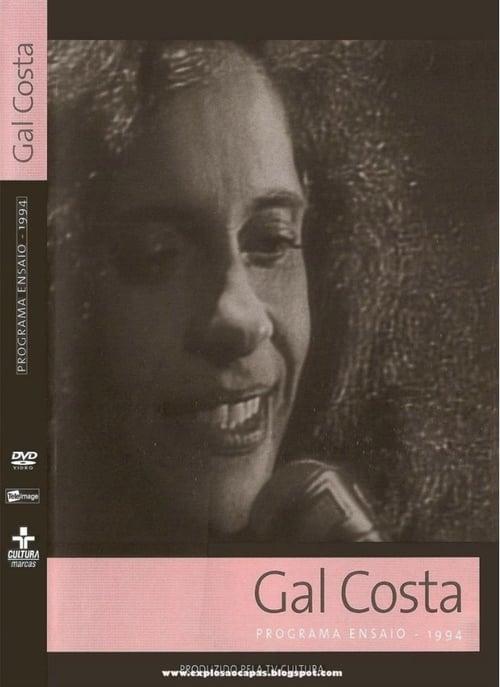
Gal Costa: Programa Ensaio
2005
In this DVD, recorded in 1994, the Bahian singer, MPB diva, grants a long interview, where she talks about her career, the Tropicalismo movement, her musical partners and composers during more than 35 years on the road. Gal performs great hits, accompanied by Luiz Brazil (guitar), Jacques Morelenbaum (cello) and Marçal (percussion).
Analyses
Mina D'água do Meu Canto – Wikipedia
Wikipedia, the free encyclopaedia
Album: Mina d'agua do meu canto. Artist/Band: Gal Costa. Year: 1995.
staimusic.com
Review Mina d'agua do meu canto is a testament to Gal Costa's timeless artistry. The album is a rich soundscape that intertwines evocative melodies with poignant lyrics. Costa's voice remains captivating, effortlessly transitioning from soft whispers to powerful crescendos, reflecting her emotional depth.

Disco: Mina d"água do Meu Canto: Gal busca frescor com Chico e Caetano
galtodas.blogspot.com
`Mina D'água do Meu Canto`, the title of Gal Costa's new album, is not merely a verse from the only unreleased track, the beautiful `Como Um Samba de Adeus`, a tribute to Tom Jobim written by Caetano Veloso (music) and Chico Buarque (lyrics), who are credited for all the songs on the album.

1995 - 1996 - Mina D'Água Do Meu Canto
caetanoendetalle.blogspot.com
To record `Mina D'Água do Meu Canto`, I tried to forget Gal Costa and rediscover the Gracinha who came from Bahia 30 years ago, who listened to João Gilberto all day long.