O Gênio das Cordas
Garoto
2003
Rankings
Why This Album Matters
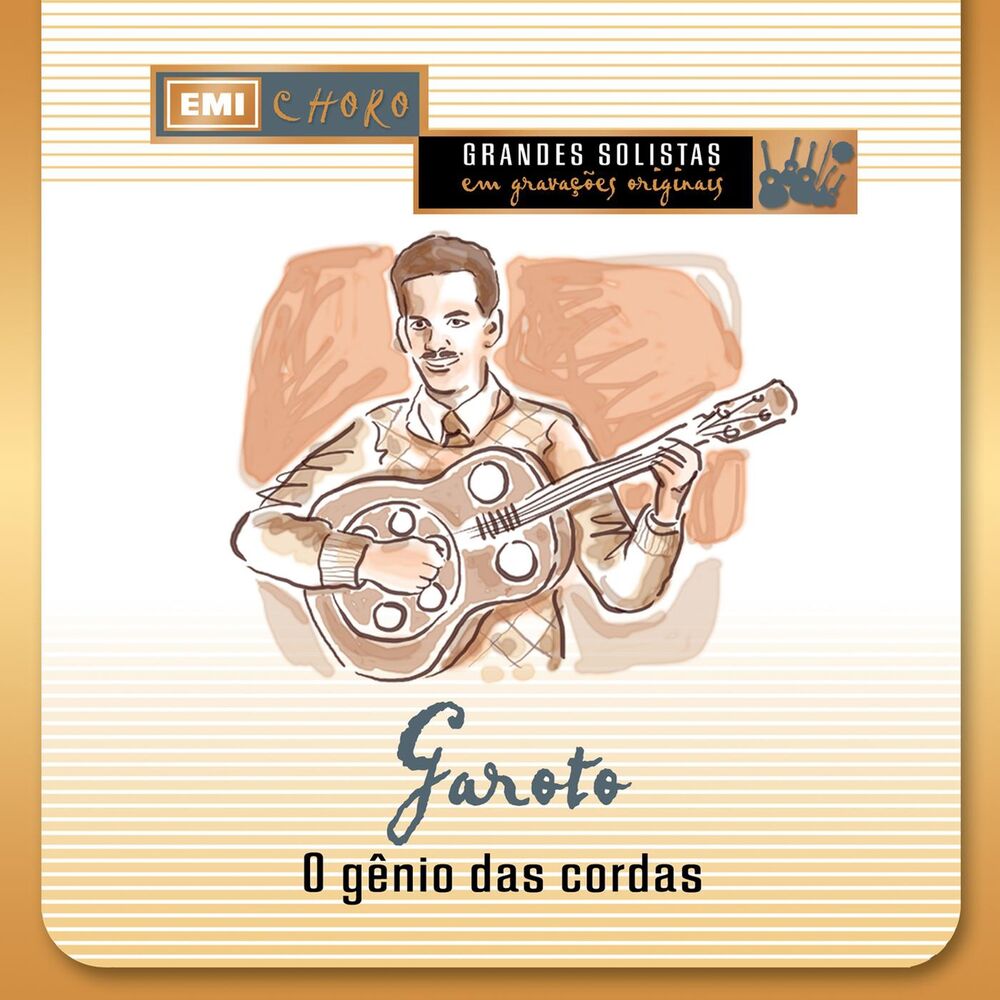
The album O Gênio das Cordas, released in 2003, is an essential compilation that celebrates the œuvre of Aníbal Augusto Sardinha, known as Garoto, one of the greatest classical guitarists and composers in Brazilian music of all time. Released posthumously, this record gathers historical recordings that reveal the virtuosity and innovation of an artist who, despite his early passing in 1955, left a monumental musical legacy. Garoto was a remarkable multi-instrumentalist, masterfully playing the classical guitar, tenor guitar, banjo, cavaquinho, and mandolin, as well as electric, Hawaiian, and Portuguese guitars. His style is a sophisticated fusion of traditional choro with influences from American jazz and French Impressionism, which made him a forerunner of modernity in Brazilian classical guitar and of future musical movements such as bossa nova. The compilation is a gateway to understanding his genius, presenting complex arrangements and captivating melodies that demonstrate why he was revered as the 'father of the modern classical guitar' and a 'genius of his race' by great names in music.
Context
Aníbal Augusto Sardinha, known as Garoto, was born in São Paulo in 1915 and lived during a period of cultural effervescence in Brazil, particularly within the radio and casino scene, where popular music gained significant prominence. He began performing on banjo at the age of 11 and, at 18, started formal studies of classical guitar, complemented by harmony and composition at the São Paulo Dramatic and Musical Conservatory. His professional career intensified in the 1930s, performing on various radio stations and accompanying renowned artists such as Carmen Miranda, with whom he toured the United States in 1939. This trip was crucial, as it brought him into contact with the big band era, the electric guitar, and the early stages of bebop, influences he uniquely incorporated into Brazilian music. Back in Brazil, Garoto formed various groups, studied with Radamés Gnattali and collaborated with names such as Tom Jobim, João Donato and Luiz Eça, establishing himself as a central figure in the renewal of popular composition standards and the transition from choro to more elaborate sonorities.
Recording
O Gênio das Cordas is a compilation released by EMI in 2003, as part of the series "Choro - Grandes Solistas". The tracks on the album were originally recorded between 1949 and 1955, Garoto's final period and one of great artistic maturity. The mastering of the compilation was carried out by Carlos Savalla, who worked to preserve and optimise the sound quality of these historical recordings, allowing Garoto's instrumental genius to be appreciated by new generations.
Songs
The songs on O Gênio das Cordas are a testament to Garoto's inventiveness and sophistication. The compilation presents a mixture of choros, waltzes, and songs that demonstrate his versatility as a composer and arranger. Tracks such as "Choro Triste Nº 2" and "Vamos Acabar Com O Baile" highlight his mastery of the classical guitar and his ability to create complex melodies and rich harmonies. Although some compositions were instrumental, Garoto also left lyrics, as in the song "Duas Contas", which stands out for the complete absence of rhymes, a unique feature in his work. His compositions frequently incorporated dissonances, then unusual in Brazilian music, influenced by French Impressionism and jazz, which made them extremely advanced for their time and precursors of future trends.
Legacy
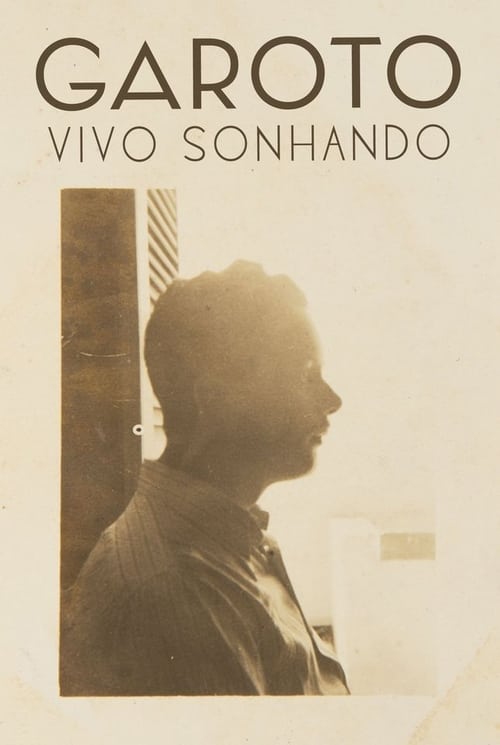
The impact of Garoto's work is immense and lasting, even if his greatness is often not proportional to the audience who knows him. He is widely considered the father of the modern classical guitar and one of the musicians who most contributed to the construction of the bossa nova language. Legendary musicians such as João Gilberto, Baden Powell and Carlos Lyra recognise his profound influence. João Gilberto went so far as to state that "Garoto is extraordinary and his classical guitar is the heart of Brazil", while Baden Powell confessed, "What I play is for Garoto." His work is constantly revisited and studied by classical guitarists worldwide, with songbooks dedicated to his œuvre, such as that by Paulo Bellinati. Documentaries and tributes, like the show "100 Anos de Garoto, o Gênio das Cordas" and the documentary "Garoto, o Gênio das Cordas", seek to give him the stature and recognition he deserves, highlighting his fundamental importance in the history of Brazilian popular music.
Tracks
Films

Books
Analyses
Garoto - O Gênio das Cordas - Acervo Digital do Violão Brasileiro
violaobrasileiro.com.br
Help preserve the memory of our culture and the richness of Brazilian music. Make your donation here. CD Credits Record Label: EMI Project Coordination: Luiz Linhares and Maurício Dias Assistant: Alexandre Sarthou Research and Texts: Henrique Cazes Mastering: Carlos Savalla (DMS) ...
Cainã Cavalcante toca Garoto em álbum que ajuda a eternizar o "gênio ...
revistaartebrasileira.com.br
Among the thousands of disciples of the São Paulo musician, is Cainã Cavalcante, who, since childhood, has seen the "string genius" as a mythological figure, as he himself stresses.
Clube do Choro de Santos
clubedochoro.org.br
The feat that resulted in the invitation was an incredible performance by Garoto with his partner Aimoré, in São Paulo, leaving the four speechless, as, incredulous, they could not believe what they had just seen and heard.
Garoto - O gênio das cordas - SESI-SP Editora
sesispeditora.com.br
We explore Garoto's world through musician friends, who tell us stories, many of them unusual, as well as memorable photos and sheet music featuring his most prominent melodies.
GAROTO: O GÊNIO DAS CORDAS - ClickREC
clickrec.com.br
Among its various releases, the group has an album dedicated to Garoto's work, entitled Enigma - A música de Garoto. The trio has performed in concerts throughout Brazil and Europe, always including Garoto's compositions in their repertoire.