Gilberto Gil
Gilberto Gil
1968

Rankings
Why This Album Matters
Released in 1968 by Philips, the album "Gilberto Gil" represents an indelible landmark in the trajectory of Brazilian music and in the Tropicalia scene, a movement of which Gilberto Gil is one of the pillars. This work is not merely the artist's second studio album, but a sonic declaration that pioneered new territories, consolidating "crazy rock" as a vital language for Brazilian musical experimentation. The work stands out for its innovative fusion of psychedelic rock, traditional Brazilian sounds, and Rogério Duprat's avant-garde orchestral arrangements, featuring the energetic participation of Os Mutantes. The album's sonic complexity and aesthetic boldness were crucial in redefining the direction of MPB, serving as a perfect evocation of the "Geleia Geral" concept: cosmopolitan, exuberant, and deeply rooted in Brazilian identity. The album is one of Gilberto Gil's first masterpieces, released one month before the collective manifesto album Tropicália ou Panis et Circensis, and exponentially elevated the artist's musical sophistication.

At a certain point in "Pega a Volta Cabeludo", drummer Dirceu sums up the avant-garde and the mischievousness: "Psychedelic sound is as round as a single drop."
Alexandre Matias · Rolling Stone Brasil
Context
The year 1968 in Brazil was marked by the shadow of the military dictatorship, a period of repression that curtailed freedom of expression. In this scenario of political and cultural effervescence, Tropicália flourished as an act of resistance and a new perspective for national music. Gilberto Gil, already an ascending artist, had distinguished himself at TV Record's III Festival of Brazilian Popular Music in 1967, winning 2nd place with the song "Domingo no Parque". This performance, alongside Os Mutantes and with the use of electric guitars, caused a great impact and publicly introduced the beginning of the Tropicalista movement. Gil's audacity in incorporating elements of international rock generated controversy, with accusations that he was "betraying Brazilian music", but the artist managed to capitalise on this controversy to gain prominence. The album represented a turning point in Gil's career; in his debut album, Louvação (1967), he had leaned towards a national-popular ideology, and now proposed a radical aesthetic revision. Inspirations came both from contact with the traditional Banda de Pífanos de Caruaru in 1967 and from the influence of The Beatles' Sgt. Pepper's Lonely Hearts Club Band.
Recording
The recordings for "Gilberto Gil" took place in early 1968 at the Companhia Brasileira de Discos (CBD) studios in São Paulo, utilising four-track techniques that allowed for greater sonic experimentation. Production was handled by Manoel Barenbein, a legendary figure in the Brazilian phonographic industry, while the arrangements and conducting were credited to the visionary maestro Rogério Duprat. Os Mutantes' participation was fundamental, with the band taking on the role of Gilberto Gil's backing group and injecting the electric guitars that would become a hallmark of Tropicalismo. Barenbein reportedly asked the group, "What else can we add to the salad?", encouraging transgression and the inclusion of noises and sound effects that give the album a playful and postmodern feel. The album cover, a visual element as iconic as the music, was conceived by artists Antonio Dias and Rogério Duarte, with photography by David Drew Zingg, presenting Gil in a military uniform, in an ironic allusion to The Beatles' Sgt. Pepper's cover and the State's "official culture".
Songs
The album opens with the vibrant "Frevo Rasgado", a composition by Gilberto Gil and Bruno Ferreira that unites the Pernambuco rhythm of frevo with a nostalgic melancholy for a lost love. The iconic "Domingo no Parque", already celebrated at the 1967 Record III Festival, narrates a passionate drama with an almost cinematic structure, blending the sound of the capoeira berimbau with electric guitar distortion. Other notable tracks include "Pega a Voga, Cabeludo" (with Juan Arcon), described as "euphoric pop" and a "wild" rock groove, which transforms Amazonian folklore into a celebration of counterculture. "Domingou", a partnership with Torquato Neto, offers a light chronicle of a Rio Sunday, with backing vocals by Os Mutantes, while "Coragem pra Suportar" and "Marginália II", also with Torquato Neto, address themes of resilience and complex Brazilian identity, with irony and social critique. The re-recording of "Procissão" from Gil's previous album exemplifies his artistic transformation, injecting Northeastern roots into "crazy rock" with Sérgio Dias's guitar solo. The lyrics, as Gil declared in 1968, prioritised the expression of what needed to be said, even if this implied greater length, and the compositions, even with traditional harmonic structures, were enriched by noises, guitars, and dissonant orchestrations.

Beatlemaniacs realised straight away. On the cover of his second album, recorded during the initial effervescence of the Tropicalista movement, Gilberto Gil appears wearing a ceremonial uniform similar to those worn by the venerable members of the Academia Brasileira de Letras.
Carlos Calado · 300 Discos Importantes
Legacy
"Gilberto Gil" was critically acclaimed, with AllMusic awarding it the maximum score of five stars and stating that the album contains "some of the best songs" of the artist's career. Its importance in the Brazilian music landscape was reiterated in October 2007, when Rolling Stone Brasil magazine included it at number 78 on its list of the "100 Maiores Discos da Música Brasileira". In 2017, the Pitchfork website recognised its international impact, placing it at number 99 on its list of the "200 Melhores Álbuns da Década de 1960", praising it for transcending the conventions of Brazilian popular music's structure and themes. The album not only redefined the place of Gilberto Gil and Os Mutantes in the music scene, but also significantly expanded the range of sounds to be explored by MPB in subsequent decades, solidifying it as a landmark for Tropicalismo and for Brazilian music in general. The album recorded a moment of intense political and cultural acceleration in Brazil, shortly before the military regime's tightening grip with AI-5.
Tracks
Credits
Rogério Duprat
Manoel Barenbein
Os Mutantes
Antônio Dias, David Drew Zingg
Júlio Pio
Estampa (Gaúcho)
Rogério Duarte
Videos
3000 Best Albums [2537] Gilberto Gil - Gilberto Gil (1968) Dan's Mini Album Review
Dan's Mini Album Reviews
Films

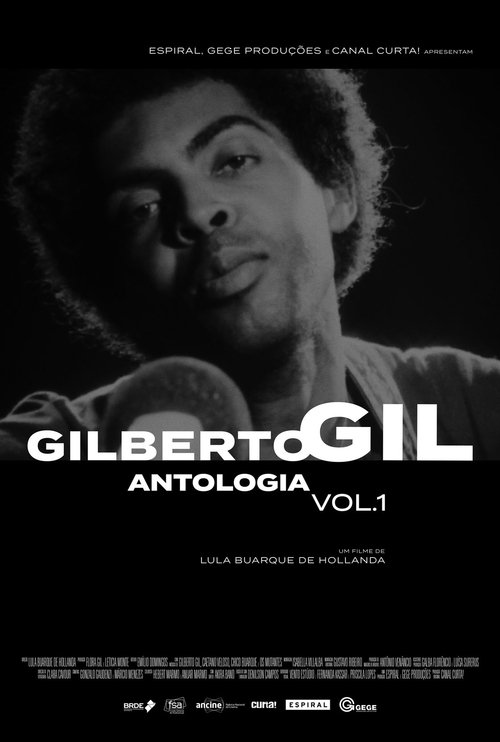
Gilberto Gil Antologia Vol.1
2019
The documentary goes through works composed by the Bahian musician between 1968 and 1987. Brazilian musician Gilberto Gil, one of the most well-known members of the Tropicália generations, revisits some of his most famous works on this documentary.
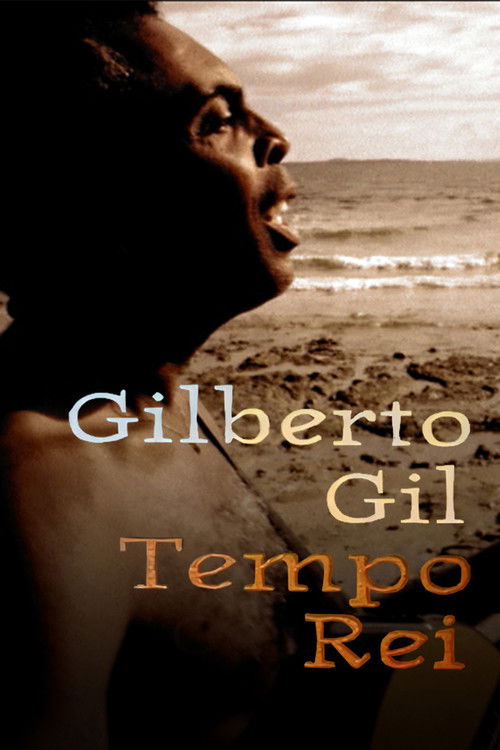
Gilberto Gil: Tempo Rei
1996
Tempo Rei is the first audiovisual record of Gilberto Gil's vast work, celebrating the artist's thirty-year career, celebrated in 1996. Gil recalls his artistic trajectory, recalls striking facts and reveals some intimacies. Completely filmed on film, it includes great successes of the artist like Madalena, Cores Vivas, Vamos Fugir, Procissão and Expresso 2222.

Amor e Sorte com Gilberto Gil
2020
The music and poetry of Gilberto Gil in the voices of different generations of artists, and his wisdom in his own voice.
Books
Os 500 Maiores Álbuns Brasileiros de Todos os Tempos
Ricardo Alexandre · 2022
The largest Brazilian music election ever conducted: 162 specialists, spanning journalists, critics, musicians, producers and podcasters, each nominated 50 essential albums, supported by a masterlist of more than 2,000 works. Led by Ricardo Alexandre with tabulation by Sérgio Jomori, it was published in December 2022 as a 200-page hardcover book with graphic design by Fernando Pires.

Gilberto bem perto
Gilberto Gil, Regina Zappa · 2013
Autobiography of Gilberto Gil, co-authored with Regina Zappa. The book offers an in-depth insight into the artist's life and career, from his origins in Bahia to his trajectory as one of the founders of Tropicália and, later, as Minister of Culture. It is an essential source for understanding the context and creation of his seminal albums, such as the 1968 one, which marks a crucial phase of experimentation and innovation.
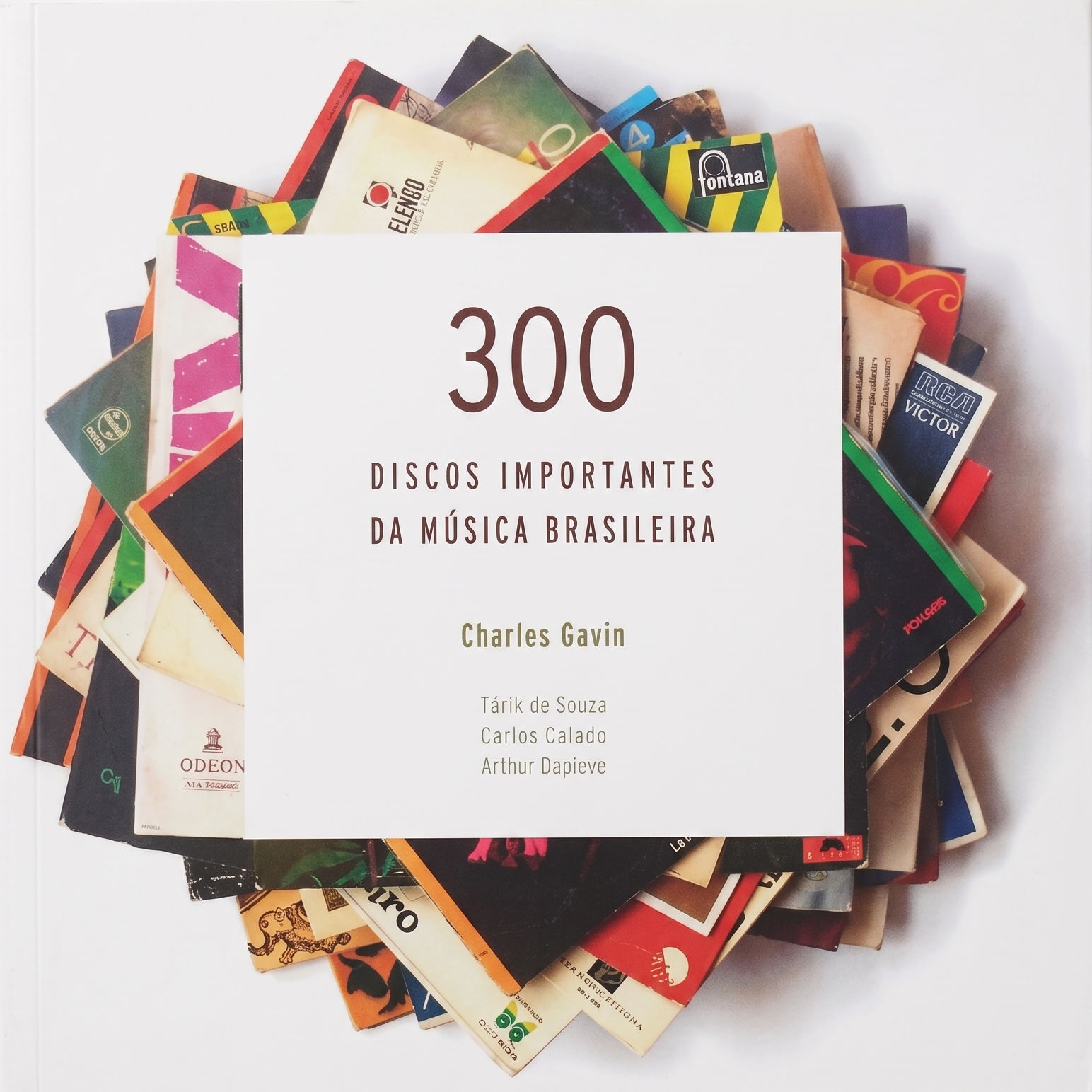
300 Discos Importantes da Música Brasileira
Charles Gavin, Tárik de Souza, Carlos Calado, Arthur Dapieve · 2008
Conceived by Titãs drummer and musical researcher Charles Gavin, the 434-page book brings together covers and reviews of albums released between 1929 and 2007. The texts were written by journalists Tárik de Souza, Arthur Dapieve and Carlos Calado.
Analyses
Gilberto Gil – Wikipedia
Wikipedia, the free encyclopaedia
Gilberto Gil – The 100 Greatest Albums of Brazilian Music
Alexandre Matias · Rolling Stone Brasil
At a certain point in "Pega a Volta Cabeludo", drummer Dirceu sums up the avant-garde and the mischievousness: "Psychedelic sound is as round as a single drop."
"Gilberto Gil" (1968), Gilberto Gil - A música de
amusicade.com
If, on this first album, Gil sought to bring together compositions, sounds, and themes linked to national-popular ideals, on the "uniform album", or LP Gilberto Gil, from 1968, he proposed an aesthetic re-evaluation of the elements that would form part of the cultural melting pot of MPB.

"Gilberto Gil" (Philips, 1968), Gilberto Gil
discosessenciais.blogspot.com
Gilberto Gil addresses the internal struggle to overcome moments of sadness with courage. The verses that portray the arduous life in the Northeastern backlands contrast with intense instrumentation, inspired by international rock, with a focus on guitar and bass.
Gilberto Gil - Gilberto Gil (1968) - by Rafael Morettini
umcatalogo.substack.com
In retrospect, "Gilberto Gil" served as a synthesis of a short interval in Brazilian culture: the months immediately preceding the definitive tightening grip of the dictatorship.