Luar (A Gente Precisa Ver o Luar)
Gilberto Gil
1981

Rankings
Why This Album Matters
Released in 1981, Luar (A Gente Precisa Ver o Luar) represents a crucial moment in Gilberto Gil's discography, consolidating his ability to reinvent himself and engage with the emerging sounds of the era. The album stands out for its organic fusion of rich Brazilian rhythms with global pop, funk, and soul influences, characteristics that made it extremely accessible and popular without compromising its lyrical and melodic depth. It is a work that, despite its clear commercial and radio-friendly intentions, maintained the high quality of Gil's compositions. This record is a testament to Gil's mastery in transitioning between the popular and the sophisticated, presenting songs that comfortably lodged themselves in the average listener's ear. It marked the artist's pioneering role in the 1980s, demonstrating remarkable dexterity with the technical creative standards of the time and the transformations his music was undergoing, reaffirming his artistic relevance and his ability to authentically incorporate new musical trends.
Context
The album Luar emerged during a period of transition both for Brazil, which was experiencing the effervescence of 'political opening' after years of military dictatorship, and for Gilberto Gil's musical career. In his previous work, Realce (1979), the artist had already demonstrated an approach to international black music, especially soul and funk. This affinity deepened, including the participation of Earth, Wind & Fire's arranger, Jerry Hey, on keyboards for Realce, and Gil's own presence at a group concert at Maracanãzinho in 1980, sharing vocals on “Realce” with percussionist Ralph Johnson. Gil, who had returned from exile in London in the early 70s and had already experimented with various sounds, including the African influence present in Refavela (1977), was attuned to the new directions of global pop music. Luar reflects this phase, where the artist sought a more modern and danceable sound, but without losing the Brazilian cultural identity and poetic reflection that had always characterised his work.
Recording
The production of Luar was credited to Liminha, a central figure in the Brazilian music scene at the time, who would also produce Gilberto Gil's subsequent album, Um Banda Um. Liminha, a former member of Os Mutantes, already had a consolidated career as a producer, with notable works in his portfolio, and his collaboration with Gil was decisive for the record's modern, pop sound. The album's recording took place at Estúdio Transamérica, and mixing was carried out at Westlake Studios in the United States, which contributed to the polished and internationalised sound of the work. This partnership between Gil and Liminha would mark the beginning of a long and fruitful collaboration, which would lead both to become partners in opening the Nas Nuvens studio in Rio de Janeiro, a space that would become the setting for the production of numerous historical albums of Brazilian music. The Luar album promotional tour was even filmed, highlighting the visual and performative appeal that accompanied the release.
Songs
The repertoire of Luar features a collection of songs that became widely known, demonstrating Gilberto Gil's compositional versatility. Among the highlights, the title track “A Gente Precisa Ver o Luar”, “Cores Vivas”, and “Flora” capture the artist's characteristic lightness and lyricism. One of the album's greatest successes, “Palco”, is a contagious ijexá that displays a notable influence from the band Earth, Wind & Fire, becoming a dance megahit and an anthem celebrating music and life. Another highly impactful song is “Se Eu Quiser Falar Com Deus”, a ballad of deep spiritual reflection, which was also recorded by Elis Regina and released as a single by Gil at the end of 1980. The album also features “Cara a Cara”, the only composition on the record not credited to Gil, but rather to Caetano Veloso, which adds a different nuance to the collection. The combination of poetic lyrics and modern arrangements, with a strong presence of keyboards and brass, makes the tracks a representative mosaic of Gil's production in the 80s.
Legacy
Luar was a critical and commercial success, widely accepted on the radio stations of the time, which underscored its radio-friendly and accessible nature. Journalist Ana Maria Bahiana described the record as "full of sounds that recall other sounds and comfortably lodge themselves in the average consumer's ear", recognising Gil's ability to create a commercially appealing work. Tracks like “Palco” not only became "dance megahits", but also consolidated Gilberto Gil's presence on dancefloors and in the charts. The album was crucial in confirming Gilberto Gil's pioneering role in the 1980s and his remarkable dexterity with the technical and aesthetic standards of musical creation from that period. It demonstrated the transformations Gil's music had undergone in a few years, showing a successful adaptation to new trends without losing its essence. The widespread acceptance by the public and radio stations of the time attested to the album's success, which became a landmark in the artist's career and in Brazilian popular music of the decade.
Tracks
Credits
Gilberto Gil E Cassiano
Caetano Veloso, Cassiano, Gilberto Gil
Claudia Telles, Jane Duboc, Loma Pereira, Lucia Turnbull, Nadia, Neila Carneiro, Pi, Ronaldo Barcellos, Rosana, Sonia Burnier
Dominguinhos, Zé Américo
Oberdan Magalhães
Leo Gandelman
Alceu De Almeida Reis, Jaques Morelenbaum, Jorge Kundert Ranevsky, Marcio Mallard
Barrozinho, Bidinho, Marcio Montarroyos
Barrozinho, Bidinho
Gilberto Gil, Joca, Liminha, Perinho Santana, Robson Jorge
Charles Negrita, Charles Negrita, Jorginho Gomes, Liminha, Miguel Cidras
Lincoln Olivetti
Lincoln Olivetti, Robson Jorge
Oberdan Magalhães
Lincoln Olivetti
Lincoln Olivetti, Robson Jorge
Lincoln Olivetti
Zé Carlos
Raul De Souza, Serginho Do Trombone
Barrozinho, Bidinho
André Gheta, Arlindo Penteado, Frederick Stephany, Hindemburgo Pereira, Nelson De Macedo
Aizik Geller, Alfredo Vidal, Carlos Eduardo Hack, Giancarlo Pareschi, Jorge Faini, José Alves, João Daltro, Paschoal Perrota, Robert Eduard, Virgilio Arraes F., Walter Hack
Lincoln Olivetti
Films

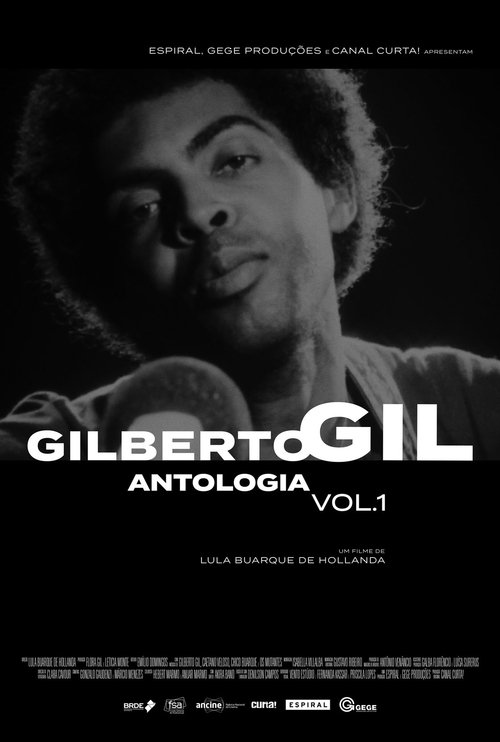
Gilberto Gil Antologia Vol.1
2019
The documentary goes through works composed by the Bahian musician between 1968 and 1987. Brazilian musician Gilberto Gil, one of the most well-known members of the Tropicália generations, revisits some of his most famous works on this documentary.
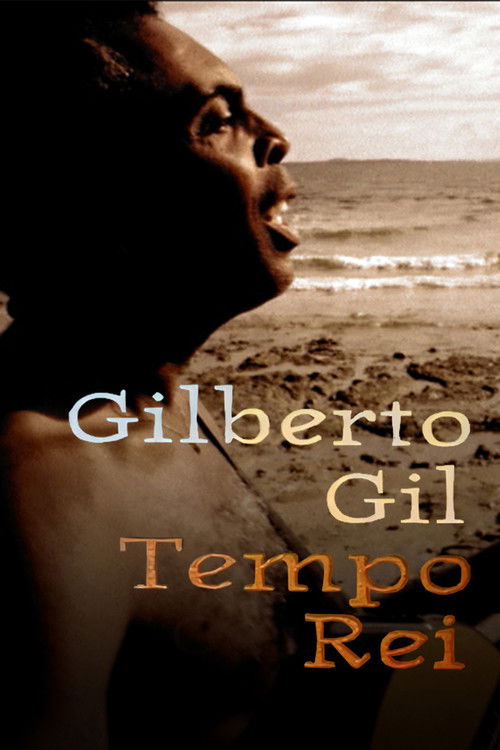
Gilberto Gil: Tempo Rei
1996
Tempo Rei is the first audiovisual record of Gilberto Gil's vast work, celebrating the artist's thirty-year career, celebrated in 1996. Gil recalls his artistic trajectory, recalls striking facts and reveals some intimacies. Completely filmed on film, it includes great successes of the artist like Madalena, Cores Vivas, Vamos Fugir, Procissão and Expresso 2222.

Amor e Sorte com Gilberto Gil
2020
The music and poetry of Gilberto Gil in the voices of different generations of artists, and his wisdom in his own voice.
Books
Os 500 Maiores Álbuns Brasileiros de Todos os Tempos
Ricardo Alexandre · 2022
The largest Brazilian music election ever conducted: 162 specialists, spanning journalists, critics, musicians, producers and podcasters, each nominated 50 essential albums, supported by a masterlist of more than 2,000 works. Led by Ricardo Alexandre with tabulation by Sérgio Jomori, it was published in December 2022 as a 200-page hardcover book with graphic design by Fernando Pires.

Gilberto bem perto
Gilberto Gil, Regina Zappa · 2013
Gilberto bem perto is a memoir and autobiography, the result of three years of interviews by Regina Zappa with Gilberto Gil. In it, the musician reflects on his life, work, career, political experiences, and worldview. As a comprehensive work on the artist, it is an essential source for understanding the context and creation of his albums, including 'Luar (A Gente Precisa Ver o Luar)'.