Realce
Gilberto Gil
1979

Rankings
Why This Album Matters
Realce, released in 1979, emerges as a seminal work in Gilberto Gil's discography, marking a period of significant musical and thematic experimentation. The album embraces disco music influences, lending it a vibrant and contemporary sound that resonated with the international music scene of the era. The title track, for example, is a possible ode to urban beauty and effervescence, with Gil exploring the idea of the "minimum wage of sparkle" for anonymous people in large cities. This perspective reveals a depth within the apparent superficiality of everyday life, addressing "McDonaldization" with a critical view, yet also recognising its intrinsic essence. Musically, the album also stands out for its inventive fusion of rhythms, such as in the song "Sarará miolo", which intertwines reggae with elements of baião.
Context
At a time when Brazilian studios still had technical limitations compared to foreign ones, Gilberto Gil received a crucial invitation from producer Marco Mazzola. Taking advantage of a tour the singer was to undertake in the United States, the opportunity to record in Los Angeles emerged as a solution to achieve a high-quality production. Mazzola, a visionary producer, was already seeking technical improvement in the American city, which facilitated the initiative. For the recording, Gil's band was enriched by the collaboration of renowned local musicians, who lent their talent and experience to the project. Among them were Steve Lukather on guitar, Rick Schlosser on drums, Michael Boddicker on keyboards, and Jerry Hey on brass arrangements, names associated with internationally prominent artists such as Toto, Van Morrison, the Bee Gees, and Michael Jackson.
Recording
The recording of Realce took place in Los Angeles, a strategic choice driven by producer Marco Mazzola, who aimed to elevate the technical quality of Brazilian production. The album was recorded at the renowned Westlake Audio studio, under the recording engineering of Humberto Gatica, with the assistance of Eric. Humberto Gatica was also in charge of mix engineering, carried out at Sunset Sound Studio, with the assistance of Rafaello Mazza. The final cut was handled by Jo Hansch at Kendun Records. Mazzola's vision of giving the album a "more international feel" was reflected in the collaboration of foreign musicians on several tracks. On the title track "Realce", for example, only international instrumentalists participated, including Steve Lukather on guitar and Jerry Hey on keyboards. This conscious decision aimed to ensure a globalised sound for the record.
Songs
The songs on Realce reveal Gilberto Gil's versatility and poetic depth. The title track, "Realce", is a striking example, with its disco music inspiration and lyrics that Gil himself described as a reflection on the "minimum wage of sparkle to which all anonymous people are entitled", exploring the coexistence of superficiality and depth in contemporary urban life. The song featured contributions from Steve Lukather on guitar and Jerry Hey on keyboards, and Gil later performed it alongside percussionist Ralph Johnson, from Earth, Wind and Fire. Other highlights include "Superhomem - a canção", composed by Gil after Caetano Veloso's account of the 1978 film, and the adaptation of Vincent Ford's reggae classic "No Woman, No Cry", transformed into "Não chore mais". Gil opted for a loose translation because he did not fully understand the meaning of the original chorus, demonstrating his creative freedom. The album also innovates on the track "Sarará miolo", where Gil promotes a rich fusion of reggae with baião, showcasing his search for new sounds and rhythmic dialogues.
Tracks
Credits
Mazzola
Gilberto Gil
Dorival Caymmi, Gilberto Gil, Vincent Ford
Gilberto Gil
Bob Glaub, Rubão Sabino
Liminha
Luiz Carlos Batera, Rick Shlosser
Perinho Santana, Steve Lukather
Mark Jordan, Tuca Camargo
Lincoln Olivetti
Bill Champlin
Sergio Dias, Steve Lukather
Gilberto Gil
Ariovaldo Contesini, Djalma Correa
John D'Andrea
Kim Hutchcroft, Larry Williams
Michael Boddicker
Michael Boddicker
Bill Reichenbach, Charlie Coper
Gary Grant, Jerry Hey, Larry Hall
Jo Hansch
Humberto Gatica
Claudio Carvalho
Noguchi
Gilberto Gil
Daniela Rodrigues
Norman Seeff
Podcasts
Brazuca Sounds · Leandro Vignoli
In episode #33 we celebrate Gilberto Gil's 80th birthday by discussing his 1970s trilogy. Refazenda (1975), where Gil paid tribute to his Northeastern roots in Bahia after he came from his exile in London; Refavela (1977), a celebration of his African origins after a trip to Nigeria; and Realce (1979), influenced by the disco music and recorded in Los Angeles.
Brazuca Sounds on Patreon · Leandro Vignoli
In episode #33 we celebrate Gilberto Gil's 80th birthday by discussing his album trilogy released in the 1970s. In Refazenda (1975) Gil paid tribute to his Northeastern roots in Bahia; Refavela (1977) is a celebration of his African origins; and Realce (1979) is influenced by the disco music. One of the most iconic Brazilian musicians of all time, a great guitarist, and exuberant songwriter, Gilbe

Ouvindo Estrelas · Marco Mazzola
Neste episódio exclusivo, Marco Mazzola abre o baú de memórias e revela os bastidores da criação e produção de um dos maiores álbuns da história da música brasileira: Realce, de Gilberto Gil.Você vai descobrir:- Como nasceu a ideia do disco- Histórias inéditas dos bastidores do estúdio- Detalhes do processo criativo e da gravação- Momentos marcantes que ajudaram a transformar Realce em um clássico
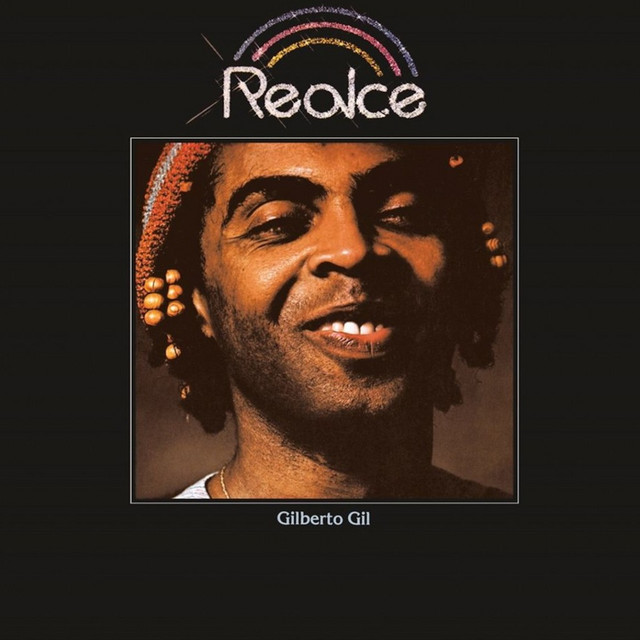
365 LPs · Paulo Henrique de Moura
Em agosto de 1979, Gilberto Gil lançava o LP Realce, com um vigor e coerência que até hoje poucos conseguiram na música popular brasileira, tanto na expressão das melodias e ritmos (samba, afoxé, disco e reggae, entre outros) quanto nos conteúdos líricos, políticos, metafísicos e sensuais das letras.Gravado nos Estados Unidos, no estúdio Westlake Audio de Hollywood, o álbum produzido por Mazzola f
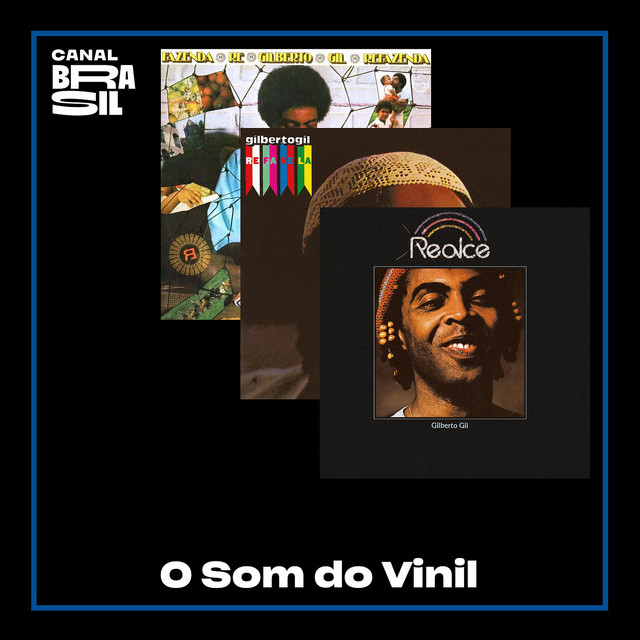
O Som do Vinil | Podcast · Canal Brasil
No episódio especial, Charles Gavin convida Gilberto Gil a traçar um panorama da carreira, a partir de três importantes álbuns: Refazenda (1975), Refavela (1977) e Realce (1979). Gil também conta sobre sua relação com Fela Kuti, pioneiro do Afrobeat.
Videos
REALCE: O FIM DA TRILOGIA RE DE GILBERTO GIL | ALBUM REVIEW
Som de Peso
A HISTÓRIA DO ÁLBUM #8 - GILBERTO GIL - REALCE (1979)
Rodrigo Faour Oficial
Films

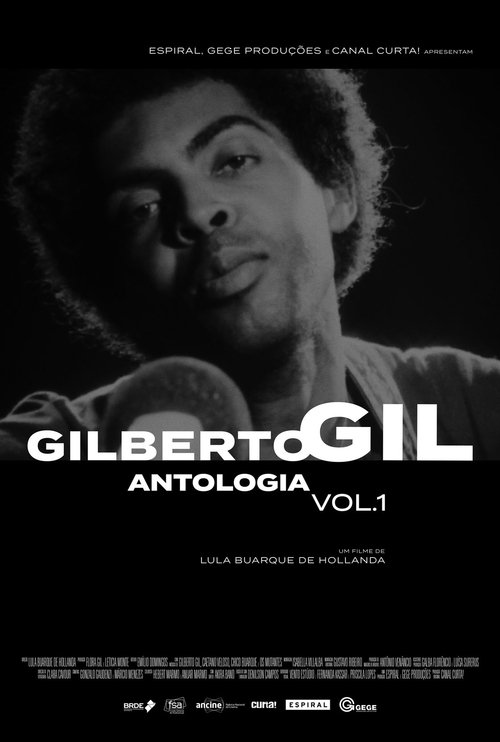
Gilberto Gil Antologia Vol.1
2019
The documentary goes through works composed by the Bahian musician between 1968 and 1987. Brazilian musician Gilberto Gil, one of the most well-known members of the Tropicália generations, revisits some of his most famous works on this documentary.
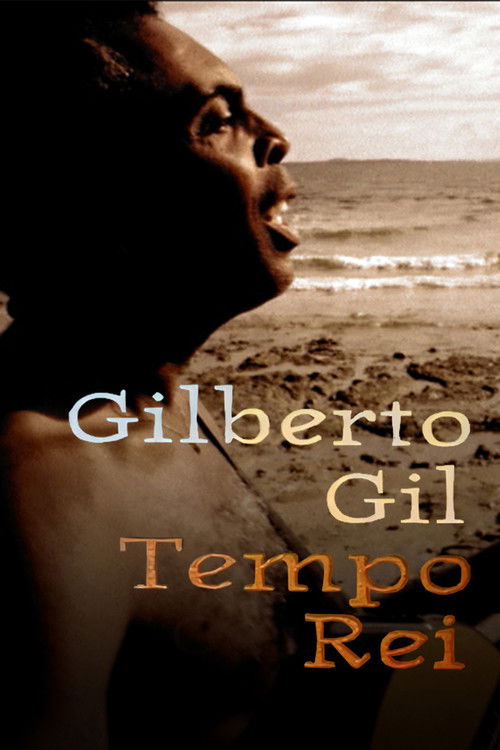
Gilberto Gil: Tempo Rei
1996
Tempo Rei is the first audiovisual record of Gilberto Gil's vast work, celebrating the artist's thirty-year career, celebrated in 1996. Gil recalls his artistic trajectory, recalls striking facts and reveals some intimacies. Completely filmed on film, it includes great successes of the artist like Madalena, Cores Vivas, Vamos Fugir, Procissão and Expresso 2222.
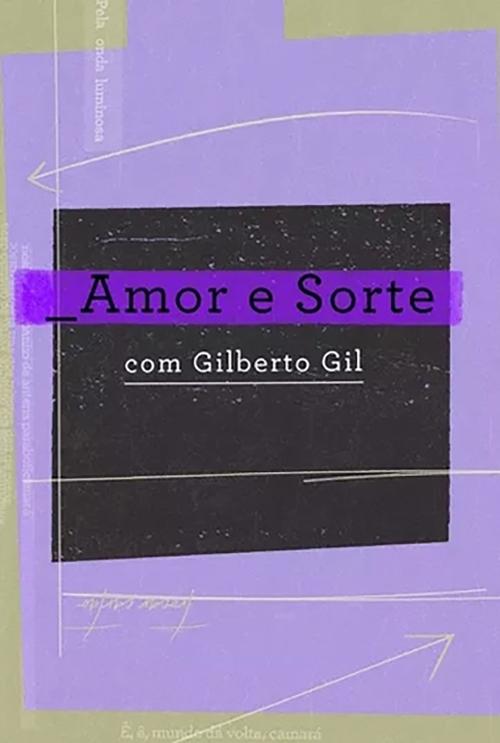
Amor e Sorte com Gilberto Gil
2020
The music and poetry of Gilberto Gil in the voices of different generations of artists, and his wisdom in his own voice.
Books
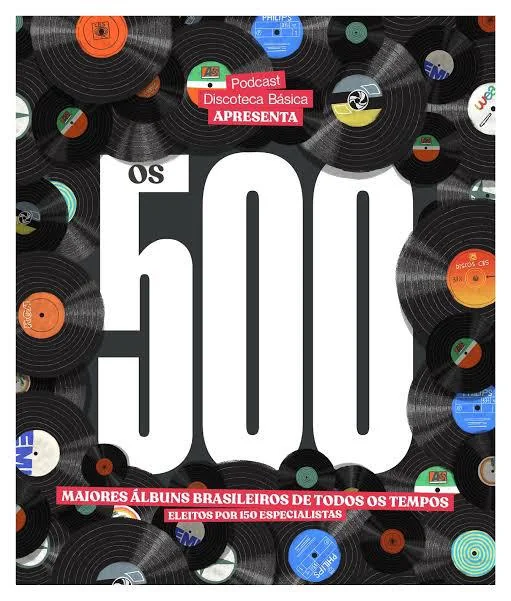
Os 500 Maiores Álbuns Brasileiros de Todos os Tempos
Ricardo Alexandre · 2022
The largest Brazilian music election ever conducted: 162 specialists, spanning journalists, critics, musicians, producers and podcasters, each nominated 50 essential albums, supported by a masterlist of more than 2,000 works. Led by Ricardo Alexandre with tabulation by Sérgio Jomori, it was published in December 2022 as a 200-page hardcover book with graphic design by Fernando Pires.

Gilberto bem perto
Gilberto Gil, Regina Zappa · 2013
This is a biographical work on Gilberto Gil, addressing his life and career. Being one of the best-known and most comprehensive, it is highly likely to discuss in depth significant albums such as 'Realce', released in 1979, offering context and analyses of its creation and impact.
Analyses
Realce – Wikipedia
Wikipedia, the free encyclopaedia
Realce (1979): Gilberto Gil no auge da invenção
avozdovinil.com
Analysis of Gilberto Gil's album Realce (1979): historical context, notable tracks, and cultural significance in the 'RE' quadrilogy. Find out more on A Voz do Vinil's blog.

Grandes Discos Brasileiros | 'Realce' - Gilberto Gil (1979)
colunablah.blogspot.com
The album to be highlighted is Realce, released in 1979, and as the cover already suggested, the singer Gilberto Gil was living, experimenting with, and breathing new musical directions, showing that his artistic capacity for reinvention was enormous.
Quanto Mais Purpurina Melhor: O Brilho de Gil em Realce
sextafeiraumdisco.substack.com
In August 1979, Gilberto Gil released Realce, an album that radiated 'life' and cohesion, opening new paths for his musical journey.
Gilberto Gil - Realce - Monkeybuzz
monkeybuzz.com.br
In 1979, the artist headed to the United States to perform and record three albums there — Realce among them. That year, the 'marriage' of Jazz and Bossa Nova was already showing signs of wear, and Rock, which had fuelled Tropicalismo, was living in underground enclaves in Brazilian capitals.