Um Banda Um
Gilberto Gil
1982

Rankings
Why This Album Matters
Released in 1982, Um Banda Um is a seminal album in Gilberto Gil's discography, marking a point of confluence between rhythmic innovation and a profound spiritual and philosophical exploration. Although heavily influenced by the Jamaican rhythms of reggae, the album transcends mere sound to delve into concepts of universalism and syncretism, elements dear to Brazilian culture and to the artist's own trajectory. Gilberto Gil described the album as a search for the 'universalist sense of Umbanda as a split from the closed cult of religions', proposing a 'pan-culturalist' vision that blends Kardecism, Catholicism and African polytheism. Songs such as "Drão", "Andar com Fé" and "Esotérico" are not only musical highlights, but also vehicles for this message of faith, love and cosmic connection, consolidating Um Banda Um as a work of remarkable lyrical and sonic depth.
Context
The early 1980s found Gilberto Gil in a phase of intense experimentation. The Um Banda Um project began with the intention of an album aimed at the international market, with Gil recording reggae-influenced material in New York. However, the artist was not satisfied with the outcome of these sessions and chose to postpone and reformulate the work, demonstrating his uncompromising approach to his own artistic vision. Parallel to the search for new sounds and spiritual themes, this period also reflected a moment of personal introspection for Gil. The song "Drão", for example, is a touching testimony to the end of his marriage to Sandra Gadelha, known as Drão, revealing a more existential and reflective dimension that permeates the album.
Recording
Um Banda Um was recorded between June and July 1982 in Rio de Janeiro, by the Warner record label. Production was handled by Liminha, who had previously worked with Gil on the album *Luar*, establishing a fruitful creative partnership that helped shape the album's sound. Gil's decision to discard the initial recordings made in New York underlines a recording process focused on the pursuit of authenticity and the full realisation of his entirely Brazilian artistic vision, despite international influences.
Songs
The songs on Um Banda Um are pillars that support the album's complex thematic and sonic web. "Drão" is a poignant and deeply personal ballad, composed by Gil for his ex-wife Sandra Gadelha (nicknamed Drão by Maria Bethânia), addressing the cyclical and transformative nature of love with a lyrical honesty that has made it one of the most emblematic of his career. Meanwhile, "Andar com Fé" became an anthem of resilience and spirituality, with its captivating melody and strong reggae influence, conveying a message of confidence and perseverance. "Esotérico" complements the triptych of successes, delving into the individual search for understanding and connection with the universe, beyond traditional religious dogmas, a characteristic of esotericism. In general, the album's tracks celebrate life's multiple possibilities, the divine, the mysterious, faith and the various manifestations of love, reflecting a Gilberto Gil who is not afraid to express his happiness and depth.
Legacy
The critical reception of Um Banda Um was predominantly positive. Tárik de Souza, in his analysis for Jornal do Brasil, praised Gil's mastery, stating that the artist 'mastered the indomitable' and that poetically 'he was never so agile'. However, Renato Sérgio, from Manchete magazine, observed that some of the public at the time considered the Africanist aspects of Gil's career, especially on Um Banda Um, to be 'excessive'. In its legacy, the album is recognised for its conceptual depth. Journalist and researcher Ceci Alves highlights that Gil revealed his relationship with Umbanda, viewing the religion as an 'antechamber for the rites of Candomblé'. Lucas Teixeira, from the Monkeybuzz portal, described the album as 'an animated celebration by the Bahian artist of what life has to offer', highlighting themes such as the divine, the mysterious, faith and the various possibilities of love. The album's relevance is also underlined by its inclusion in the Discoteca Básica podcast's list of the 500 best albums in the history of Brazilian music, where it occupied the 490th position among Gil's 17 albums on the list.
Tracks
Credits
Chico Neves, Gregorio Gomes Nogueira
Liminha
Teresa Teixeira
Rique Pantoja
Billy, Enoque De Oliveira, Laci Moraes, Magro, Mauro Moraes, Willians Francesconi
Osmar Furtado
Wilson Medeiros
Liminha, Vitor Farias
Claudio Farias, Liminha, Rafael Azulay, Richard Alderson, Vitor Farias
Edeltrudes Marques Da Silva
Edeltrudes Marques Da Silva, Eduardo Pastorelli, Ricardo Garcia, Walter Guimarães
Luciano Figueiredo
Ivan Cardoso
Films

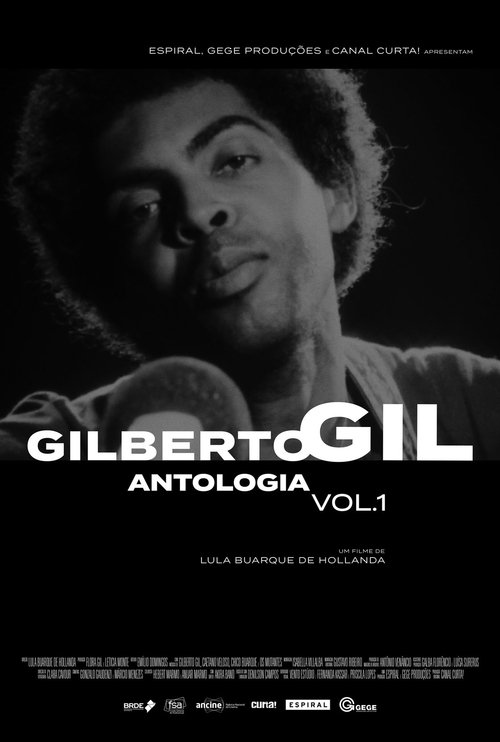
Gilberto Gil Antologia Vol.1
2019
The documentary goes through works composed by the Bahian musician between 1968 and 1987. Brazilian musician Gilberto Gil, one of the most well-known members of the Tropicália generations, revisits some of his most famous works on this documentary.
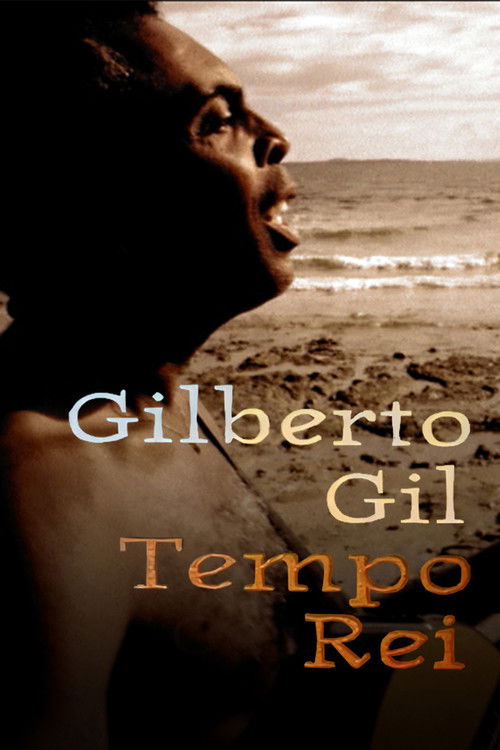
Gilberto Gil: Tempo Rei
1996
Tempo Rei is the first audiovisual record of Gilberto Gil's vast work, celebrating the artist's thirty-year career, celebrated in 1996. Gil recalls his artistic trajectory, recalls striking facts and reveals some intimacies. Completely filmed on film, it includes great successes of the artist like Madalena, Cores Vivas, Vamos Fugir, Procissão and Expresso 2222.

Amor e Sorte com Gilberto Gil
2020
The music and poetry of Gilberto Gil in the voices of different generations of artists, and his wisdom in his own voice.
Books
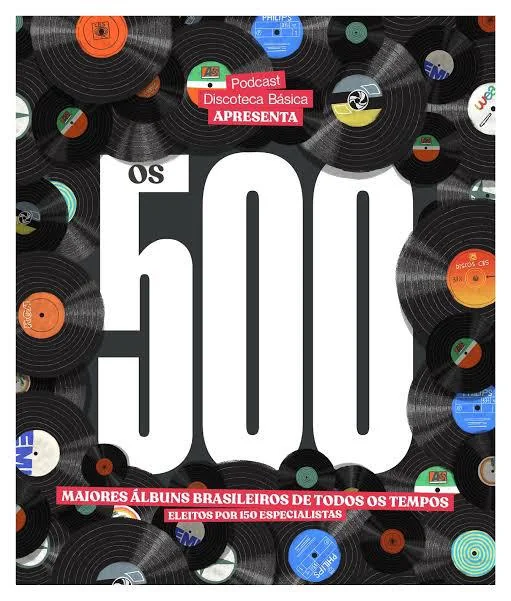
Os 500 Maiores Álbuns Brasileiros de Todos os Tempos
Ricardo Alexandre · 2022
The largest Brazilian music election ever conducted: 162 specialists, spanning journalists, critics, musicians, producers and podcasters, each nominated 50 essential albums, supported by a masterlist of more than 2,000 works. Led by Ricardo Alexandre with tabulation by Sérgio Jomori, it was published in December 2022 as a 200-page hardcover book with graphic design by Fernando Pires.

Gilberto bem perto
Gilberto Gil, Regina Zappa · 2013
There is probably no Brazilian who doesn't know who Gilberto Gil is or cannot recall offhand some of his most famous choruses. But, beyond knowing that Gil is a Bahian singer and songwriter, was one of the founders of Tropicália and even became Minister of Culture – what the general public knows of his life – this work seeks to delve deeper into his career, revealing lesser-known aspects of his life and discography.
Analyses
Um Banda Um – Wikipedia
Wikipedia, the free encyclopaedia
Um Banda Um: Gilberto Gil and Umbanda - Google Arts & Culture
artsandculture.google.com
Um Banda Um: Gilberto Gil and Umbanda Gil's connection to the afro-brazilian religion becomes an album.
Gilberto Gil - Um Banda Um - Monkeybuzz
monkeybuzz.com.br
Um Banda Um is the Bahian artist's lively celebration of what life has to offer. It encompasses the divine, the mysterious, faith, and the various possibilities of love. It is an album by a Gil who is unafraid to be happy or to show that happiness to the world.
Gilberto Gil - Um Banda Um (1982) - musicasdonordeste.net
musicasdonordeste.net
It was produced by Liminha (as was the previous album, Luar), and recorded between June and July 1982 by Warner Records. The album's most famous songs are Drão, Andar com Fé, and Esotérico, all heavily influenced by the reggae style.
Um Banda Um: Gilberto Gil e a Umbanda - Google Arts & Culture
artsandculture.google.com
In Um Banda Um, Gil hints at his relationship with Umbanda, a religion which, for him, was a kind of antechamber to the rites of Candomblé. The artist spoke about these matters, to...