Beleléu, Leléu, Eu
Itamar Assumpção
1980
Rankings
Why This Album Matters
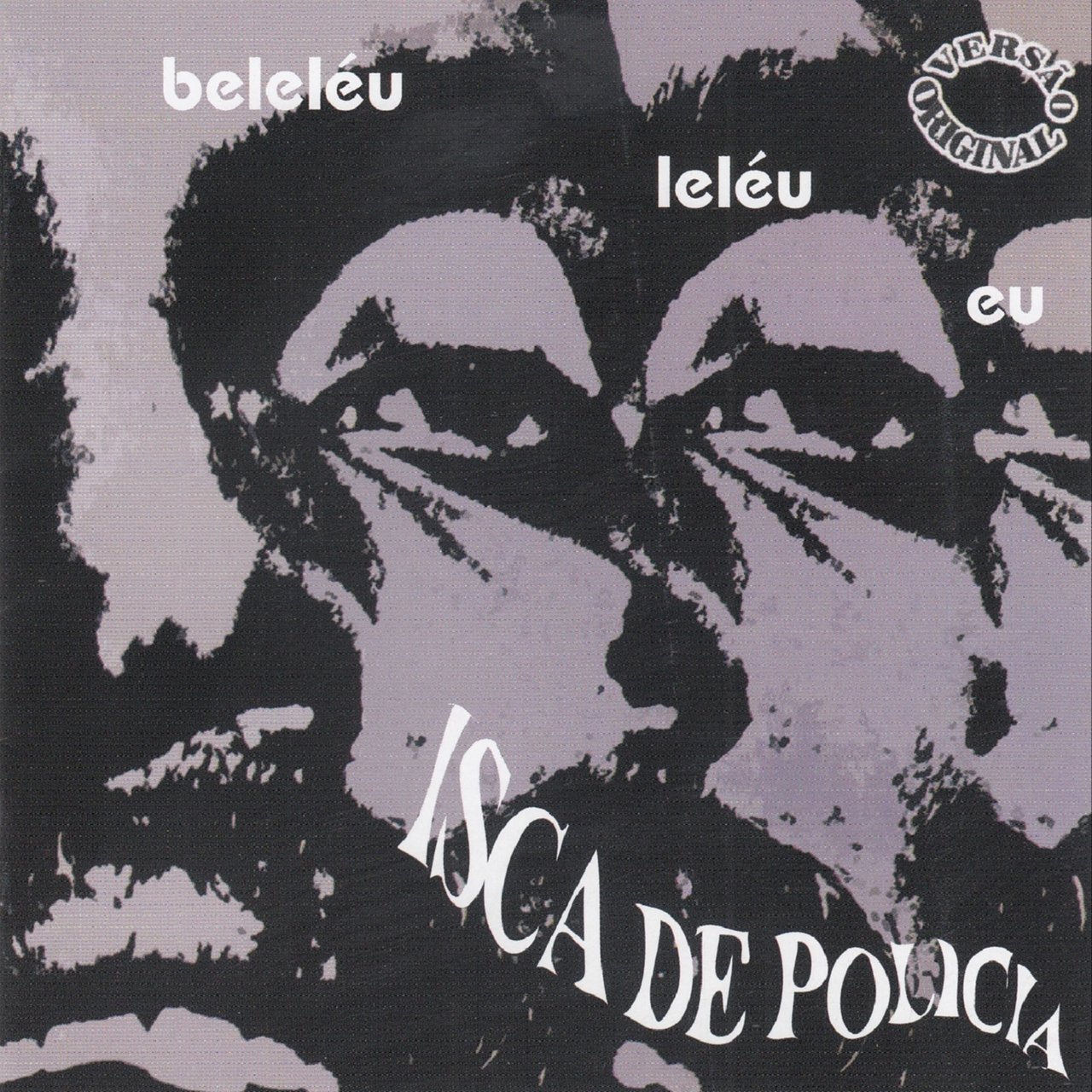
Beleléu, Leléu, Eu, Itamar Assumpção's debut album released in 1980 with the band Isca de Polícia, is a seminal work that redefined the contours of Brazilian popular music. Considered an unmissable milestone of the Vanguarda Paulistana, the album burst onto the music scene with a bold sonic proposal, mixing elements of MPB, soul, reggae, and jazz in a unique and intrinsically experimental way. Its arrival represented a break from the predominant musical aesthetic of the time, paving a singular path for the artist and for Brazilian music. This debut work is not only the singer's most famous, but also an artistic statement that exposes the full truth of Itamar Assumpção, with a rigour and frankness that make it perennially relevant. His compositions are a melting pot of influences, featuring unusual modulations, spoken word collages, complex vocal arrangements, and flirtations with atonal music, all wrapped in an art-rock attitude and a visceral performance delivery. It is an album that, as his daughter Anelis Assumpção rightly observed, possesses a robust literary construction, urban chronicles, and a deep, raw representation of the city of São Paulo, elements that guarantee its relevance even decades after its release.

The album would guarantee him a definitive place among the great Brazilian composers and the role of a destabiliser of the relationship between critics and the public.
Márcio Cruz · Rolling Stone Brasil
Context
Released at the height of the cultural effervescence of the Vanguarda Paulistana, between 1979 and 1985, Beleléu, Leléu, Eu emerged in a Brazil that was beginning to glimpse re-democratisation after years of military dictatorship. The movement, centred in São Paulo and with Teatro Lira Paulistana as one of its main strongholds, brought together artists who sought to break away from the control of the phonographic industry and the standards of hegemonic MPB, opting for independent production and a challenging aesthetic and political stance. Itamar Assumpção, born in Tietê in 1949, already had a rich trajectory before this album. After a youth in Londrina where he ventured into theatre, he moved to São Paulo in 1973, where he met and collaborated with Arrigo Barnabé. His figure, often associated with the alter ego 'Nego Dito', represented the Black and independent artist who challenged the impositions of the cultural industry, choosing creative autonomy as a pillar of his work. The formation of the band Isca de Polícia in 1979 was a crucial step, preparing the ground for the creative explosion of his first album.
Recording
Beleléu, Leléu, Eu is emblematic not only for its sound, but also for its genesis: it was released entirely independently in 1980, a distinctive hallmark of the Vanguarda Paulistana. The album marked the debut of the Lira Paulistana label, an initiative by producer Wilson Souto Jr. (known as 'Gordo'), who created the record company to release the works of artists connected to the theatre of the same name. Independent production, for the Vanguarda musicians, was not just a choice, but an aesthetic and practical necessity given the lack of interest from major record labels. The recording featured Itamar Assumpção himself in various roles, taking on vocals, bass, guitar, acoustic guitar, accordion, acoustic piano, drums, and percussion, demonstrating his versatility and creative control. Accompanying him, Isca de Polícia included Paulo Barnabé on drums and percussion (and accordion), Luis Lopes on acoustic and electric pianos, and Luiz A. Rondó Monteiro and Jean Trad on guitars. Additional vocals were performed by Mari (Maria Alice Souto), Gordo, Eliana, and Turcão, with Kiko and Pamps on double bass on some tracks. Itamar's daughter, Anelis Assumpção, reported that her father showed particular rigour in the production and recording of the songs on this first album, aiming for it to truly reflect his artistic vision.
Songs
The tracks on Beleléu, Leléu, Eu are a deep dive into Itamar Assumpção's complexity and originality. The album is interspersed with vignettes, a device that punctuates the album's sonic narrative. Songs like "Fico Louco" quickly stood out, even becoming a soap opera soundtrack, which attests to Itamar's melodic strength even within his experimental proposal. "Nego Dito", in turn, is an example of the persona Itamar constructed, with a striking chorus that evokes his alter ego and challenges passivity. Other compositions like "Embalos" express the sensations and challenges of everyday life in the São Paulo metropolis, revealing Itamar's ability to translate the urban experience into poetry and rhythm. His lyrics are frequently metalinguistic, addressing the composer's own concerns and the city's noise pollution. Itamar's work is characterised by rhythmic, melodic, and discursive superpositions, with vocal arrangements reminiscent of brass sections, breaks, and rhythmic interplay of an experimental groove, and even flirtations with atonal music. This structural complexity and richness of meaning make each listen a new discovery.

Ironically, he wanted to be a popular composer, but his work became associated with the "vanguarda paulista," the supposed movement that emerged in the late 1970s, which also supposedly included composer Arrigo Barnabé, musical groups like Rumo and Premeditando o Breque, and singers such as Eliete Negreiros and Tetê Espíndola, among other names, but which was never an articulated movement.
Carlos Calado · 300 Discos Importantes
Legacy
Beleléu, Leléu, Eu cemented Itamar Assumpção's status as a central and innovative figure in Brazilian music. His recognition was solidified with his inclusion on Rolling Stone magazine's list of the 100 Best Brazilian Music Albums, occupying the 86th position. The album also earned him the APCA Award for Male Revelation in 1981, an important recognition for his independent career. The album's impact is lasting, with several re-releases in different formats: on CD in 2000 by Baratos Afins/Atração Fonográfica and, subsequently, in 2010, as part of the Caixa Preta box set, released by Selo Sesc, which compiled his entire discography. The influence of Itamar Assumpção, manifest in this album, resonates through generations of artists, with his compositions being reinterpreted by names such as Cássia Eller, Zélia Duncan, who dedicated an entire album to his songs, Juçara Marçal, and Ney Matogrosso. "Beleléu, Leléu, Eu" not only opened Itamar's own path in Brazilian music but also remains relevant, traversing the years with its unique artistic vision and timeless representation of urban reality.
Tracks
Credits
Chico Pardal, Plínio Chaves, Wilson Souto Jr.
Wilson Souto Jr.
Itamar Assumpção
Eliana Ignácio, Maria Alice Souto, Sergio Feres, Wilson Souto Jr.
Kiko Tupinambá, Pamps
Paulo Barnabé
Jean Trad
Luiz Rondó
Luis Lopes
Helder Marques
José Oswaldo Martins
Gordo, Helder Marques, Itamar Assumpção
Nelson Rentero
A. C. Tonelli, Paulo Priolli
Videos
Itamar Assumpção - Beleléu, Leléu, Eu | ALBUM REVIEW
Som de Peso
Films

Books

Os 500 Maiores Álbuns Brasileiros de Todos os Tempos
Ricardo Alexandre · 2022
The largest Brazilian music election ever conducted: 162 specialists, spanning journalists, critics, musicians, producers and podcasters, each nominated 50 essential albums, supported by a masterlist of more than 2,000 works. Led by Ricardo Alexandre with tabulation by Sérgio Jomori, it was published in December 2022 as a 200-page hardcover book with graphic design by Fernando Pires.

300 Discos Importantes da Música Brasileira
Charles Gavin, Tárik de Souza, Carlos Calado, Arthur Dapieve · 2008
Conceived by Titãs drummer and musical researcher Charles Gavin, the 434-page book brings together covers and reviews of albums released between 1929 and 2007. The texts were written by journalists Tárik de Souza, Arthur Dapieve and Carlos Calado.
Analyses
Beleléu, Leléu, Eu – Wikipedia
Wikipedia, the free encyclopaedia
Beleléu, Leléu, Eu – The 100 Greatest Albums of Brazilian Music
Márcio Cruz · Rolling Stone Brasil
The album would guarantee him a definitive place among the great Brazilian composers and the role of a destabiliser of the relationship between critics and the public.

Itamar Assumpção - Beleléu e Banda Isca de Polícia 1980 (1998)
tabernanovostempos.blogspot.com
Itamar Assumpção: Beleléu, Leléu, Eu - The Creative Chaos that Defined the Paulista Avant-garde! "Beleléu, Leléu, Eu", Itamar Assumpção's debut album with Banda Isca de Polícia, released in 1980 and re-released in 1998, is a landmark of São Paulo's underground scene.
Museu Itamar Assumpção
itamarassumpcao.com
The first virtual museum of a Black Brazilian artist, the Museu Itamar Assumpção showcases the artist's collection, with over 2,000 works brought together, including paintings, music, objects, photographs, texts, videos, original costumes and accessories, from the most diverse phases of the musician and poet's life and career.