Bicho de Sete Cabeças
Itamar Assumpção
1993

Rankings
Why This Album Matters
Released in 1993, Bicho de Sete Cabeças is the first volume of a trilogy marking a period of intense renewal and experimentation in Itamar Assumpção's prolific career. The album, featuring the band As Orquídeas do Brasil, formed exclusively by women, solidifies Itamar's reputation as one of Brazilian music's most original and audacious creators, an artist who defies easy classification. In this work, Itamar delves into a radically artisanal sound, amalgamating samba, rock, funk, reggae, blues, and baião in a peculiar way, always maintaining his unmistakable musical signature. His compositions are an invitation to a dense poetic universe, packed with satire and social critique, where lyricism intertwines with urban everyday life and existential reflections. Bicho de Sete Cabeças is not just an album, but an artistic declaration reflecting Itamar Assumpção's creative freedom. His eccentric, synthetic, and theatrical musicality, combined with lyrics that eschew clichés, makes this album a fundamental piece for understanding the singularity of one of MPB's greatest innovators.
Context
Itamar Assumpção, born in Tietê, São Paulo, in 1949, and based in Londrina, Paraná, before moving to São Paulo in 1973, established himself as a central figure of the Vanguarda Paulista. This cultural movement, which flourished at the Teatro Lira Paulistana, was a breeding ground for artists seeking independent and experimental musical expression, distant from commercial circuits. Before Bicho de Sete Cabeças, Itamar had already independently released significant albums, such as Beleléu leléu eu (1980), Às Próprias Custas S.A. (1983), and Sampa Midnight (1986), frequently accompanied by the band Isca de Polícia. Throughout his career, he earned the moniker of "MPB's enfant terrible" for his refusal to make concessions to market trends, cultivating an authorial and uncompromising body of work.
Recording
The album Bicho de Sete Cabeças was released by the independent label Baratos Afins, a partnership that was already a hallmark of Itamar Assumpção's trajectory with autonomous production, outside of major conglomerates. Production was handled by Luiz Calanca, a figure known for his involvement with São Paulo's independent music scene. One of the most distinctive aspects of the project is the accompaniment by the band As Orquídeas do Brasil, composed exclusively of women, which added a singular layer of voices and instrumentation to the album's sound. The Orquídeas, whose members included Cibele Cássia, Tatá Fernandes, Míriam Maria, Nina Blauth, Simone Julian, Lelena Anhaia, Geórgia Branco, Simone Soul, Clara Bastos, and Adriana Sanchez, were essential in creating the peculiar atmosphere of the albums. Itamar's meticulousness also extended to the work's visual aesthetics. The album's liner notes, for example, featured the song lyrics and full technical credits in handwritten script, a detail that reinforced the artisanal and personal character of the work. Furthermore, the cover and liner notes used collage techniques and symbol overlay, with a language that evoked Afrofuturism.
Songs
The Bicho de Sete Cabeças trilogy, of which this album is the first volume, encompasses a total of 22 compositions that explore the lyrical and musical richness of Itamar Assumpção. Among the songs, collaborations with important names in Brazilian poetry and music stand out, such as Alice Ruiz on tracks like "Vou Tirar Você Do Dicionário", "Milágrimas", and "Tua Boca", and Paulo Leminski on "Custa Nada Sonhar". The album is also enriched by notable special appearances, including Jards Macalé on "Estrupício", Tom Zé on "É Tanta Água", and Ná Ozzetti on "Quem Canta Seus Males Espanta", all of whom contribute to the work's diversity and sonic depth. Itamar's lyrics, often metalinguistic, reflect his concerns as a composer and are permeated by satire and social critique, avoiding clichés and obvious statements. Musically, the compositions display a remarkable rhythmic variety, transitioning between funk, samba, soul, reggae, rock, blues, and baião, without falling into opportunistic eclecticism. The voices of As Orquídeas do Brasil complement Itamar's interpretation, often in provocative dialogues, reinforcing the theatrical impact of the songs. "Onda Sertaneja", for example, humorously satirises the commercialisation of popular music.
Legacy
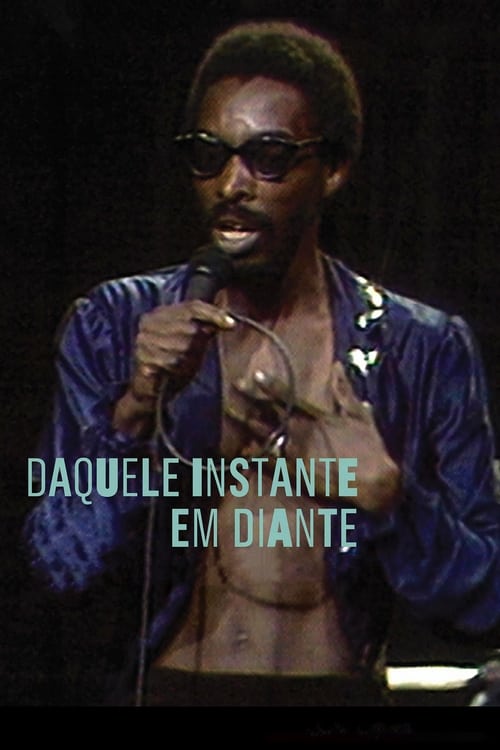
Bicho de Sete Cabeças and the trilogy that succeeds it are considered seminal works and an essential landmark of the Vanguarda Paulistana, reaffirming Itamar Assumpção as an inescapable figure in the history of Brazilian music. While this specific album is not explicitly cited with sales awards, the critical reception of Itamar's work and his recognition by the APCA (Associação Paulista de Críticos de Arte) with the Best Composer award in 1998 and Best CD of the Year in 1996, for Ataulfo Alves por Itamar Assumpção – pra sempre agora, attest to the importance of his output. His influence is undeniable, with songs interpreted by great names in MPB, such as Ney Matogrosso, Cássia Eller ("Já deu pra sentir" and "Aprendiz de Feiticeiro"), Monica Salmaso, and Zélia Duncan ("Código de Acesso"). The relevance of his discography was reinforced with its complete re-release by Selo Sesc in 2010. Documentaries such as Daquele Instante em Diante (2011) and studies on his work continue to cement his place as one of the most singular and influential geniuses of Brazilian popular music.
Tracks
Credits
Itamar Assumpção
Miriam Maria, Nina Blauth, Tata Fernandes
Itamar Assumpção
Simone Julian
Simone Julian
Simone Soul
Clara Bastos, Lelena Anhaia, Mário Campos
Adriana Sanchez
Nina Blauth
Videos
BICHO DE SETE CABEÇAS | Crítica do Filme | Cinema Nacional #3
16 mm
Films

Books
Analyses
Lp Bicho De Sete Cabeças Vol. Ii (1993) - Itamar Assumpção E As ...
avozdovinil.com
"Bicho de Sete Cabeças Vol. II" is the sixth studio album by São Paulo singer and songwriter Itamar Assumpção (1949-2003), released in 1993 by the Baratos Afins label.
Bicho De 7 Cabeças Volume 1 | Itamar Assumpção
itamar-assumpcao.bandcamp.com
Bicho De 7 Cabeças Volume 1 by Itamar Assumpção? Straight fire. Raw, wild, genius. Listen online now and feel that São Paulo pulse. You need this noise in your ears - it's not MPB, it's more. Download it before it vanishes again. Dude was decades ahead, blending samba, rock, jazz like nobody's business. And the lyrics? Savage.

Itamar Assumpção - Bicho de Sete Cabeças, Vol. 1 (1993)
liricoleminski.blogspot.com
Concluding Itamar Assumpção's albums that feature songs by Leminski, as well as collaborations, I present the first in the Bicho de Sete Cabeças series. On this album, we can hear the song Custa Nada Sonhar, a collaboration between the two artists.
Itamar Assumpção E As Orquideas Do Brasil - Bicho De Sete Cabeças (1993)
toque-musicall.com
According to the liner notes, the 'note to listeners', this album is the first part of the "Bicho de Sete Cabeças" trilogy, all recorded in 1993. On this first album, Itamar is very much at ease, showcasing his compositions and collaborations. Only the track "Balaio" is not his own work.

Itamar Assumpção - Bicho de 7 Cabeças VOL. I [1993]
portrasdavitrola.blogspot.com
The interaction between Itamar Assumpção's own voice, distinctive rather than deep, and the much lighter voices of the female choir floating over the sound of the almost always present tinkling piano, creates an interesting atmosphere on this thoroughly enjoyable album.