Vibrações
Jacob do Bandolim & Conjunto Época de Ouro
1967
Rankings
Why This Album Matters
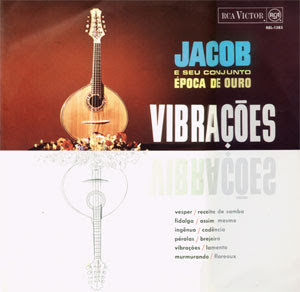
Vibrações, released in 1967 by Jacob do Bandolim and his Conjunto Época de Ouro, is widely considered the masterpiece and most representative album of the mandolinist's career. This album is a landmark in the history of Brazilian instrumental music, solidifying the classic formation of the choro regional ensemble and elevating the genre to an unparalleled level of expressiveness and sophistication. The album is a celebration of Jacob's virtuosity on the mandolin, an instrument he practically institutionalised as an essential component in choro ensembles. Through its impeccable execution and carefully selected repertoire, Vibrações reaffirms Jacob's passionate defence of genuine choro. The album demonstrates his perfectionism and his ability to extract from the mandolin a mournful sound, yet one of rare beauty and technical refinement, characteristics that make him one of the greatest icons of choro alongside Pixinguinha.
Context
Jacob do Bandolim was a strong personality in the Brazilian music scene, known for his perfectionism and his intransigent defence of choro. He viewed the modernisations of Brazilian popular music with reservations, fearing an 'Americanisation' of choro, although he harboured admiration for songs such as 'Chega de Saudade', a Bossa Nova classic. In the effervescence of the 1960s, with the rise of new genres and young people drawn to foreign fads, Jacob actively fought for the preservation and renewal of choro. He promoted rodas and saraus across Brazil, seeking to keep the genre alive and relevant. Conjunto Época de Ouro, although its musicians had already accompanied Jacob in previous works, was officially christened in 1964, with its classic formation solidified in the period preceding the recording of Vibrações.
Recording
The album Vibrações was released in 1967 by the RCA record label. The line-up of Conjunto Época de Ouro that accompanied Jacob do Bandolim on this historic recording included prominent instrumentalists such as Dino 7 Cordas on the seven-string guitar, César Faria and Carlinhos Leite on the six-string guitars, Jonas Pereira da Silva on the cavaquinho, and Gilberto D'Ávila on the pandeiro. Jorginho also contributed percussion on some tracks. Jacob had a habit of extensively recording his performances, including radio programmes and even informal gatherings at his home. This practice contributed to the album featuring recordings with a relaxed and organic feel, reminiscent of the atmosphere of a choro roda, which gives the album a particular authenticity.
Songs
The repertoire of Vibrações is a careful selection that blends compositions by great choro figures with works by Jacob do Bandolim himself. The album features three previously unreleased songs by Jacob, including the title track, 'Vibrações', which stands out for a mandolin solo of rare beauty and technical refinement. Other compositions of his on the album are 'Receita de Samba' and 'Pérolas', both considered to have great melodic and harmonic depth. The album also revives and reinterprets classics by masters such as Pixinguinha, Ernesto Nazareth, and Luiz Americano. Jacob's version of 'Ingênuo', by Pixinguinha and Benedito Lacerda, is notable for establishing an engaging instrumental dialogue between his mandolin and the guitar of Conjunto Época de Ouro, reinterpreting the dynamics of the original recording. 'Brejeiro', by Ernesto Nazareth, is another highlight, with Jacob transforming the original tanguinho into a lively and relaxed choro, creating a version that would become definitive. The album also features gems such as 'Lamentos' by Pixinguinha and waltzes by Nazareth, like 'Fidalga' and 'Vésper', demonstrating the versatility of Jacob's mandolin.
Legacy
Vibrações is universally recognised as the last and best album of Jacob do Bandolim's career, consolidating his position as one of the greatest instrumentalists in Brazilian music. The album not only became an essential record of choro but also cemented the structure and language of regional ensembles, setting a standard for the performance of the genre. After Jacob's passing in 1969, Conjunto Época de Ouro continued its activities, with the mission of preserving and propagating the legacy of genuine choro, keeping alive the school and style defined by Jacob. The influence of the album and Jacob do Bandolim's work is felt to this day, with Época de Ouro perpetuating his approach without intending to modernise choro in a way that distorts its character, but rather to preserve its essence and excellence.
Tracks
Books
Analyses

"Vibrações" (RCA, 1967), Jacob do Bandolim & Época de Ouro
discosessenciais.blogspot.com
That only happened in 1967, precisely with the last and considered best album of Jacob's career: Vibrações. The cover bears the inscription "JACOB E SEU CONJUNTO ÉPOCA DE OURO".
.: interlúdio :. Raphael Rabello & Dino 7 Cordas - Vibrações (Jacob ...
pqpbach.ars.blog.br
Jacob Pick Bittencourt, known as Jacob do Bandolim, was famous and innovative, introducing new elements to Choro. This album features the first lineup of the Época de Ouro ensemble and was recorded in 1967, shortly before Jacob's death.
VIBRAÇÕES - JACOB DO BANDOLIM e CONJUNTO ÉPOCA DE OURO
cliquemusic.com.br
Jacob do Bandolim / Dino 7 Cordas / Época de Ouro (1967) 1967 RCA Camden BBL 1383 Faixas 1 Vibrações (Jacob Bittencourt) 2 Receita de samba (Jacob Bittencourt) 3 Ingênuo (Benedito Lacerda, Pixinguinha) 4 Pérolas (Jacob Bittencourt) 5 Assim mesmo (Luis Americano) 6 Fidalga (Ernesto Nazareth) 7 Lamento (Pixinguinha) 8 Murmurando (Fon)