Jacob do Bandolim
Jacob do Bandolim
2000
Rankings
Why This Album Matters
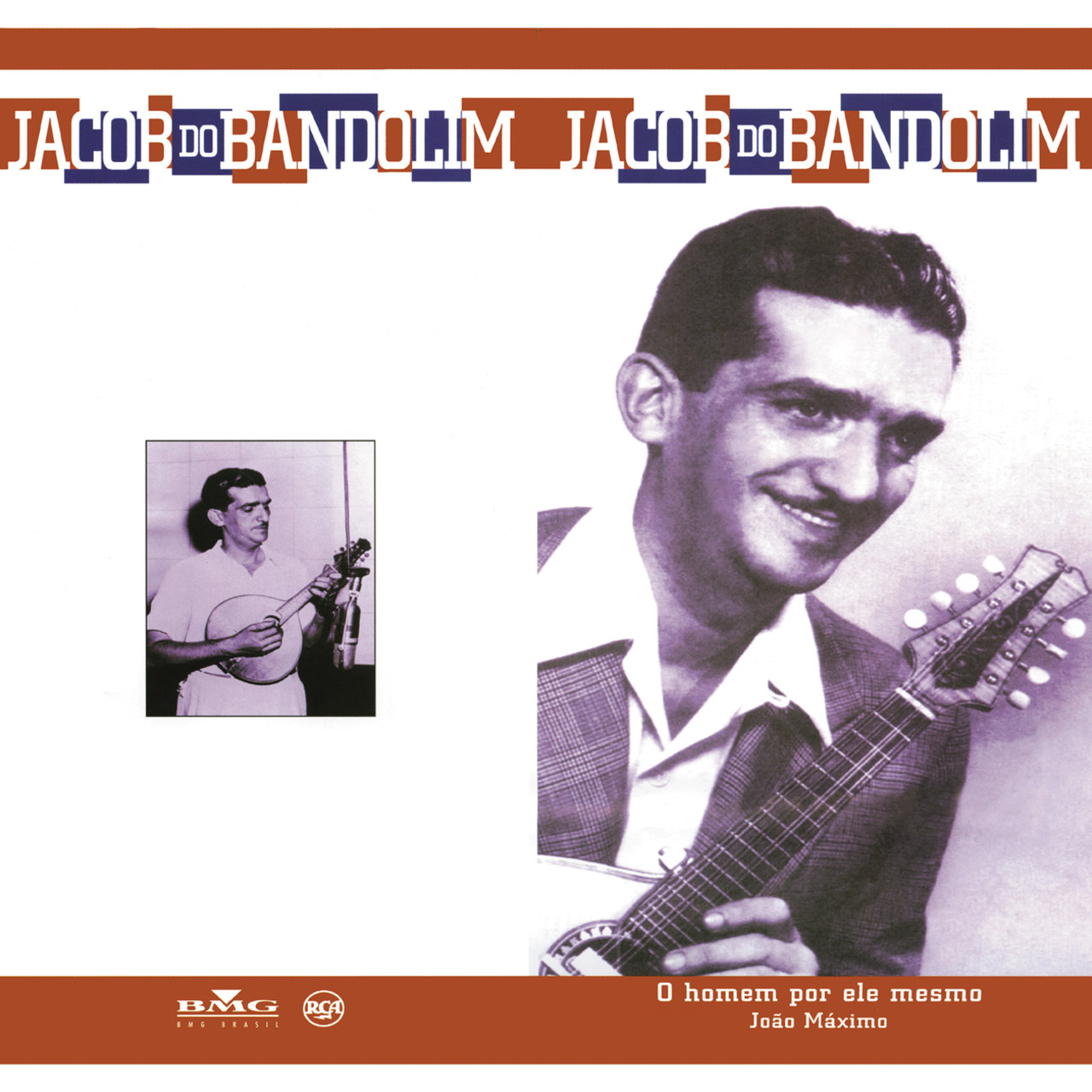
The album Jacob do Bandolim, released in 2000, represents an essential collection celebrating the work of one of Brazilian music's greatest instrumentalists and composers. This release, often in the form of box sets or remastered compilations, offers a deep immersion into the world of choro, a genre of which Jacob Pick Bittencourt, known as Jacob do Bandolim, was an undeniable master. He is widely recognised as the greatest mandolin player Brazil has ever produced and one of the most prolific choro composers. Through his virtuosic technique and a profound understanding of choro, Jacob do Bandolim transformed the role of the mandolin, elevating it from an accompanying instrument to a central protagonist. His approach, which combined classical precision and popular expressiveness, is a landmark in the history of Brazilian instrumental music, making this album an indispensable entry point for understanding the richness and complexity of choro. The recordings featured in these 2000 editions, spanning his period of greatest activity between 1949 and 1969, reveal Jacob's genius in combining ornamentation and virtuosity with lyrical melodies and sophisticated harmonies. It is a testament to his tireless pursuit of perfection and his dedication to the preservation and evolution of choro, without it losing its essential characteristics.
Context
Jacob do Bandolim was active in the 1940s, 1950s, and 1960s, a period of cultural effervescence in Brazil. Born in 1918 in Rio de Janeiro, he began his musical journey as a child, self-taught on the mandolin from the age of 12. By 15, he was already performing on radio programmes, and in a short time, his musical ensembles were winning competitions, judged by leading names in choro. Surprisingly, Jacob and his bandmates did not rely on music for their livelihood. Jacob held various professions, such as pharmacist, insurance salesman, and court clerk, while dedicating himself entirely to music. This passion and commitment to choro, detached from direct commercial pressures, allowed him to develop a constant process of research and refinement, culminating in the formation of groups like the celebrated Época de Ouro in the 1960s.
Recording
The recordings that make up the 2000 compilations of Jacob do Bandolim were made between 1949 and 1969, a period during which the artist signed a contract with RCA Victor in 1949, recording throughout his career under this label. Although the liner notes of the 2000 compilations do not always credit all participating musicians, it is known that Jacob valued quality and professionalism in his ensembles. A notable example of his pursuit of excellence is the group Época de Ouro, formed in 1966, with whom he recorded the LP Vibrações, considered by many to be one of the highlights of his career. Jacob was a perfectionist, who demanded the highest level of quality from his musicians and valued an impeccable performance, combatting the stereotype of the 'dishevelled, drunken folk musician'. He was also a tireless researcher, seeking to innovate in sound and improve his musical archives, even inventing instruments such as the vibraplex, which combined a tenor guitar with a Hammond organ to obtain sounds reminiscent of modern synthesizers.
Songs
The 2000 compilations bring together the most expressive works of Jacob do Bandolim, featuring his iconic compositions and interpretations that defined choro. Among the standout tracks, we find classics such as "Noites Cariocas", with its lyrical melodies that evoke the spirit of Rio de Janeiro, and "Assanhado", which displays a rhythmic vigour and melodic complexity reminiscent of bebop. Other notable compositions present in these albums include "Vibrações", a work that became synonymous with Jacob himself and the spirit of Brazilian choro, and "Doce de Coco", which reveals his melodic flair. Also worth mentioning are "Nostalgia" and "Pé de Moleque", which demonstrate the diversity of his compositional technique and the emotional depth of his music. His music is characterised by fast sixteenth-note scales and arpeggios, combining influences from Portuguese guitar and jazz, in addition to exploring the original harmonies of Brazilian music.
Legacy
Jacob do Bandolim's legacy is immeasurable for Brazilian music, and the 2000 editions of his albums serve as a perennial reminder of his importance. He is considered one of the most important figures in choro and left a heritage of recordings and over 100 compositions. His influence extends to generations of choro musicians, who consider him a musical reference, and the mandolin in choro is intrinsically linked to his name. Beyond his instrumental and compositional mastery, Jacob was a tireless researcher, responsible for reviving and preserving the work of other great masters, such as Ernesto Nazareth and João Pernambuco. His vast archive of records, sheet music, photographs, and journalistic articles, known as "Arquivo Jacob", was later incorporated into the collection of the Museu da Imagem e do Som do Rio de Janeiro. After his death in 1969, the ensemble Época de Ouro disbanded, but reconvened in 1973 and had a significant impact on the renaissance of choro in Brazil during the 1970s, continuing to be active to this day.