Caça à Raposa
João Bosco
1975

Rankings
Why This Album Matters
Released in 1975, Caça à Raposa is the second album by the renowned musician João Bosco and an essential milestone in Brazilian Popular Music. This work solidified the emblematic partnership of the singer-songwriter with the lyricist Aldir Blanc, responsible for all the album's lyrics, a collaboration that would become one of MPB's most prolific and significant. The album is a vivid portrait of 1970s Brazil, combining Bosco's melodic sophistication with Blanc's social and political chronicles, which addressed themes such as urban violence, the military dictatorship and popular culture with acidity and poetry. "Caça à Raposa" is notable for featuring several compositions that became pillars in João Bosco's career and in the repertoire of Brazilian music. Tracks such as "O Mestre Sala dos Mares", "De Frente pro Crime" and "Dois Pra Lá, Dois Pra Cá" are examples of the artistic strength contained within the album. The undeniable quality of this material is underlined by the fact that Elis Regina, one of the country's greatest interpreters, had already recorded and would later re-record a good portion of the songs, attesting to the lasting impact and relevance of Bosco and Blanc's songbook.
Context
João Bosco de Freitas Mucci, born in 1946 in Ponte Nova, Minas Gerais, began his musical journey at a young age, playing the guitar at twelve and absorbing influences from jazz, bossa nova and tropicalismo. His career began to take shape with the meeting with Vinicius de Moraes in 1967, resulting in compositions such as "Samba do Pouso" and "O Mergulhador". However, the definitive partnership for MPB happened with Aldir Blanc, initiated in 1970, which yielded over a hundred songs. Before Caça à Raposa, Bosco released his first LP in 1973, and his compositions had already been popularised by Elis Regina, who recorded hits such as "Bala com Bala" (1972) and "Dois Pra Lá, Dois Pra Cá" (1974), boosting the duo's visibility. The album emerged in 1975, a particularly fertile and challenging period for MPB, which found ways to express itself diversely and provocatively amidst the context of the Brazilian Military Dictatorship.
Recording
The album Caça à Raposa was recorded in 1975 at RCA Victor studios, located in Rio de Janeiro, utilising a 16-channel structure for production. The artistic coordination and studio direction were overseen by Rildo Hora, a prominent figure in Brazilian music, while the arrangements, conducting and keyboards were masterfully executed by César Camargo Mariano. The team of musicians who participated in the project was of high calibre, including Hélio Delmiro and Toninho Horta on guitars, Dino Sete Cordas on the seven-string guitar, Luizão Maia on electric bass, Pascoal Meirelles on drums and percussionists such as Chico Batera, Everaldo Ferreira and Gilberto D'Ávila. Despite the presence of so many talents, João Bosco's guitar, with its blend of baroque Mineiro, African, Arab, Iberian and Carioca influences, remained the central instrument of the work. The album's cover art was by the Gaúcho illustrator Glauco Rodrigues.
Songs
Aldir Blanc's lyrics in Caça à Raposa are notable for their ability to create incisive and multifaceted chronicles, which precisely detail the cultural landscape and reality of the Brazilian suburb. The opening track, "O Mestre Sala dos Mares", is an eloquent tribute to João Cândido, the 'Black Admiral', leader of the 1910 Revolta da Chibata, and, even with adaptations imposed by censorship, denounces the historical oblivion and lack of recognition of this revolutionary figure. "De Frente Pro Crime" is a direct and forceful portrayal of the growing urban violence and the subsequent exploitation of this reality in large cities. The bolero "Dois Pra Lá, Dois Pra Cá" explores romantic nostalgia, narrating the sensations evoked by memories of an old ballroom dance partner. In "Jardins da Infância", the innocence of children's games is re-signified and contrasted with the environment of repression and torture experienced in Brazil during the Military Dictatorship, giving the lyrics a tone of veiled social criticism. Other standout tracks include "Escadas da Penha", which delves into a crime of passion permeated by religious elements and popular beliefs, and "Bodas de Prata", which addresses a woman's frustration in the face of marital betrayal. The title track, "Caça à Raposa", uses the analogy of the hunt to symbolise the incessant search for desires and the cyclical nature of new beginnings in human life. Meanwhile, "Kid Cavaquinho" and "Casa de Marimbondo" celebrate samba as a powerful tool for resistance and sociocultural provocation, while "Nessa Data" exposes the political, cultural and social contrasts and tensions of Brazil at the time.
Legacy
Originally released on LP in 1975 by RCA, the album Caça à Raposa was later re-released on CD in 1989 and again in 1996. Over the decades, the work consolidated itself as one of João Bosco's most important albums, recognised as a perceptive musical chronicle of the social and political tensions that permeated urban Brazil in the 1970s. The album's relevance is attested by its reception in various reviews: in a poll of 162 music specialists promoted by the podcast Discoteca Básica, Caça à Raposa ranked 92nd among the most important Brazilian albums. On the website BestEverAlbums.com, the album is classified in the top 5% of all albums, and occupies the 350th position among 1975 releases, demonstrating its enduring critical appreciation. The presence of several of its compositions in Elis Regina's repertoire, who recorded a good portion of the tracks, is a definitive testament to the quality and cultural impact that the songs by João Bosco and Aldir Blanc had on MPB.
Tracks
Credits
Aldir Blanc
João Bosco
Joab Teixeira, Raymundo Bittencourt
Dino 7 Cordas
Luizão Maia
Neco
Pascoal Meirelles
Hélio Delmiro, Toninho Horta
César Camargo Mariano
Chico Batera, Everaldo Ferreira
Gilberto D'Avila
Doutour
Hélio Delmiro
José Oswaldo Martins
Luiz Carlos T. Reis
Carlos Guarany
Rildo Hora
Ney Tavora
Glauco Rodrigues
Ivan Klingen
Books

João Bosco
Regina Carvalho · 2023
The biography of João Bosco, which narrates his trajectory from Ponte Nova, Minas Gerais, his Civil Engineering studies, and his move to Rio de Janeiro to pursue a musical career with encouragement from Vinicius de Moraes and Elis Regina, comprehensively addressing his life and work.
Álbum 2 - 1972 a 1978
Pedro Alexandre Sanches · 2022
Part of the acclaimed 'Álbum' series, this volume explores the history of Brazilian music through in-depth analyses of albums released between 1972 and 1978. It is highly likely to include a detailed analysis of João Bosco's album 'Caça à Raposa', released in 1975, placing it within the context of MPB of that period.
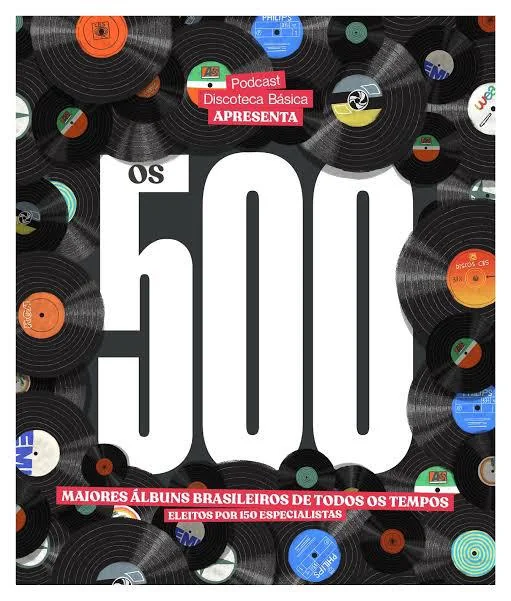
Os 500 Maiores Álbuns Brasileiros de Todos os Tempos
Ricardo Alexandre · 2022
The largest Brazilian music election ever conducted: 162 specialists, spanning journalists, critics, musicians, producers and podcasters, each nominated 50 essential albums, supported by a masterlist of more than 2,000 works. Led by Ricardo Alexandre with tabulation by Sérgio Jomori, it was published in December 2022 as a 200-page hardcover book with graphic design by Fernando Pires.
João Bosco, Galos de Briga
Charles Gavin, João Bosco, Rildo Hora, Guinga · 2015
This work delves into João Bosco's unique vocal style and guitar technique, qualities recognised by musicians and academics. With a title alluding to the album 'Galos de Briga' (released soon after 'Caça à Raposa'), it is a musical analysis that addresses the artist's rhythmic originality and creativity during a period of intense production and invention, being fundamental to understanding the sound of 'Caça à Raposa'.
Analyses
Caça à Raposa – Wikipedia
Wikipedia, the free encyclopaedia
Álbum que deu voz a João Bosco faz 50 anos como crônica afiada ... - G1
g1.globo.com
Released in 1975, the album that gave voice to João Bosco, Caça à raposa, celebrates its 50th anniversary in 2025 as a sharp chronicle of the social and political violence in urban Brazil of the 1970s.
Caça à Raposa faz 50 anos: álbum que projetou João Bosco permanece ...
redefanfm.com.br
Rio de Janeiro - Released in 1975 by RCA, João Bosco's album Caça à Raposa celebrates its 50th anniversary in 2025, maintaining its title as a sharp musical chronicle of the political and social violence that marked urban Brazil in the 1970s.

TEM QUE OUVIR: João Bosco - Caça à Raposa (1975)
paisdobaurets.blogspot.com
Ultra-creative and combative music. There's something of a serenade in "Jandira da Gandaia", one of the album's most poetic compositions, carried by voice and guitars. The modern samba "Casa de Marimbondo", however, features the full band, performing with perfection and crystal-clear recording.
Discoteca Básica Bizz #203: João Bosco - Caça à Raposa (1975)
collectorsroom.com.br
It is from this cultural melting pot that Caça à Raposa emerges, the first great album from one of MPB's most important partnerships: that of guitarist and former engineer João Bosco with lyricist and former doctor Aldir Blanc.