Chega de Saudade
João Gilberto
1959

Rankings
Why This Album Matters
Released in March 1959, Chega de Saudade, João Gilberto's debut album, was not just a record, but a foundational landmark for Brazilian and world music. It solidified João's revolutionary guitar 'batida' (beat) and his whispering, intimate singing, elements that together gave definitive shape to bossa nova. The eponymous title track, composed by the iconic partnership of Antônio Carlos Jobim and Vinicius de Moraes, launched Gilberto's career and introduced to the public a new movement that would forever change Brazil's soundscape and spread across the planet. This singular work is recognised as the starting point of the genre, which combined the harmonic sophistication of jazz with the cadence and swing of Rio samba. João Gilberto's innovative approach, with his guitar functioning almost like a small orchestra and his voice softly overlaid, created an original and modern sound, redefining the role of the interpreter in popular music and establishing an aesthetic standard that would reverberate for decades.

It is no exaggeration to compare João Gilberto to The Beatles. Both artists invented the musical universe we inhabit today, creating sonic amalgamations that shaped the ears of the second half of the 20th century.
Alexandre Matias · Rolling Stone Brasil
Context
In the late 1950s, Brazil experienced a period of optimism and development, propelled by the government of Juscelino Kubitschek and his slogan 'fifty years in five'. The musical scene, however, was often described by some as stagnant or dominated by samba-canção, with its dramatic lyrics and powerful vocal interpretations. João Gilberto, a musician from Bahia with a singular vision, spent years dedicating himself to the study of the guitar, seeking a new expressive path. He 'exiled' himself from the Rio de Janeiro scene between 1955 and 1957 to refine his technique and develop the sound that would make him famous. Upon returning to Rio de Janeiro in 1957, he brought with him the essence of bossa nova, a style that, although already rehearsed in restricted circles, needed his voice and guitar to be fully revealed.
Recording
The recording sessions for Chega de Saudade, held at Odeon Studios in Rio de Janeiro between July 1958 and February 1959, were as innovative as they were challenging. João Gilberto, known for his perfectionism, insisted on details that, for the time, were unusual. He demanded two microphones: one dedicated to his voice and another to his guitar, seeking a sonic balance where both had the same volume, in contrast to the usual practice of highlighting the voice. This incessant search for the ideal sound resulted in numerous interruptions, with João correcting the orchestra musicians for every mistake, which generated tension in the studio and at times led musicians to abandon the sessions. Antônio Carlos Jobim, who acted as musical director and arranger, played a crucial role in mediating and bringing Gilberto's vision to fruition. His influence on the arrangements, allied with Milton Banana's rhythmic precision on percussion, was fundamental in shaping the clean, stripped-back sound that would become the hallmark of bossa nova.
Songs
Chega de Saudade presents a repertoire that would become the backbone of the new genre, blending traditional sambas with original compositions that defined the bossa nova aesthetic. The title track, "Chega de Saudade", written by Jobim and Vinicius de Moraes, exemplifies the melodic and harmonic sophistication of the movement, with a melody that subtly transitions between minor and major. João Gilberto's interpretation, with his soft, almost whispering voice, contrasted drastically with the more potent and dramatic singing of the samba-canção predominant at the time, introducing an intimacy and a colloquial tone never before seen. Other notable tracks include "Desafinado", which became a bossa nova anthem, satirising those who did not understand the harmonic complexity of the new style. Songs such as "Bim Bom" and "Hô-bá-lá-lá", authored by João Gilberto himself, demonstrate the lightness and swing of his guitar 'batida' (beat), which combined samba rhythm with jazz chords and melodic inventions. The album also explores everyday themes and melancholic romances, enveloped by minimalist instrumentation that emphasised clarity and simplicity.

João Gilberto is a 27-year-old Bahian 'bossa nova' artist. In a very short time, he influenced an entire generation of arrangers, guitarists, musicians, and singers.
Tárik de Souza · 300 Discos Importantes
Legacy
Since its release between 8 and 12 March 1959, Chega de Saudade was critically acclaimed. The newspaper O Estado de S. Paulo highlighted João Gilberto's good taste and sobriety, praising his interpretation of "Desafinado". The album not only launched the artist's career, but also cemented bossa nova as one of the most important genres in popular music, remaining in the catalogue for 31 consecutive years. Its repercussions transcended Brazilian borders, leading the country's popular music to international recognition. The album's impact is undeniable, influencing generations of Brazilian artists, from Caetano Veloso and Gilberto Gil to Chico Buarque, and serving as a fundamental reference for Música Popular Brasileira (MPB) itself. Its historical and artistic value was officially recognised with its induction into the Grammy Hall of Fame and as one of the inaugural members of the Latin Grammy Hall of Fame in 2001. In 2007, the Brazilian version of Rolling Stone magazine elected it the fourth best Brazilian album of all time, solidifying its permanent place in music history.
Tracks
Credits
Antonio Carlos Jobim
Podcasts

The Jazz Real Book · Jay Sweet
58-João Gilberto “Chega de Saude (No More Blues)” Standards Rating 7 Difficulty Rating 7 João Gilberto (1931–2019), known as the "father of bossa nova," revolutionized Brazilian music with his innovative guitar techniques and understated vocal style. His 1959 album Chega de Saudade marked the birth of bossa nova, blending samba rhythms with jazz harmony and syncopation. The album’s title track,
Discoteca Básica Podcast · Parasol Storytelling
A REVOLUÇÃO DO SILÊNCIO. Eleito o terceiro melhor álbum brasileiro de todos os tempos pelo júri reunido pelo “Discoteca Básica”, Chega de Saudade continua tão assustadoramente refrescante quanto no Brasil de 1959. Convidado do episódio: Edu Lobo Assinante do Clube Discoteca Básica tem conteúdo complementar. Nesta semana, abrimos para ninguém menos do que Roberto Menescal dez dos discos de bossa
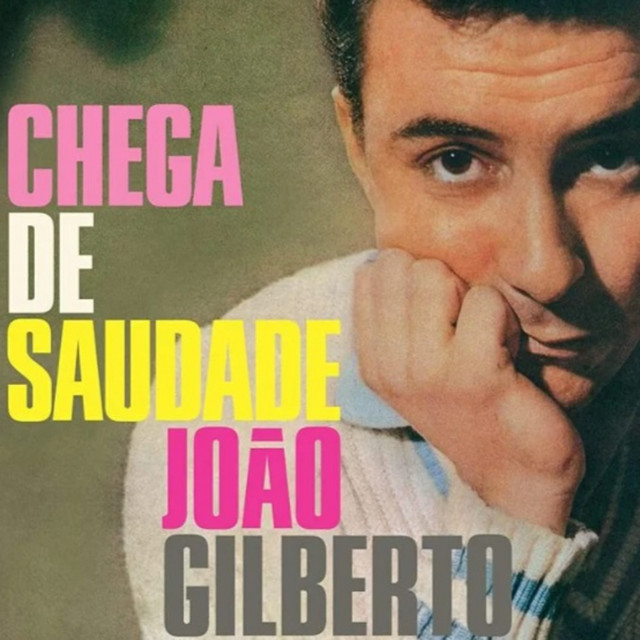
Músicas e suas Histórias · Músicas e Suas Histórias
Gostou?Para saber mais acesse o Canaldo YouTube: Músicas e Suas Histórias:https://www.youtube.com/channel/UCBbOHBkyr3Aj5ITUqG_gADw/featured

Rádio Brasil MPB · Radio Brasil MPB
Qual é a importância do Clube da Chave em uma das formações mais importantes da Música Popular Brasileira? "CantaCrônica" é uma produção da Rádio Brasil MPB. Apresentação: Marcos Massolini Trabalhos técnicos: Léo Engelmann "CantaCrônica" vai ao ar toda sexta-feira ao meio-dia; reprise à 1h de segunda-feira. Acesse e ouça antes: www.radiobrasilmpb.com.br

SILVAMUSICPODCAST · HEBERT SILVA ARAÚJO
O texto apresenta a trajetória de João Gilberto, músico baiano fundamental para a história da cultura brasileira e reconhecido como o criador da Bossa Nova. A biografia detalha sua juventude, o início da carreira em rádios e seu perfeccionismo técnico revolucionário ao integrar voz e violão de forma inovadora. O conteúdo destaca marcos importantes, como o lançamento do álbum Chega de Saudade e o s
Videos
CHEGA DE SAUDADE (1959): PROFª DRª CLAUDIA N. MATOS (UFF) - CURSO DE EXTENSÃO DOZE LPS + UM BÔNUS
Literaturas, Linguagens e Contextos - UFRRJ
Chega de Saudade: O Impacto Revolucionário de João Gilberto na Música Brasileira
Pitadas do Sal
Chega de saudade (álbum) - João Gilberto | Resenha | Clássico é clássico
Guilherme Mattar
CHEGA DE SAUDADE │ João Gilberto │ Flávio Mendes - O Arranjo
🔴 BOSSANOVA CLUBE │ CARLOS ANGLADA
3000 Best Albums [1712] João Gilberto - Chega De Saudade (1959) Dan's Mini Album Review
Dan's Mini Album Reviews
Análise Harmônica - Chega de Saudade [Tom Jobim]
Teoria Musical Real
Films


Where Are You, João Gilberto?
2018
Where are you, João Gilberto? sets out in the footsteps of German writer Marc Fischer who obsessively searched for the legendary founding father of Bossa Nova and last great musical legend of our time, Brazilian musician João Gilberto, who has not been seen in public for decades. Fischer described his journey in a book, Hobalala, but committed suicide one week before it was published. By taking up Marc Fischer's quest, following his steps one by one, thanks to all the clues he left us, we pursue João Gilberto to understand the history, the very soul and essence of Bossa Nova. But who can tell whether we will meet him or not?

Coisa Mais Linda - Histórias e Casos da Bossa Nova
2005
Documentary about the birth of bossa-nova, in Brazil, and the major stars of this musical style.

The Music According to Tom Jobim
2012
Half a century ago, Brazilian composer and musician Antonio Carlos "Tom" Jobim (1927-1994) introduced bossa nova to a worldwide audience with "The Girl from Ipanema." This relaxed, cool, sensuous music blended jazz and samba. After recording an album of songs by his friend Jobim, Frank Sinatra is reported to have said, "I haven't sung so quietly since I had laryngitis." Naturally, "The Girl from Ipanema" and Frank Sinatra are featured in this musical collage of countless seamlessly edited excerpts of concert footage that cover decades of events all over the world: from Rio de Janeiro to Lisbon, Paris, Copenhagen, Jerusalem, Tokyo, Montreal, New York and back to Rio.
Books
Os 500 Maiores Álbuns Brasileiros de Todos os Tempos
Ricardo Alexandre · 2022
The largest Brazilian music election ever conducted: 162 specialists, spanning journalists, critics, musicians, producers and podcasters, each nominated 50 essential albums, supported by a masterlist of more than 2,000 works. Led by Ricardo Alexandre with tabulation by Sérgio Jomori, it was published in December 2022 as a 200-page hardcover book with graphic design by Fernando Pires.

Amoroso: uma biografia de João Gilberto
Zuza Homem de Mello · 2021
Considered the most comprehensive and authoritative biography of João Gilberto, written by one of Brazil's greatest music critics and historians, Zuza Homem de Mello. The work details the artist's life, career, and creative process, dedicating special attention to the album 'Chega de Saudade' and its fundamental role in establishing bossa nova and in the guitarist's trajectory.
300 Discos Importantes da Música Brasileira
Charles Gavin, Tárik de Souza, Carlos Calado, Arthur Dapieve · 2008
Conceived by Titãs drummer and musical researcher Charles Gavin, the 434-page book brings together covers and reviews of albums released between 1929 and 2007. The texts were written by journalists Tárik de Souza, Arthur Dapieve and Carlos Calado.

Chega de Saudade
Ruy Castro, Julian Dibbell, Nicolai von Schweder-Schreiner · 1990
This is Ruy Castro's definitive and seminal work on the birth and history of bossa nova, a Brazilian musical genre. The book, whose title is the same as the album's, explores in depth the movement, its main characters and, inevitably, the revolutionary impact of João Gilberto's 'Chega de Saudade' album, which is the foundational milestone of the style.
Analyses
Chega de Saudade – Wikipedia
Wikipedia, the free encyclopaedia
Chega de Saudade – The 100 Greatest Albums of Brazilian Music
Alexandre Matias · Rolling Stone Brasil
It is no exaggeration to compare João Gilberto to The Beatles. Both artists invented the musical universe we inhabit today, creating sonic amalgamations that shaped the ears of the second half of the 20th century.

Chega de Saudade (Odeon, 1959), João Gilberto
discosessenciais.blogspot.com
In João Gilberto's career, Chega de Saudade goes beyond a debut album: it is the foundation of his myth. Before that, he was just another talented guitarist, playing at night, composing jingles, sometimes sleeping on friends' sofas.

Grandes Discos: João Gilberto - Chega de Saudade (Odeon, 1959)
globodamusica.wordpress.com
João and Milton had been playing together since 1957. As soon as the LP was released in March 1959, success was immediate. Until then, nothing had been so different in the style of the guitar beat and João Gilberto's soft singing.
brasilidade's Review of 'Chega De Saudade' by João Gilberto
albumoftheyear.org
To give you an idea, when "Chega de Saudade" was released in March 1959, Miles Davis's gem "Kind Of Blue", and in my opinion the best jazz album ever made, didn't even exist yet.