O Amor, o Sorriso e a Flor
João Gilberto
1960

Rankings
Why This Album Matters
Released in Brazil in 1961, O Amor, o Sorriso e a Flor is one of the fundamental pillars of João Gilberto's discography and a milestone in the consolidation of Bossa Nova as a musical genre. As the artist's second studio album, it deepened and refined the sound presented in its predecessor, Chega de Saudade, solidifying the aesthetic that would become Brazilian music's global hallmark. This work is crucial for presenting João Gilberto's unmistakable guitar 'batida' and his whispered, intimate voice, characteristics that revolutionised the way samba and romantic songs were interpreted in Brazil. The album acquired even greater importance by being the vehicle that introduced João Gilberto, Antônio Carlos Jobim and, by extension, Bossa Nova itself to the United States, being released there a year earlier, in 1960, under the title Brazil's Brilliant João Gilberto. It was through its tracks that timeless Jobim classics, such as "Samba de Uma Nota Só", "Corcovado", "Meditação" and "Outra Vez", were first heard in North America, paving the way for the genre's global success.
Context
O Amor, o Sorriso e a Flor emerged at a time of cultural effervescence and optimism in Brazil, buoyed by Juscelino Kubitschek's developmentalist government, which promoted the country's modernisation. Bossa Nova, which had appeared in Rio de Janeiro around 1958, represented a break from the grandiose and melodramatic style of popular music of the time, seeking a more sophisticated, urban, and intimate sound. João Gilberto, coming from his acclaimed debut album, Chega de Saudade (1959), was already recognised as the voice and guitar that best expressed this new musical sensibility. This record is part of what many consider his 'seminal trilogy' of albums, which defined the foundations of Bossa Nova and projected it onto an international stage.
Recording
The album O Amor, o Sorriso e a Flor was recorded between 1959 and 1960 in Rio de Janeiro, and released by the Odeon label in Brazil in 1961. Production was handled by Aloysio de Oliveira, a central figure in Brazilian music production and one of Bossa Nova's great driving forces. Musical direction and arrangements were penned by none other than Antônio Carlos Jobim, the maestro and one of the movement's main sonic architects, who also wrote the album's liner notes. The album credits also highlight the artwork by Cesar Gomes Villela and photography by Francisco Pereira. The technical details reveal João Gilberto himself on vocals and guitar, accompanied by Jobim on piano and orchestra, creating the subtle and elegant instrumentation that became synonymous with the style.
Songs
The repertoire of O Amor, o Sorriso e a Flor is a masterpiece of delicacy and sophistication, featuring 12 tracks that consecrate the aesthetic of Bossa Nova. The album's title itself was taken from original verses of "Meditação", a composition by Antônio Carlos Jobim and Newton Mendonça, which is among the album's memorable songs. Among the highlights, in addition to the aforementioned "Meditação", we find gems such as the intricate "Samba de Uma Nota Só", "Corcovado", which paints a poetic portrait of Rio de Janeiro, and the melancholic "Outra Vez", all penned by Tom Jobim. The album also includes "Doralice" by Dorival Caymmi and Antônio Almeida, and "Um Abraço no Bonfá", João Gilberto's only composition on the record. Across all tracks, João Gilberto's guitar mastery, with its syncopated 'batida' and innovative harmonies, blends perfectly with his soft, almost spoken voice, creating an auditory experience of rare intimacy and beauty.
Legacy
O Amor, o Sorriso e a Flor is universally recognised as an album of vital importance, particularly for having been Bossa Nova's calling card in the United States in 1960, a year before Stan Getz achieved success with "Desafinado". Its critical reception was warm, with AllMusic highlighting its historical relevance and the introduction of several future Tom Jobim classics to the North American public. The album's impact transcended borders, consolidating Bossa Nova as a genre of international renown and paving the way for the fever the style would cause on the global music scene. In Brazil, its relevance is perennial, being included in the list of the 500 greatest Brazilian music albums, a vote conducted by the Discoteca Básica podcast in 2022, which underlines its iconic status and lasting influence on the country's musical culture.
Tracks
Credits
Antonio Carlos Jobim
Aloysio De Oliveira
Cesar G. Villela
Francisco Pereira
Films


Books
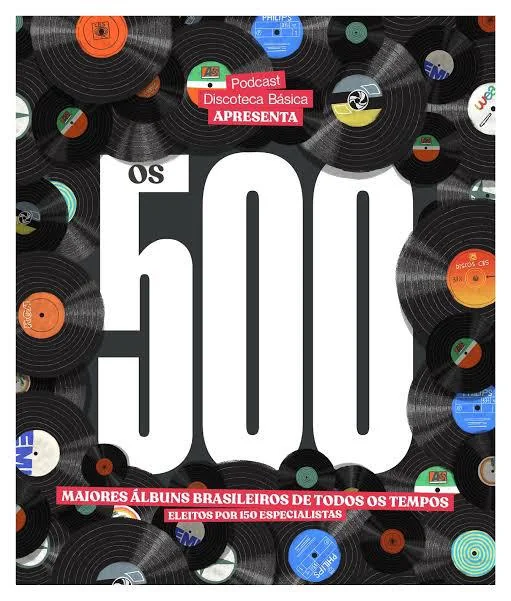
Os 500 Maiores Álbuns Brasileiros de Todos os Tempos
Ricardo Alexandre · 2022
The largest Brazilian music election ever conducted: 162 specialists, spanning journalists, critics, musicians, producers and podcasters, each nominated 50 essential albums, supported by a masterlist of more than 2,000 works. Led by Ricardo Alexandre with tabulation by Sérgio Jomori, it was published in December 2022 as a 200-page hardcover book with graphic design by Fernando Pires.

Amoroso: uma biografia de João Gilberto
Zuza Homem de Mello · 2021
This is a comprehensive biography of João Gilberto, written by Zuza Homem de Mello, one of the most respected critics and historians of Brazilian music. The work details the life and career of the 'father of Bossa Nova', covering from his origins in Bahia to his global recognition, and certainly delves deeply into his seminal albums, such as 'O Amor, o Sorriso e a Flor'.

Ho-ba-la-lá: À Procura de João Gilberto
Marc Fischer · 2011
This work narrates the journey of the German author, writer, and journalist, and his objective – to go to Rio de Janeiro to try to find João Gilberto and convince him to play 'Ho-ba-la-lá' on a century-old small guitar. In his search, the author also presents interviews with musicians such as Roberto Menescal and João Donato, and is highly relevant for understanding the figure of João Gilberto and his work.
Bossa Nova
Ruy Castro · 2000
A translation of the 1990 Brazilian best-seller, this is a definitive history of what happened when 'street samba' became Bossa Nova, an international form of pop/jazz. The book is filled with interviews with artists and people close to them, and the author makes clear the importance of Bossa Nova and its creators, such as João Gilberto, deeply contextualising albums like 'O Amor, o Sorriso e a Flor'.
Analyses
O Amor, o Sorriso e a Flor – Wikipedia
Wikipedia, the free encyclopaedia
Álbum "O Amor, o Sorriso e a Flor", de João Gilberto, completa 60 anos ...
revistaforum.com.br
The album, considered by many to be one of the most important in our music, features the artist already elevated to the category of a genius of our song, despite still generating – and this was the case throughout his life and career – numerous controversies.
O amor, o sorriso e a flor, por Daniel Taubkin - TV Cultura
cultura.uol.com.br
'O Amor, o Sorriso e a Flor', released in 1960, is the second album in João Gilberto's trilogy. "Talking about João is complicated for me," says composer Daniel Taubkin, one of the interlocutors of the bossa nova master.

João Gilberto - O Amor, o Sorriso e a Flor | 1960 - Blogger
discosqueouvi.blogspot.com
Whoever believed In love, in the smile, in the flower Then dreamed, dreamed And lost peace Love, the smile and the flower Transform too quickly Whoever, in their heart Harboured the sadness of seeing All this lost And, in solitude Sought a path and followed it Already disbelieving in a happy day Whoever cried, cried And so much that their tears have already dried Whoever ...
Álbum "O Amor, o Sorriso e a Flor", do juazeirense João Gilberto ...
acaopopular.net
The album 'O Amor, o Sorriso e a Flor', João Gilberto's second, celebrated its 60th release anniversary at the beginning of this confusing year of 2020. The album, considered by many to be one of the most important in our music, features the artist already elevated to the category of a genius of our song, despite still generating – and this was the case throughout his life and career – numerous...