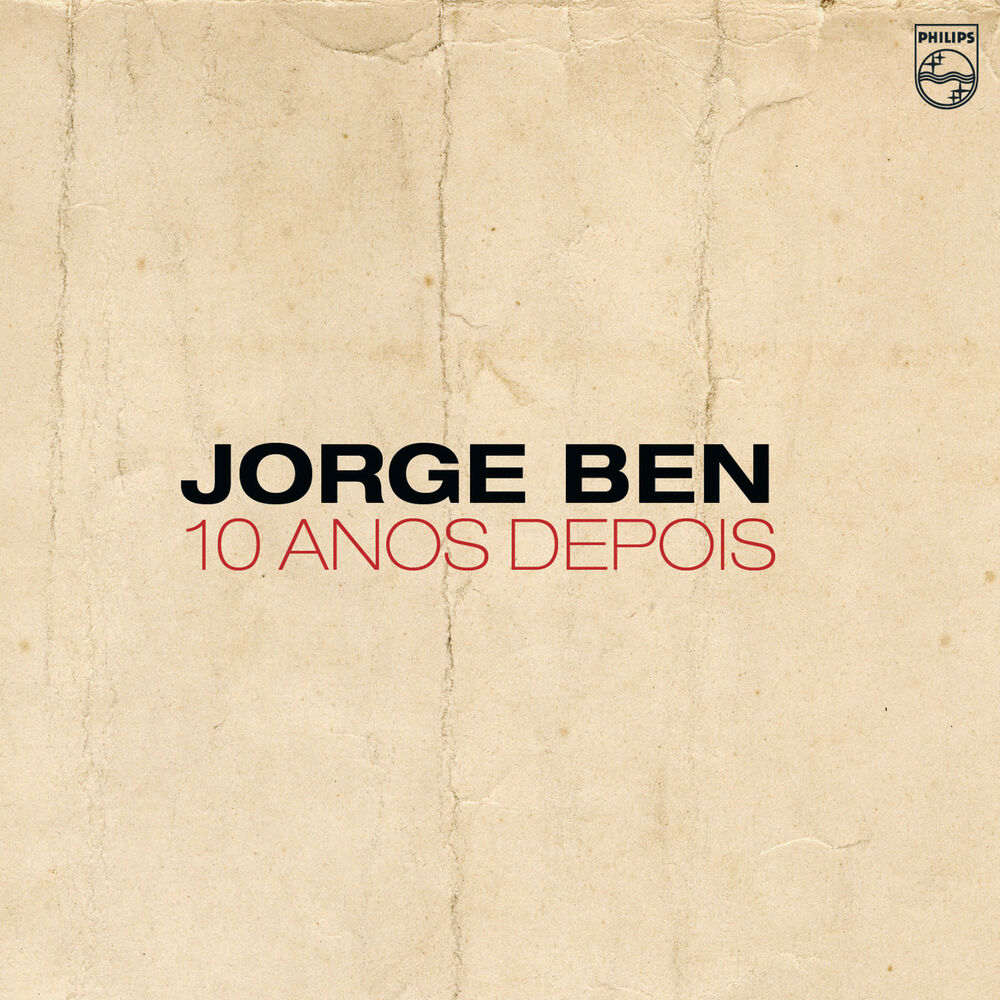
10 Anos Depois
Jorge Ben Jor
1973
Rankings
Why This Album Matters
The album 10 Anos Depois, released by Jorge Ben Jor in 1973, is a point of inflection in the artist's trajectory, celebrating his first decade of an already prolific career. Far from being a mere compilation, the work presents itself as a reinvention of his own repertoire, compiling great hits in an innovative way. Through carefully crafted medleys, Jorge Ben Jor revisits songs that defined his style, such as "Mas Que Nada", "País Tropical" and "Fio Maravilha", offering them a new rhythmic and interpretive dressing. This format of blending the tracks, which would become a signature of his live performances, demonstrates the artist's ability to recontextualise and revitalise his music. The record is a testament to Jorge Ben Jor's ability to fuse samba, rock, soul, and funk, consolidating what would become known as samba-rock and sambalanço. It captures the essence of an artist in constant evolution, who did not fear experimenting with his own sound and who, even then, proved himself a master in the art of the 'suingue' characteristic of his work.
Context
Released during a period of intense and fertile production in Jorge Ben Jor's career, 10 Anos Depois emerged between albums such as Ben (1972) and the acclaimed A Tábua de Esmeralda (1974). Brazil at the time lived under the yoke of a military dictatorship, a context of strong censorship and political repression, which often led artists to adopt more coded language in their lyrics. Although Jorge Ben Jor was not an artist of explicit political engagement like some of his Tropicalista contemporaries, his music, with its celebration of Black culture, football, everyday life in Rio, and African roots, carried within it a form of cultural resistance and ancestry, addressing the experience of the Black community in an authentic and original way.
Recording
The album 10 Anos Depois was produced by Paulinho Tapajós, a name with whom Jorge Ben Jor had already collaborated and who understood the proposal for reinterpretation at that moment. The recording sessions took place at Phonogram studios in Rio de Janeiro, a location that would witness the creation of many Brazilian music classics in the 1970s. The album's great innovation, in terms of recording and arrangement, was the decision to present most of its best-known songs in medley format. This choice not only dynamised the listening experience but also transformed each medley into a new composition, flowing from one track to another without interruption. Such a technique highlighted the interconnectedness of his musical universe and allowed for a sonic cohesion that would become emblematic in his live performances.
Songs
The peculiarities of the songs on 10 Anos Depois lie in the intelligent conception of the medleys. The album is structured into seven long musical blocks, plus a vignette, which interlink pearls from Jorge Ben Jor's first decade. Iconic tracks such as "Por Causa de Você, Menina", "Chove Chuva", "Mas Que Nada", "Agora, Ninguém Chora Mais", "Charles Anjo 45", "País Tropical", "Fio Maravilha", "Taj Mahal", "Que Nega É Essa", "Que Pena" and "Domingas" are revisited and gain new layers of interpretation and arrangement. The way the songs are chained together allows for a journey through Jorge Ben Jor's rhythmic universe, evidencing the evolution of his 'suingue' and the way his compositions converse with each other. Although the original versions are acclaimed, the re-recordings on this album present a renewed energy, with a more 'soul' sound and a groove that, according to some critics, conversed with the emerging Black Power movement in Brazil.
Legacy
Although some voices pointed out that the new versions did not always surpass the brilliance of the originals, 10 Anos Depois consolidated a practice that would become one of Jorge Ben Jor's trademarks: the presentation of his hits in medleys, a format that added unrivalled dynamism to his shows. This album serves as a crucial bridge in the artist's discography, connecting his initial samba-esquema-novo phase to his subsequent, more mystical and experimental era, which would be fully explored in masterpieces such as A Tábua de Esmeralda (1974) and África Brasil (1976). Jorge Ben Jor's work, including this revisited album, is fundamental for Brazilian music, due to its uniqueness in incorporating elements of American rock, soul, and funk, as well as African influences, being decisive in the transformation of bossa nova into MPB. Its impact resonates to this day, influencing genres such as sambalanço and samba-rock, and being re-recorded and honoured by countless artists from different generations.
Tracks
Videos
LED ZEPPELIN 4 A HISTÓRIA DO DISCO QUE VOLTOU PARA O DONO 25 ANOS DEPOIS | Meu Vinil Perdido 28
Canal Meu Vinil Perdido
Analyses
10 Anos Depois – Wikipedia
Wikipedia, the free encyclopaedia

Jorge Ben Jor - 10 Anos Depois (1973) - br320.blogspot.com
br320.blogspot.com
Artist: Jorge Ben Album: 10 Anos Depois Year: 1973 This edition: 2009 (CD Reissue) Label: Philips (Original release) / Uni...
Jorge Ben Jor - 10 Anos Depois [1973] - musicasdonordeste.net
musicasdonordeste.net
10 Anos Depois is Jorge Ben Jor's tenth studio album, released on LP in 1973 by Philips Records. Here, the singer re-recorded the greatest hits from his first 10 years of his career.