A Tábua de Esmeralda
Jorge Ben Jor
1974

Rankings
Why This Album Matters
A Tábua de Esmeralda, released in 1974, represents a fundamental turning point in Jorge Ben Jor's vast discography, marking the beginning of his acclaimed "musical alchemy" phase. This album stands out for its deep immersion into a mystical, esoteric, and philosophical universe, blending the artist's swinging and contagious samba with complex and transcendental lyrics about self-knowledge, Afro-Brazilian spirituality, and hermetic philosophy. Its unique sound and melodies that sound simultaneously natural and unpredictable establish it as a singular work in Música Popular Brasileira. Beyond its lyrical and thematic richness, the album is notable for being Jorge Ben's last project where the acoustic guitar is used intensively. The particular sound and expressiveness of his acoustic guitar on this album became a landmark, with the artist himself expressing, years later, the difficulty of replicating that same quality due to technical issues. This characteristic confers upon the album a nostalgic and irreplaceable value in Ben Jor's musical journey, capturing a moment of instrumental mastery and thematic innovation.

Each chord reinforces the certainty that no other guitar, on any other album, sounds nor will sound that way.
Ramiro Zwetsch · Rolling Stone Brasil
Context
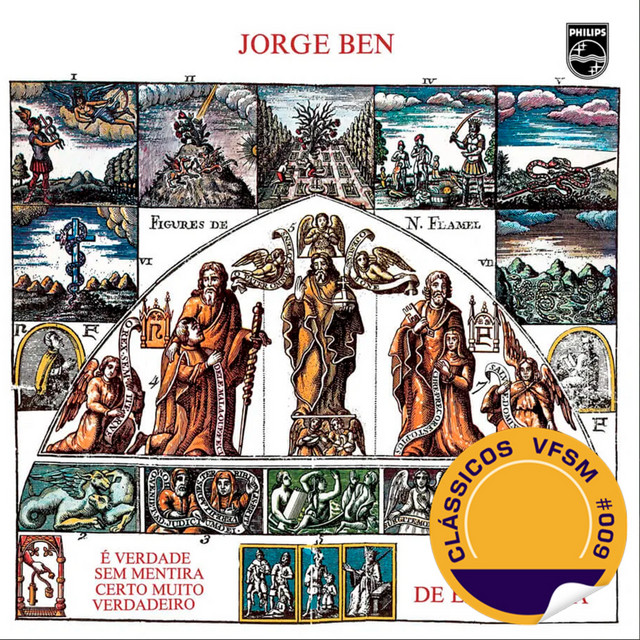
The year 1974 found Brazil under the height of the Military Dictatorship, a period marked by intense repression and censorship of artistic production. In this scenario, many artists sought creative ways to convey messages and reflections, and it was in this context of cultural and political effervescence that Jorge Ben Jor, then 35 years old and already with ten acclaimed albums, conceived A Tábua de Esmeralda. Jorge Ben, already an icon for his unique fusion of samba, rock, soul, and bossa in his work, delved into studies of theology, philosophy, and especially alchemy. This immersion was catalysed by a mystical experience in 1973, when, in Paris, he visited the ancient house of the alchemist Nicolas Flamel alongside Gilberto Gil, where both reported having had a vision of 15th-century figures, an event that directly influenced the album's thematic direction.
Recording
The production of A Tábua de Esmeralda was signed by Paulinho Tapajós, with recording engineering handled by Luigi Hoffer and João Moreira. The arrangements, a fundamental pillar in constructing the album's musical atmosphere, were developed by Osmar Milito, Darcy de Paulo, and Hugo Bellard, with Milito being responsible for the arrangements of tracks such as "Os Alquimistas Estão Chegando Os Alquimistas" and "Magnólia", and Bellard contributing synthesizers and string arrangements on "Errare Humanum Est". The team of musicians brought in for the recordings included names such as Dadi Carvalho on bass and Pedrinho Batera on drums, who, alongside Jorge Ben's central acoustic guitar, consolidated an organic and consistent sound. The cover art, created by Aldo Luiz, is a work of art in itself, explicitly incorporating figures such as Nicolas Flamel and Hermes Trismegistus, visual elements that reinforce the mystical and alchemical themes present throughout the entire project.
Songs
The twelve tracks of A Tábua de Esmeralda form a true musical treatise on medieval mythology, alchemy, Egyptian cosmology, and hermetic theory, with Jorge Ben Jor demonstrating a profound knowledge of figures such as Saint Thomas Aquinas, Paracelsus, Nicolas Flamel, and Hermes Trismegistus. This thematic complexity uniquely intertwines with the artist's characteristic Black pride and celebration of joy. Songs like the opening track, "Os Alquimistas Estão Chegando Os Alquimistas", which announces a new era and greater social consciousness, and "O Homem da Gravata Florida (A Gravata Florida de Paracelso)", which plays with Paracelsus' peculiarities, delve into the alchemical universe. "Menina Mulher da Pele Preta" and "Zumbi" reaffirm Afro-Brazilian identity, while "Errare Humanum Est" creates an intriguing bridge between philosophy and theories of extraterrestrial contact, citing authors such as Erich von Däniken. Other gems include "Magnólia", which inspired a play fifty years later, and "O Namorado da Viúva", a reference to the legend of Nicolas Flamel. The track "Hermes Trismegisto e sua Celeste Tábua de Esmeralda" even directly quotes the hermetic text that gives the album its name, encapsulating the mystical and philosophical proposition that permeates every chord and verse of this timeless work.

If an artist, any one, presented a record label with the project of turning into an album the stories and precepts of the alchemists, a medieval science that transmuted substances in search of the philosopher's stone, they would be shown the door.
Tárik de Souza · 300 Discos Importantes
Legacy
Since its release, A Tábua de Esmeralda has been universally acclaimed as one of the most important, if not the most important, albums in Jorge Ben Jor's career and one of the pillars of Música Popular Brasileira. Its relevance is attested by various prestigious lists, including that of Rolling Stone Brasil magazine, which elected it the sixth best Brazilian album of all time. Critics such as Philip Jandovský, from Allmusic, and Mike Wojciechowski, from Tiny Mix Tapes, consider it a masterpiece, highlighting its natural and unpredictable melodies. The album not only consolidated Jorge Ben Jor's "musical alchemy" phase, but also influenced generations of Brazilian artists with its innovative blend of contagious groove and transcendental lyrics. Fifty years after its release, the enduring quality of its art is celebrated with the emergence of projects such as a play and a show inspired by its songs, reiterating the lasting impact and reverence that A Tábua de Esmeralda continues to enjoy in Brazilian musical culture.
Tracks
Credits
Darcy De Paulo, Hugo Bellard, Osmar Milito
Paulinho Tapajós
Jorge Ben
Joaquim Figueira
João Moreira, Luigi Hoffer
Aldo Luiz
Mario Luiz T. De Carvalho
Podcasts
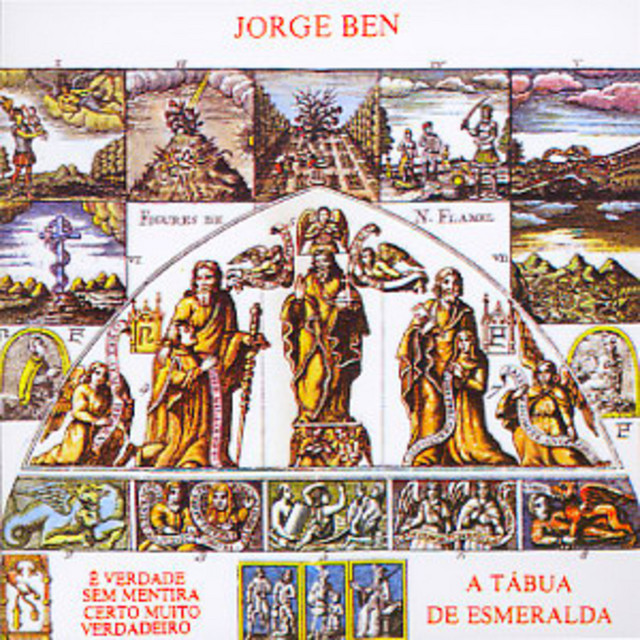
Record Rotations · Justin Webb
Brazil? The 1970's? Alchemy? What's not to like? Join us as we deep dive into Jorge Ben Jor's most iconic album, A Tabua De Esmeralda. Check out the Essential Albums playlist here! If you like the theme tune, you can check out the full song here!
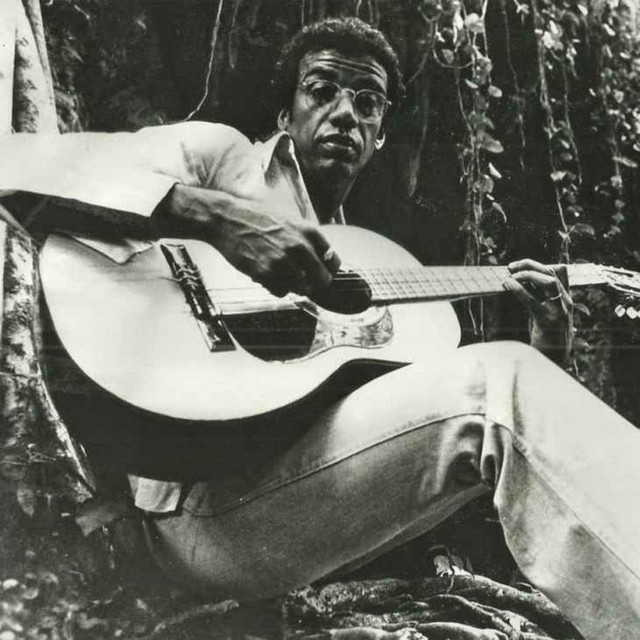
Brazuca Sounds · Leandro Vignoli
In episode #62 we discussed the 50th anniversary of Jorge Ben's masterpiece "A Tábua de Esmeralda", released in 1974. After a period of living in France, Jorge Ben got involved with alchemists. Hence, the album is a reflection of its secrets, legends, and fables, including the album's title (a reference to the Emerald Tablet) and the artwork that incorporates drawings from Nicholas Flamel, who was
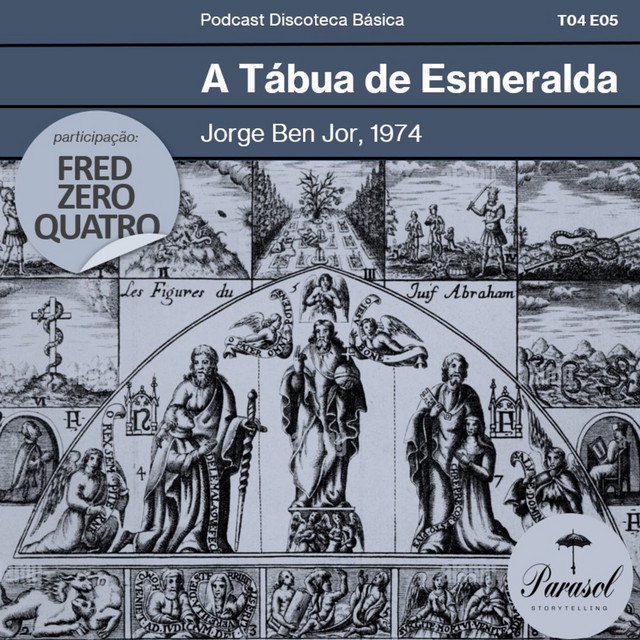
Discoteca Básica Podcast · Parasol Storytelling
BABULINA BATE NAS PORTAS DA PERCEPÇÃO. Depois de uma visão na casa de um alquimista francês, Jorge Ben Jor criou um dos dez maiores álbuns brasileiros da história. Convidado do episódio: Fred Zero Quatro (Mundo Livre S/A) Assinante do Clube Discoteca Básica tem conteúdo complementar. Nesta semana, a gente preparou dois episódios exclusivos: a íntegra do depoimento de Fred Zero Quatro falando sob
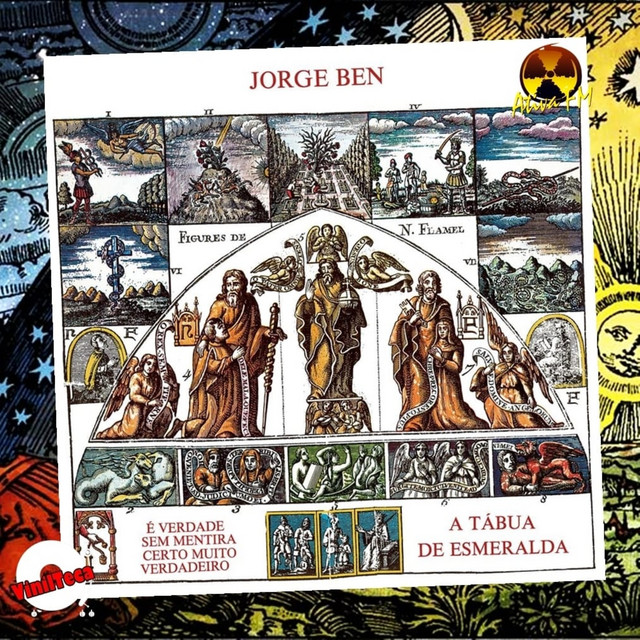
Vinilteca · José Ono Junior e Guilherme Colpani
Os estudos de Jorge Ben sobre filosofia, teologia, São Tomás de Aquino, Hermes Trismegisto e alquimia resultaram naquele que é considerado um dos seus melhores álbuns, "A Tábua de Esmeralda". O disco foi lançado em 1974 e faz parte de uma leva de trabalhos com temáticas místicas lançados pela MPB nesse período. Jorge Ben falava de alquimia numa época em que ninguém conhecia sequer essa palavra no
Consolidado com mais de uma década de carreira, Jorge Ben lança sua obra-prima "A Tábua de Esmeraldas" em 1974, corando um momento brilhante em sua trajetoria e uma liberdade ímpar para levar suas composições onde bem entendesse. O registro discute diversos temas místicos e exotéricos através de associações com os alquimistas e com a Tábua de Esmeraldas. ● Apoie a gente no Padrim: http://bit.ly/
Videos
JORGE BEN JOR E A TÁBUA DE ESMERALDA
Vinilteca
Quando Jorge Ben Virou Místico: A História de A Tábua de Esmeralda | Dissecando Álbum
Novabrasil
Jorge Ben Jor - A Tábua de Esmeralda - Discos que Envelheceram Bem
Regis Tadeu
"A tábua de esmeralda" - Jorge Ben | Os melhores discos da MPB nos anos 70 | Alta Fidelidade
Alta Fidelidade
Jorge Ben Jor - A Tábua de Esmeralda | Contracapa
Sala de Estar
PodCália #1 - Jorge Ben e A Tábua de Esmeralda
PodCália
Books
Jornada Hermética Com Jorge Ben Jor
Luiz Lindão · 2025
This work invites readers on a journey through the history of esoteric philosophy, drawing parallels and connections with the work of Jorge Ben Jor. Given the hermetic and esoteric themes of the album 'A Tábua de Esmeralda', this book is highly likely to deeply explore the influences and meaning behind the record.

Os 500 Maiores Álbuns Brasileiros de Todos os Tempos
Ricardo Alexandre · 2022
The largest Brazilian music election ever conducted: 162 specialists, spanning journalists, critics, musicians, producers and podcasters, each nominated 50 essential albums, supported by a masterlist of more than 2,000 works. Led by Ricardo Alexandre with tabulation by Sérgio Jomori, it was published in December 2022 as a 200-page hardcover book with graphic design by Fernando Pires.

300 Discos Importantes da Música Brasileira
Charles Gavin, Tárik de Souza, Carlos Calado, Arthur Dapieve · 2008
Conceived by Titãs drummer and musical researcher Charles Gavin, the 434-page book brings together covers and reviews of albums released between 1929 and 2007. The texts were written by journalists Tárik de Souza, Arthur Dapieve and Carlos Calado.
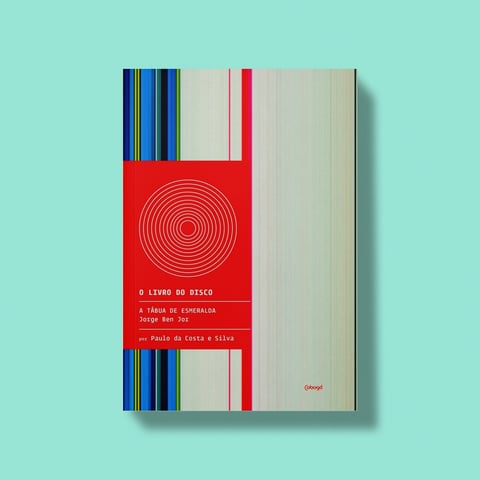
Jorge Ben Jor: A tábua de esmeralda | Jorge Ben Jor: A tábua de esmeralda - Editora Cobogó
In A Tábua de Esmeralda, Paulo da Costa e Silva sheds light on the Jorge Ben of the 1960s-70s, with this album as its epicentre. Drawing on interviews and articles written about the musician, the author pro...
Analyses
A Tábua de Esmeralda – Wikipedia
Wikipedia, the free encyclopaedia
A Tábua de Esmeralda – The 100 Greatest Albums of Brazilian Music
Ramiro Zwetsch · Rolling Stone Brasil
Each chord reinforces the certainty that no other guitar, on any other album, sounds nor will sound that way.
"A Tábua de Esmeralda": análise sobre o mais famoso álbum de Jorge Ben Jor
mundonegro.inf.br
Jorge Ben Jor established himself in a musical style that unites the best of samba, rock and Bossa, with strong African influences, thus ushering in a new era for music. He also took part in another great musical manifesto: tropicalismo, alongside his friends Caetano Veloso and Gilberto Gil.
Álbum antológico de Jorge Ben Jor, 'A tábua de esmeralda ... - G1
g1.globo.com
Fifty years since the LP's release by the Philips label in 1974, the album A Tábua de Esmeralda remains celebrated as one of Jorge Ben Jor's key albums, and there are those who consider it...
A Tábua de Esmeralda: A obra enigmática de Jorge Ben Jor
cantinhododisco.com.br
In the Record Corner, we will embark on this journey through the songs and mysteries presented by the work of Jorge Ben Jor, the red-and-black multi-instrumentalist, widely recognised as a genius of MPB, who delivered one of the most iconic albums in Brazilian music, cherished in many collections.