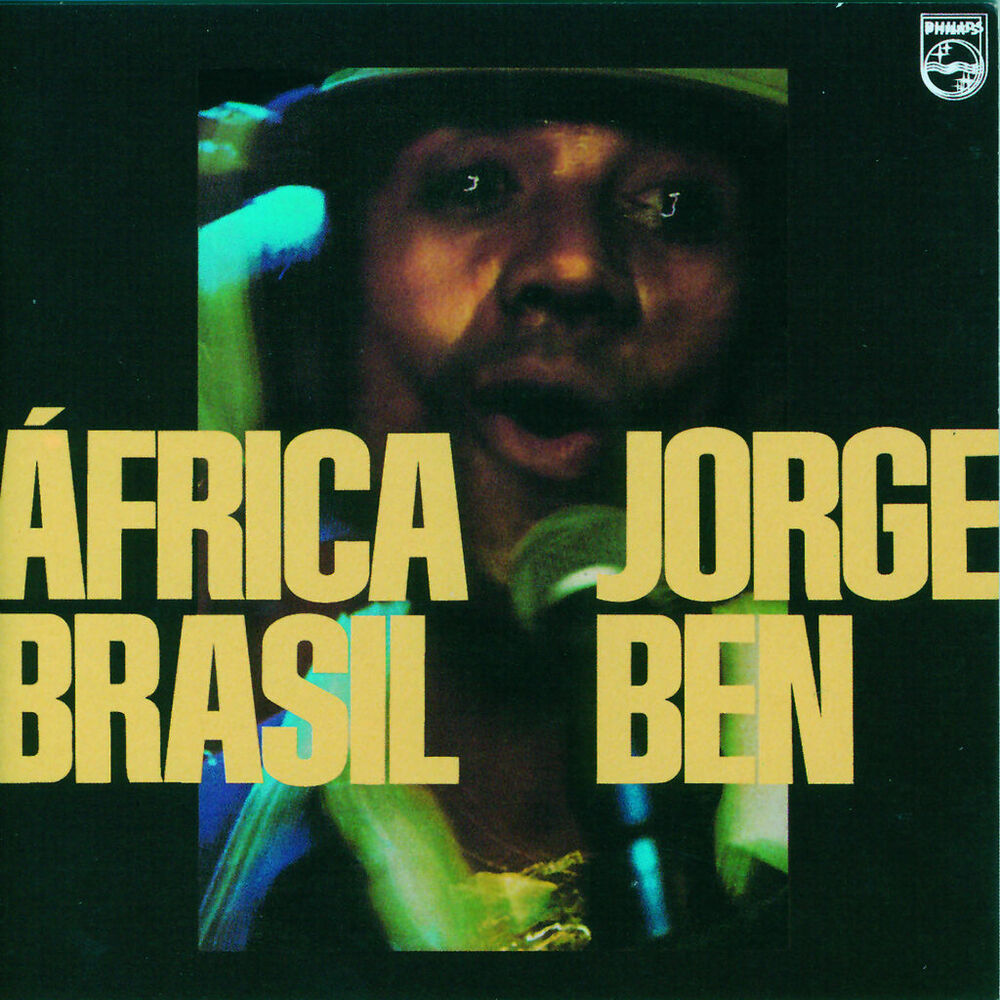
África Brasil
Jorge Ben Jor
1976
Rankings
Why This Album Matters
África Brasil, Jorge Ben Jor's fourteenth studio album, released in 1976, represents a fundamental landmark in the artist's career. In this work, Ben Jor definitively consolidated his transition from acoustic guitar to electric guitar, a move already rehearsed on previous albums, but which here establishes itself as an integral part of his sonic identity. The album is notable for its bold fusion of genres and compositional techniques, uniting the richness of Afro-Brazilian music with vibrant Black American popular music. This synthesis, which the composer had been working on since the beginning of his trajectory, reached its apex in África Brasil, solidifying the stylistic foundations of samba-rock and positioning the record as an unavoidable reference within this musical subgenre. Its unique sound is a rhythmic celebration that deserves special attention.

Ben clashes cuíca, tamborim, whistle and pandeiro with bass, guitar, keyboard and drums. Fly, Jorge!
Alexandre Matias · Rolling Stone Brasil
Context
From the beginning of his career in the early 1960s, Jorge Ben already distanced himself from the traditional bossa nova arrangements, seeking greater proximity to aspects of Afro-Brazilian popular music. Combining this vein with the strong influence of Black popular music from the United States, his work began to gain visibility, creating the foundations for what would be recognised as samba-rock by specialist critics. África Brasil marks the apex of this fusion of samba with soul music and funk, aligning itself with the more pop and dance-oriented shift that the Brazilian phonographic market began to show at the turn of the 1970s to the 1980s. The album signalled a crucial change in Ben's trajectory, as he began to move away from the more traditional MPB compositional style of the time, embracing a more accessible and popular sound that would open the doors to the mainstream of Afro-Brazilian music.
Recording
The production of África Brasil was taken over by Marco Mazzola, who also handled the mixing, replacing Paulinho Tapajós, producer of Jorge Ben's previous albums. The team of arrangers included talents such as pianist José Roberto Bertrami, saxophonist Oberdan Magalhães, and drummer Wilson das Neves. Bertrami, known for his work with Raul Seixas and Elis Regina, worked on the orchestrated tracks and used synthesizers, anticipating the use of these instruments on Ben's records in the 1980s. The album's sound is notably heavier, influenced by American funk and soul music, but articulated with the specific sonic resources of Afro-Brazilian music, such as samba and ijexá. Traditional percussion instruments like pandeiros, cuícas, surdos, and atabaques were skilfully combined with drums, saxophone, trumpet, electric bass, and, crucially, Jorge Ben's electric guitar, which would become his definitive instrument. The percussive configuration was further enriched with the inclusion of instruments typical of Cuban music, such as congas and tumbas, stemming from the Afro-Cuban tradition. This combination lent a more acoustic sound in contrast to the other electrified instruments, resulting in a rich and innovative sonic tapestry, recorded at the 16-channel Phonogram studio.
Songs
Featuring 11 tracks written by Jorge Ben Jor, including some re-recordings, África Brasil explores an explicitly Afro-Brazilian lyrical theme, during a period of emerging Black movements in Brazil, even under the context of military dictatorship repression. The representation of Black culture is not limited to the lyrics, but manifests profoundly in the selection of instruments and rhythmic procedures, with the striking presence of musical genres of African origin, such as candomblé, evidenced by the use of the atabaque. The album's compositions are a reflection of Ben Jor's musical versatility. Jorge Ben's vocal style oscillates between a more aggressive and deep rhythm, influenced by rock, as heard in "África Brasil (Zumbi)", and a softer, more syncopated rhythm, inspired by soul music, exemplified in "Xica da Silva". Both songs stand out for referencing important historical figures in Brazil.

Voted one of the 100 best by the American edition of Rolling Stone magazine in 2002 (ahead of albums by Sinatra, Miles Davis, Joy Division and Beck, his self-proclaimed fan), África Brasil synthesises the potent connection of the musician's own DNA.
Tárik de Souza · 300 Discos Importantes
Legacy
África Brasil was a commercial and critical success since its release in 1976, selling around 60,000 copies at the time, a significant number for the Brazilian market. Although not Ben's biggest seller, the album quickly established itself as one of the most celebrated works in Brazilian popular music, both nationally and internationally, thanks to its originality in production and musical quality. International specialist critics praised the album's musical fusion. The Allmusic website described it as "one of the most fascinating sounds ever recorded in Brazil", while the book 1001 Albums You Must Hear Before You Die characterised it as a kind of "Carioca soul manifesto", combining the best of James Brown and Sly Stone. In 2002, the album was re-released in a remastered version by Universal and, in the same year, was chosen by Rolling Stone magazine as one of the 50 coolest albums in the world, being the only Brazilian record on the list. In 2003, Rolling Stone Brasil classified it as number 67 among the 100 greatest albums in Brazilian music, reaffirming its status as an iconic work and its lasting influence.
Tracks
Credits
Jorge Ben
Mazzola
Jorge Ben
Claudia Telles, Evinha, Marisa Fossa, Regina Werneck, Waldyr
José Roberto Bertrami
Dadi
Zezinho
Marcio Montarroyos
Darcy Da Cruz
Neném Da Cuica
Ariovaldo Contesini, Djalma Correa, Hermes Contesini
Pedrinho Batera
José Carlos
Doutor, Gustavo Schroeter, João Parahyba, Wilson Canegal
João "Bum"
Oberdan Magalhães
Luna
Wilson Das Neves
Mazzola
Ary Carvalhaes, João Moreira, Luigi Hoffer, Paulo Sergio
Luigi Hoffer
Rafael Azulay
Jorge Vianna
Aldo Luiz
Orlando Abrunhosa
Podcasts

1001 Album Club · Birch
Known godfather of Samba Rock, Jorge Ben, pulled a Brazilian uncle Robert in 1976. Brushing off the shackles of nylon strings and bringing in a myriad of musical influences, Jorge made a stone cold classic butt shaker on his 14th studio outing. Let's talk Jorge Ben, África Brasil!

Ouvindo Estrelas · Marco Mazzola
EPISÓDIO #08 Em uma tarde de 1976, Jorge Ben vai até a gravadora Philips e entra na sala do produtor musical Marco Mazzola para lhe fazer um convite que marcaria a história da música popular brasileira: a produção de "África Brasil", considerado um dos "The Rolling Stone's 50 Coolest Records". Jorge, que na época era apenas Jorge Ben, explica a Mazzola o que pensa em fazer, como quer revolucionar
Roteirices · Carlos Alberto Jr.
O álbum "Samba esquema novo", primeiro trabalho de Jorge Ben Jor, que ainda se chamava Jorge Ben, foi lançado em 1963. Desde aquele ano, composições como "Mas que nada", "Balança Pema" e "Chove Chuva" fazem parte do nosso repertório musical. Jorge Ben se tornou um artista global e não parou de produzir música de altíssima qualidade. A jornalista e pesquisadora musical Kamille Viola queria escrever

Acorde - Música e Psicanálise · Rafael Garbuio e Ricardo Pezati
Décimo Segundo episódio do Podcast Acorde - Música e Psicanálise falando da Obra Zumbi, composta por Jorge Benjor, publicada inicialmente no álbum A Tábua de Esmeralda de 1974. Esta música consta também com outro arranjo no disco Africa Brasil de 1976, passou a ser chamada Africa Brasil (Zumbi) com uma nova versão e arranjo.Para esta conversa vamos receber nosso convidado, Érico Andrade que é psic
Videos
Ensaio de Mesa - Jorge Ben/África Brasil - #18
Disparada
AFRICA BRASIL JORGE BEN REVIEW /REVEJA
Classic Rock Album Reviews
3000 Best Albums [2121] Jorge Ben - África Brasil (1976) Dan's Mini Album Review
Dan's Mini Album Reviews
"África Brasil: um dia Jorge Ben voou para toda a gente ver", com Kamille Viola
Carlos Alberto Jr.
Books
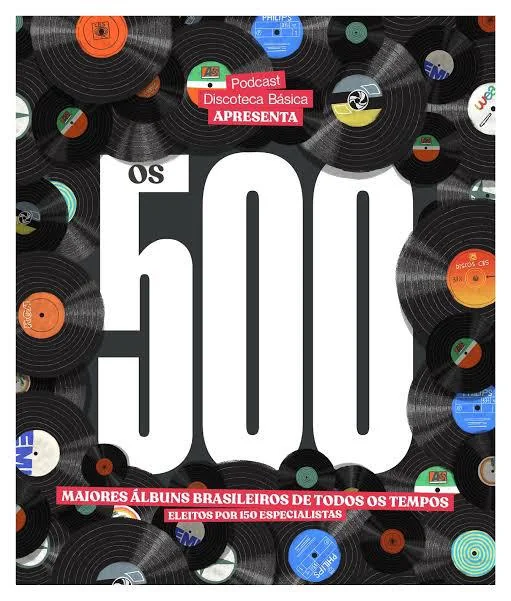
Os 500 Maiores Álbuns Brasileiros de Todos os Tempos
Ricardo Alexandre · 2022
The largest Brazilian music election ever conducted: 162 specialists, spanning journalists, critics, musicians, producers and podcasters, each nominated 50 essential albums, supported by a masterlist of more than 2,000 works. Led by Ricardo Alexandre with tabulation by Sérgio Jomori, it was published in December 2022 as a 200-page hardcover book with graphic design by Fernando Pires.

300 Discos Importantes da Música Brasileira
Charles Gavin, Tárik de Souza, Carlos Calado, Arthur Dapieve · 2008
Conceived by Titãs drummer and musical researcher Charles Gavin, the 434-page book brings together covers and reviews of albums released between 1929 and 2007. The texts were written by journalists Tárik de Souza, Arthur Dapieve and Carlos Calado.
Analyses
África Brasil – Wikipedia
Wikipedia, the free encyclopaedia
África Brasil – The 100 Greatest Albums of Brazilian Music
Alexandre Matias · Rolling Stone Brasil
Ben clashes cuíca, tamborim, whistle and pandeiro with bass, guitar, keyboard and drums. Fly, Jorge!
África Brasil (1976): uma análise midiática do álbum de Jorge Ben Jor ...
periodicos.ufba.br
For this purpose, a media analysis is carried out on one of his most representative albums, África Brasil (Philips, 1976), also articulating the notions of mass popular music and song diction. The analytical corpus comprises the album's two lead singles, Xica da Silva and África Brasil (Zumbi).
Análise do Álbum África Brasil de Jorge Ben Jor - Scribd
pt.scribd.com
This article is a study of the dynamics of the musical genre articulated with the interpretation of stylistic markers mobilised as addressing strategies embedded in Jorge Ben Jor's work. For this purpose, a media analysis is carried out on one of his most representative albums, África Brasil (Philips, 1976), also articulating the notions of mass popular music...
África Brasil (1976): uma análise midiática do álbum de Jorge Ben Jor
ru.dgb.unam.mx
This article is a study of the dynamics of the musical genre articulated with the interpretation of stylistic markers mobilised as addressing strategies embedded in Jorge Ben Jor's work. For this purpose, a media analysis is carried out on one of his most representative albums, África Brasil (Philips, 1976), also articulating the notions of mass popular music...