Jorge Ben
Jorge Ben Jor
1969

Rankings
Why This Album Matters
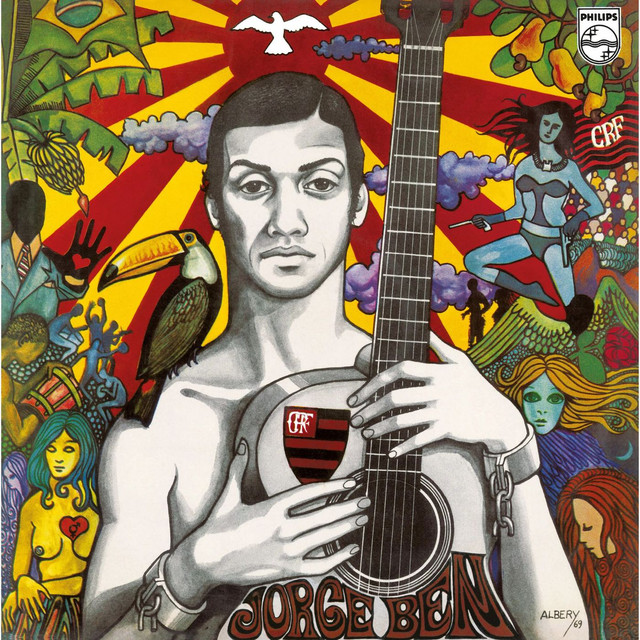
Released in November 1969 by Philips Records, Jorge Ben is a fundamental milestone in the career of singer, songwriter, and guitarist Jorge Ben Jor, consolidating his innovative sound and unique artistic persona. The album represented his return to a major record label after a four-year hiatus and creative differences, bringing a vibrant fusion of samba with elements of psychedelic music and soul, which positioned him as a singular figure in the Brazilian music scene. This work recaptured the effervescence of his debut, Samba Esquema Novo, but with a maturity and experimentation that made it an instant classic. Jorge Ben is not merely a samba record, but a rich sonic tapestry that anticipated trends and captured the spirit of an era. His witty and insightful lyrics address everyday themes, romances, Afro-Brazilian identity, and self-awareness, while the rhythmic inventiveness, marked by the "samba de batida firme em 4/4" (firm 4/4 samba beat), would become a signature of the artist. Accompanied by the iconic Trio Mocotó and with arrangements by José Briamonte and Rogério Duprat, the album radiates a contagious energy that made it one of Jorge Ben's most celebrated and accessible works.
Context
The album Jorge Ben emerged during a period of intense cultural and political effervescence in Brazil, marked by the rise of Tropicália and, simultaneously, the hardening of the military dictatorship and subsequent censorship. Prior to this release, Jorge Ben had enjoyed a promising start with Philips Records in 1963, with the success of Samba Esquema Novo. However, the label's pressure for quick releases and creative control led to a split in 1965, after the album Big Ben. In the following years, Ben operated independently, releasing only the low-selling album O Bidú: Silêncio no Brooklin (1967). During this period, he perfected his singular style and composed songs that were recorded by major names in Brazilian music, such as Os Mutantes, Wilson Simonal, and Elis Regina. This recognition caught the attention of Philips, which, under the new direction of André Midani and with the support of Gilberto Gil and Caetano Veloso, re-signed him in 1969, paving the way for the creation of one of his most important records.
Recording
The recording of the album Jorge Ben took place in two studios in Brazil: C.B.D., in Rio de Janeiro, and Scatena, in São Paulo. For this project, Jorge Ben selected a repertoire of songs he had composed in the preceding two years, reflecting his phase of stylistic refinement. Production was handled by Manoel Barenbein, with sound engineering under the responsibility of Stelio Carlini, Ary Carvalhaes, Didi, João Kibelestis, and Célio Martins. One of the highlights of the recording was the accompaniment of Trio Mocotó, a vocal and percussive group Jorge Ben met in São Paulo clubs in the late 1960s, whose contribution would become intrinsic to the sound of samba-rock. The orchestral arrangements were divided between José Briamonte, responsible for most tracks, and Rogério Duprat, who signed the arrangements for "Barbarella" and "Descobri que Eu Sou um Anjo", adding a dimension of tropical psychedelia to the music. The record was produced with sound effects considered cutting-edge for the time, contributing to its innovative texture.
Songs
The sound of the album Jorge Ben is a melting pot of rhythms and styles, centred on what critic Greg Caz described as the "samba de batida firme em 4/4" (firm 4/4 samba beat), a rhythm that would become a pillar of the underground samba-rock movement and the artist's work in the following decade. The fusion of Trio Mocotó's percussive and vocal accompaniment with the string arrangements of José Briamonte and Rogério Duprat resulted in a unique form of tropical psychedelia, comparable to the experimentation of artists such as Gilberto Gil, Caetano Veloso, and Os Mutantes. Tracks such as "Descobri que Eu Sou um Anjo" are notable for their inventiveness, and "Take It Easy My Brother Charles" incorporates elements of funk, highlighting Ben's ability to transcend genres. The lyrics, in turn, are a mirror of Jorge Ben's genius, addressing themes such as romances, Brazilian daily life, and football, as in the iconic "País Tropical", where he sings about his love for Flamengo. Ben frequently employs repetitions, humour, and sound play, prioritising the sound of words over extensive verses. Furthermore, the album manifests a racial consciousness and affirmation of Afro-Brazilian identity, present in songs such as "Crioula", which portrays the transformation of a Black market woman into a Carnival queen, symbolising the African royalty who, by geographical error, were born in Brazil.
Legacy
Jorge Ben represented a triumphant return for the artist and became one of the most acclaimed and recognised albums in his discography. Commercially, it was a great success, with songs such as "País Tropical", "Que Pena", and "Cadê Teresa" already being widely known and interpreted by other artists even before the album's release. Music critics quickly associated the album with the samba-rock and Tropicália musical movements, consolidating Jorge Ben's position as an independent figure who knew how to blend samba tradition with the innovations of the era. Although there were some mixed reviews at the time, such as Tárik de Souza's in Veja magazine about Briamonte's arrangements, the subsequent critical consensus is that the album is a masterpiece. In 2022, it was included in the list of the "500 greatest Brazilian music albums" in a vote by the Discoteca Básica podcast, reaffirming its lasting importance. The album has been re-released numerous times over the years, including a remastered edition in the United States in 2008 by Dusty Groove America and, in 2018, the first vinyl version in the US by Verve/Universal Music Enterprises, celebrating its 50th anniversary, which demonstrates its international recognition and the continuous relevance of his work.
Tracks
Credits
José Briamonte, Rogério Duprat
Manoel Barenbein
Jorge Ben
Ary Carvalhaes, Célio Martins, João Kibelkstis, Oswaldo Cruz Vidal, Stelio Carlini
Albery
Lincoln
Armando Pittigliani
Johnny Salles
Podcasts

Musicas e Suas Histórias · Paulo Eduardo Arruda
Todos os episódios do Canal Músicas e Suas Histórias (Facebook, Instagram, TikTok e YouTube), podem ser ouvidos no Spotify! Uma boa dica para quem vai viajar! Bom Entretenimento!
PodCália · Gigola
Caros PodCálistas!Ele está de volta!O Debutante do PodCália estreia seu terceiro episódio por aqui!JORGE BEN!Desta vez com seu disco de 1969 - sem sombra de dúvidas seu trabalho mais tropicalista.Os temas das canções giram em torno da vida cotidiana nas favelas, a afirmação da identidade racial e cultural afro, o ufanismo, o amor pelo ser feminino, e claro, o futebol!Tudo isso acompanhado do fodás

365 LPs · Paulo Henrique de Moura
Em seu maravilhoso Jorge Ben (1969), o cantor e compositor convocou duas feras para os arranjos, José Briamonte e ninguém menos que Rogério Duprat, o maestro arranjador mais inventivo da Tropicália. A capa deslumbrante é obra do pintor e artista plástico Albery, e também dialoga com a estética tropicalista.O disco abre com uma sequência matadora de 4 canções em homenagem às mulheres, sob prismas d
Videos
Jorge Ben - Jorge Ben (1969) | ALBUM REVIEW
Som de Peso
JORGE BEN - SAMBA ESQUEMA NOVO (1963) | ALBUM REVIEW
Vinilteca
JORGE BEN 1972 VINYL RECORD WITH ERROR PRESSING !! quick Review ! CRAZY RARE COLLECTIBLE
BRAZIL RECORDS REVIEW
AFRICA BRASIL JORGE BEN REVIEW /REVEJA
Classic Rock Album Reviews
Jorge Ben (1969) - Jorge Ben Jor (Review Relâmpago)
Rádio Guerrilha
Jorge Ben Jor - A Tábua de Esmeralda - Discos que Envelheceram Bem
Regis Tadeu
Books
Jornada Hermética Com Jorge Ben Jor
Luiz Lindão · 2025
This work invites readers on a 'hermetic journey' with Jorge Ben Jor, offering an in-depth analysis of his work. Although the original description is truncated, the title and fragment suggest a philosophical and esoteric exploration of the artist's career, which would necessarily include one of his most important albums, such as the 1969 'Jorge Ben', offering a unique perspective on the meaning of his music.

Os 500 Maiores Álbuns Brasileiros de Todos os Tempos
Ricardo Alexandre · 2022
The largest Brazilian music election ever conducted: 162 specialists, spanning journalists, critics, musicians, producers and podcasters, each nominated 50 essential albums, supported by a masterlist of more than 2,000 works. Led by Ricardo Alexandre with tabulation by Sérgio Jomori, it was published in December 2022 as a 200-page hardcover book with graphic design by Fernando Pires.
África Brasil
Kamille Viola · 2021
This book focuses on the 1976 album África Brasil, a landmark in Jorge Ben's career. However, it recounts Jorge Ben's trajectory 'album by album', exploring the evolution of his discography until it reaches the featured LP. This means it offers a detailed analysis of previous albums, including the 1969 album 'Jorge Ben', essential for understanding the artist's development.
Analyses
Jorge Ben – Wikipedia
Wikipedia, the free encyclopaedia
Jorge Ben Jor - Jorge Ben (LP) - Vinyl
vinylscouter.com
Product description Jorge Ben Jor's self-titled album, released on 20 January 1969 via Universal Music Ltda., is a captivating 38-minute journey through the vibrant sounds of Brazil. This iconic record showcases Jorge Ben Jor's unique blend of MPB, bossa nova, samba, and Brazilian jazz, creating an irresistible atmosphere that draws the ...
Jorge Ben Jor - Jorge Ben [1969] - musicasdonordeste.net
musicasdonordeste.net
The album, released in 1969, was responsible for reviving the career of the singer and songwriter, who had achieved resounding success with his debut, but had been releasing less prominent albums.
Hominis Canidae: Jorge Ben Jor - Jorge Ben (1969)...
hominiscanidae.org
In 1965, Jorge Ben left behind his sunny and inspiring hometown of Rio de Janeiro and moved to São Paulo. In that city, he even lived for a time with Erasmo Carlos in the same property.
Jorge Ben Jor - Jorge Ben (1969) | cenaindie
cenaindie.com
The album is an innovative fusion of samba, rock, pop, and afrobeat elements, demonstrating the versatility of the singer and songwriter. Its vibrant sound and striking lyrics consolidate Jorge Ben as one of the great names in Brazilian music.