Negro É Lindo
Jorge Ben Jor
1971

Rankings
Why This Album Matters
Negro É Lindo, released in 1971, is one of Jorge Ben Jor's most emblematic albums, marking his eighth studio work. The album stands out as an explicit declaration of racial affirmation, its title a direct translation of the slogan 'Black is Beautiful', reverberating the American civil rights movement within the Brazilian context. Musically, the work consolidates Jorge Ben Jor's singular style, an inventive and percussive samba-rock that incorporates elements of soul and funk, creating an unmistakable sound. Even with striking string arrangements, the artist's guitar remains the rhythmic engine, synthesising African influences present in both Brazilian and American music. Although it was not the artist's greatest commercial success, Negro É Lindo maintains remarkable musical freshness and timeless relevance, especially in its dialogue with discussions about the valorisation of Black life and culture.
Context
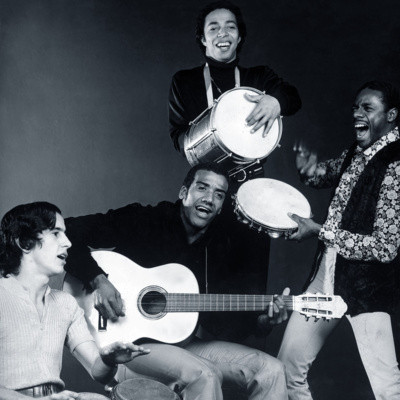
The release of Negro É Lindo occurred during a period when the 'black power' social movements in the United States were already influencing Brazilian culture, opening space for artists who explicitly showcased Black identity in their works. Jorge Ben Jor, in turn, was already a consolidated figure in Brazilian music, known for his ability to navigate and be admired by various aesthetic movements such as Bossa Nova, Jovem Guarda, and Tropicalismo. This album marks the end of Jorge Ben Jor's prolific partnership with Trio Mocotó, a samba-rock group formed by Fritz Escovão, João Parahyba, and Nereu Gargalo. The collaboration, which began after a meeting at the Jogral nightclub in São Paulo, generated a phonographic trilogy of great impact on Brazilian music, of which Negro É Lindo is the third and final part.
Recording
Negro É Lindo was released in November 1971 by the Philips record label. The album's production was overseen by the composer and guitarist Paulinho Tapajós, who skilfully harmonised the various elements that make up Jorge Ben Jor's musical universe. The string arrangements, present in tracks such as the title track, "Porque É Proibido Pisar na Grama", and "Cigana", were orchestrated by maestro Arthur Verocai, adding a sophisticated layer to the sound. However, the central and driving element of the album is Ben Jor's guitar, which, with its alchemist's touch, creates a fusion of Black rhythms from Brazil and the United States.
Songs
The album consists of ten tracks, all written by Jorge Ben Jor, with co-writing credits for Toquinho on "Cassius Marcelo Clay" and "Que Maravilha". The title track, "Negro É Lindo", is an anthem of self-acceptance and pride, repeating the affirmation 'Black is beautiful / Black is love / Black is a friend / Black is also a Child of God', and expresses the wish for his son to grow up without being harmed by racism. The opening track, "Rita Jeep", is an animated samba-rock that pays homage to singer Rita Lee, with whom Ben Jor shared studios in São Paulo. Other highlights include "Cassius Marcelo Clay", an electrifying homage to the legendary boxer and activist Muhammad Ali, and "Comanche", which celebrates Trio Mocotó's drummer, João Parahyba. Black beauty is exalted in "Zula", while "Que Maravilha" is revived with the gentle touch of a piano. The album closes with "Palomaris", which, despite melancholic verses, is driven by the artist's characteristic rhythm.
Legacy
Negro É Lindo, although not Jorge Ben Jor's greatest commercial success, is recognised as a fundamental work in his career. Its message of Black pride directly connects it with contemporary movements reaffirming the importance of Black lives, remaining current and relevant even decades after its release. The album played a significant role in the Brazilian Black movement, acting as a reference point for the exaltation of Afro-Brazilian culture and identity. Specialists highlight how compositions that positively affirm Blackness are crucial for identity reconstruction and combating invisibility in a country with a history of racism.
Tracks
Podcasts
Brazuca Sounds on Patreon · Leandro Vignoli
In episode #21 we discussed Jorge Ben's album, "Negro é Lindo", released by Philips in November 1971. It was Jorge Ben's third and last studio album recorded with Trio Mocotó as his backup band. An ending to a trilogy, the arrangements are more centered on the acoustic guitar, the fruit of his partnership with producer Paulinho Tapajós, who directed Jorge Ben’s recordings between 71 and 75, includ
Brazuca Sounds · Leandro Vignoli
In episode #21 we discussed the album "Negro é Lindo", released by Philips in November 1971. It was Jorge Ben's third and last studio album recorded with Trio Mocotó as his backup band. An ending to a trilogy, the arrangements are more centered on the acoustic guitar, possibly the fruit of his partnership with Paulinho Tapajós, who directed Ben’s recordings between 71 and 75, including his future

QUER QUE EU RESENHE? · André Marx
Em sua primeira resenha de disco neste 2021, André Marx fala sobre um clássico absoluto, pero meio que deixado à margem, do gênio Jorge Ben. Sejam bem-vind@s ao Canal/Podcast QUER QUE EU RESENHE? e esperamos que vocês gostem.
Videos
Jorge Ben - Negro é Lindo (1971) | ALBUM REVIEW
QUER QUE EU RESENHE?
Álbum de Jorge Ben em 1971, 'Negro é lindo' se afina com 'black power' de 2021 ao fazer 50 anos
Kathy Gray
Books
África Brasil
Kamille Viola · 2021
This book recounts Jorge Ben's album-by-album journey until he reached África Brasil, his 14th studio LP, a 1976 landmark. It details how the artist swapped the acoustic guitar for the electric guitar and the evolution of his career. As 'Negro É Lindo' (1971) is an album preceding 'África Brasil' and an integral part of the artist's discography, it will be covered in the track-by-track analysis.
Que maravilha
Francisco Silva · 2018
The book explores the songs of Jorge Ben Jor, produced since the 1960s, as a source for understanding his definition of music: 'urban, suburban, African and oriental', and how they enabled and continue to enable the rethinking of social and cultural relations. As 'Negro É Lindo' (1971) fits into this period, the album will certainly be addressed in depth.
Analyses
Negro É Lindo – Wikipedia
Wikipedia, the free encyclopaedia
Álbum de Jorge Ben em 1971, Negro é lindo se afina com black power de ...
florianonews.com
MEMÓRIA - Jorge Ben Jor's eighth studio album, released in November 1971 by the Philips record label, Negro é lindo is a product of the social movements that institutionalised black power in the United States throughout the 1960s and, for this very reason, the album celebrates its 50th anniversary in 2021, connected and in tune with the cry for...
Álbum de Jorge Ben em 1971, 'Negro é lindo' se afina com 'black ... - G1
g1.globo.com
Negro é lindo is far from being Jorge Ben Jor's most commercially successful album. Nor did the album yield a major hit for the singer-songwriter's repertoire.
Universidade Federal da Bahia: Do negro é lindo (1971) ao nada como um ...
repositorio.ufba.br
This work analyses the influence of Jorge Ben Jor on the works of the group Racionais MC's, addressing art as a form of resistance for Black people in the diaspora and its contribution to the formation of contemporary Brazilian Blackness.
Pantheon: Negro é lindo: a música como ruptura do estigma das ... - UFRJ
pantheon.ufrj.br
Through the analysis of Jorge Ben Jor's song Negro é Lindo, as an example of positive Black masculinity, the sharing of experiences shaped by racial issues is highlighted in listening practices in digital environments. Each Black man is unique, and must live his own complexity.