Solta o Pavão
Jorge Ben Jor
1975
Rankings
Why This Album Matters
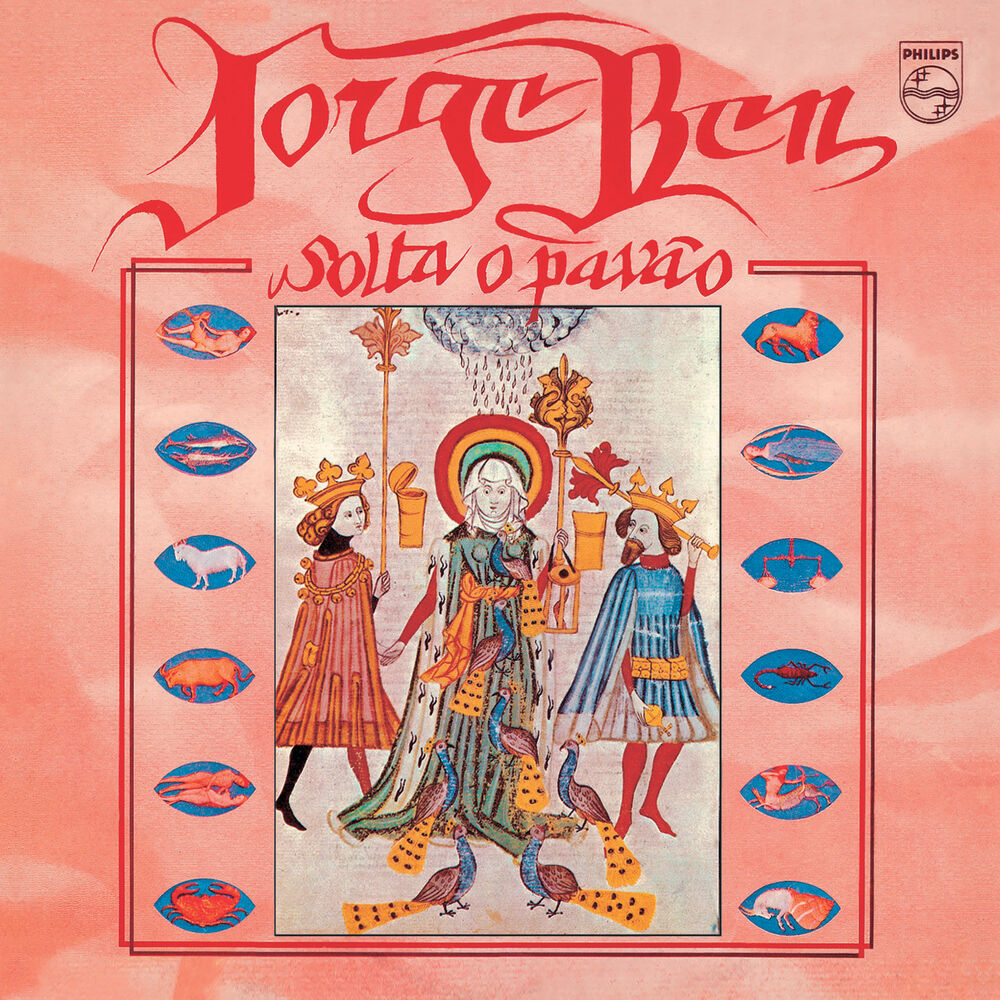
Solta o Pavão, released in 1975, is an indelible landmark in Jorge Ben Jor's discography, notable for introducing the band Admiral Jorge V and, for the first time, featuring the artist wielding the electric guitar on a studio album. This record perfectly encapsulates the rhythmic fusion that became Ben Jor's signature: a vibrant tapestry of samba, samba-rock, soul and funk, with a psychedelic touch that differentiates it within his vast catalogue. It is an album that reflects the essence of his musical style, characterised by a unique swing that many have tried to replicate, but which remains inimitable. The work stands out for its contagious swing, mysticism and strong religiosity, characteristics that the artist had already been exploring and which are intensified here. Solta o Pavão represents a kind of sonic explosion in Jorge Ben Jor's transition from acoustic to electric guitar, preparing the ground for equally emblematic future albums, such as África Brasil. The album's rhythmic exuberance and poetic lyrics, often replete with esoteric and humanist themes, give it lasting importance in Brazilian music, making it a treasure for aficionados of MPB and samba-funk.
Context
By the mid-1970s, Jorge Ben Jor was already an established figure in Brazilian music, with a career that stretched back to the international success of "Mas Que Nada" in 1963. He had already explored various musical avenues, from initial bossa nova to forays into samba-rock, soul and Tropicália influences. Before Solta o Pavão, the artist had released acclaimed albums such as A Tábua de Esmeralda (1974), a highly creative record with inventive melodies and stripped-back harmonies, which addressed esotericism, religion and philosophy. During this period, the Brazilian music scene was buzzing with experimentation and the appropriation of international rhythms, especially American funk and soul, which blended with Brazilian roots. Solta o Pavão emerges in this context of creative effervescence, further consolidating Jorge Ben Jor's unique style. With his acoustic guitar and, from this album onwards, his electric guitar, he continued to forge a completely peculiar musical language, full of rhythm and 'brasilidade'.
Recording
The recording of Solta o Pavão took place at Estúdios Phonogram, located in Barra da Tijuca, Rio de Janeiro. Production and studio direction were handled by Paulinho Tapajós, who played a crucial role in the album's sonic conception. The technical team comprised João Moreira, Luiz Cláudio and Luigi Hoffer as recording engineers, with Luigi Hoffer also undertaking the album's mixing. Paulo "Chocolate" Sérgio and Zé Guilherme served as recording assistants. A notable aspect of the recording was the accompaniment by the band Admiral Jorge V, marking the first time Jorge Ben Jor worked with this group on a studio album. The band consisted of João Roberto Vandaluz on piano, Dadi Carvalho on bass, Gustavo Schroeter on drums and Joãozinho Pereira on percussion, with Jorge Ben Jor himself on vocals, electric guitar and acoustic guitar. This line-up brought new energy and texture to the artist's compositions, especially with the introduction of the electric guitar into his musical arsenal, amplifying the sound and consolidating the transition to a more electrified sound that would be fully explored in subsequent works.
Songs
The twelve tracks on Solta o Pavão are entirely original compositions and demonstrate Jorge Ben Jor's lyrical and rhythmic genius. The songs "Jorge da Capadócia", "Zagueiro" and "Dumingaz" are frequently cited as the album's most famous and have become classics in his repertoire. "Jorge da Capadócia" is a vibrant ode to the warrior saint, with a striking chorus and a mystical energy that made it a public favourite. "Zagueiro" is a playful and poetic samba that celebrates football defenders, a recurring theme in the artist's work. "Dumingaz" stands out for its captivating swing and the unique way Jorge Ben Jor weaves his narratives. Other notable tracks include "Assim Falou Santo Tomaz de Aquino", a theological meditation that illustrates the depth of the album's mystical themes, and "Velhos, Flores, Criancinhas e Cachorros", a humanist plea to Jesus Christ. "Cuidado com o Bulldog" is another gem on the record, with an arrangement that blends the cadence of samba with a frenetic beat reminiscent of rock, evidencing Jorge Ben Jor's rhythmic freedom. The inclusion of string instruments and flutes in arrangements such as that of "Para Ouvir no Rádio (Luciana)" adds layers of sophistication to the songs, while Dadi Carvalho's pulsating bass and occasional string synthesizers ensure an innovative and distinctive sound.
Legacy
Although Solta o Pavão did not achieve the same commercial success as some of its immediate predecessors at the time of its release, such as A Tábua de Esmeralda or the later África Brasil, the album is today recognised as a classic of Brazilian music by critics and enthusiasts. Its relevance is underlined by the influence it exerted on subsequent generations, as evidenced by the sample of the track "Cuidado Com O Bulldog" on the album Afrociberdelia (1996) by the group Chico Science & Nação Zumbi, one of the pillars of the Manguebeat movement. The album maintains an 'A-' rating from critic Tom Hull, solidifying its position as a high-quality work in Jorge Ben Jor's discography. The continuous appreciation for Solta o Pavão is notable, with its CD re-release in 2017 and high demand for vinyl copies, attesting to its enduring relevance and the esteem of collectors and new listeners. It is considered by many a 'gem that needs to be discussed more as a classic in the genre', proving that its rhythmic flight maintains altitude decades after its release.
Tracks
Books
Analyses
Solta o Pavão – Wikipedia
Wikipedia, the free encyclopaedia
Discos para descobrir em casa - 'Solta o pavão', Jorge Ben Jor, 1975
g1.globo.com
Featuring 12 previously unreleased tracks in its entirely self-penned repertoire, the album Solta o Pavão bequeathed to posterity a classic from Ben's songbook, 'Jorge de Capadócia'...
"Solta o Pavão": álbum de Jorge Ben Jor completa 50 anos
radios.ebc.com.br
The album's biggest hit was "Jorge da Capadócia", which was later covered by Caetano Veloso and Fernanda Abreu. Another striking song from the album, opening side A, "Zagueiro", was dedicated to a star player from Flamengo, Jorge Ben Jor's favourite team.

JORGE BEN JOR - SOLTA O PAVÃO (1975 - Philips/Phonogram)
discosmusicaeinformacao.blogspot.com
JORGE BEN JOR - SOLTA O PAVÃO (1975 - Philips/Phonogram) Biography: https://www.letras.com.br/biografia/jorge-ben-jor 01 - Zagueiro (Jorge Ben Jor) 02 - Assim Falou Santo Tomaz de Aquino (Jorge Ben Jor) 03 - Velhos, Flores, Criancinhas e Cachorros (Jorge Ben Jor) 04 - Dorothy (Jorge Ben Jor) Guest Appearance: EVINHA 05 - Cuidado Com o ...