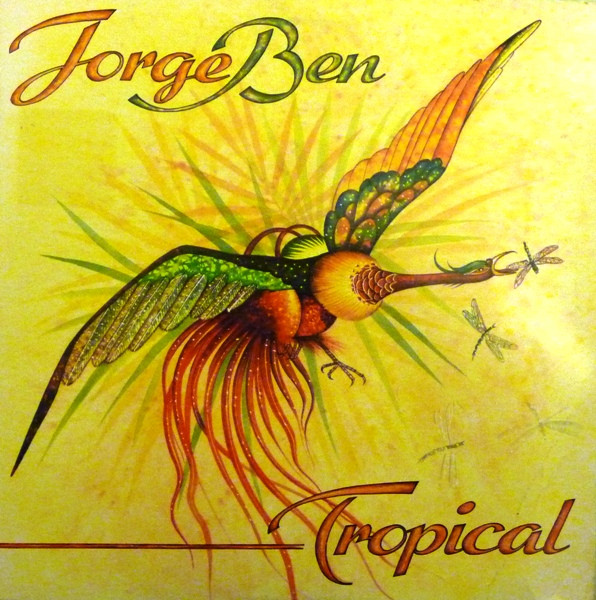
Tropical
Jorge Ben Jor
1976
Rankings
Why This Album Matters
Jorge Ben's self-titled album, released in 1969, represents a fundamental landmark in Brazilian music, solidifying the artistic identity of one of the country's greatest innovators. Considered a samba-soul masterpiece, the record uniquely amalgamates the swing of samba, the energy of funk, psychedelia, and the depth of soul music, creating a vibrant and timeless sound. Its importance lies not only in the genius of its compositions but also in the way Ben transcended and synthesised Brazilian and American genres, paving the way for MPB. This album is a vivid expression of samba-rock, a style Jorge Ben would help define and popularise, with its percussive beats and distinctive acoustic guitar. Featuring songs that would become anthems of Brazilian culture, such as "País Tropical" and "Que Pena (Ela Já Não Gosta Mais De Mim)", the record is a celebration of everyday life, love, and Afro-Brazilian identity, packaged in a unique sound that exploded with an incredible sense of energy.
Context
The release of Jorge Ben in 1969 occurred during an effervescent period of Brazilian culture, at the height of the Tropicália movement, with which the album artistically dialogues, albeit in a particular way. This was the artist's sixth studio album and marked his triumphant return to the Philips record label, following a period of absence since 1965, motivated by creative differences and albums with less commercial repercussion. Jorge Ben's return to Philips was driven by the support of names such as Caetano Veloso and Gilberto Gil, who recognised his genre-transcending musical vision. The record also emerged in a political context of jingoism, a characteristic that, although more associated with Wilson Simonal's version of "País Tropical", permeated the social atmosphere of the time and found resonance in elements of the celebration of Brazilian identity present in Ben's work.
Recording
The album Jorge Ben was carefully recorded at C.B.D. studios in Rio de Janeiro and Scatena in São Paulo, under the production direction of Manoel Barenbein. For the recording, Ben selected songs he had been developing in previous years, incorporating his vision for a unique samba-rock. One of the crucial elements for the album's sound was the participation of Trio Mocotó, a vocal and percussive group Ben met during his performances in the São Paulo nightlife, providing the characteristic and cohesive rhythmic base. Furthermore, the orchestral arrangements, essential for the psychedelic and soul dimension of the record, were conceived by José Briamonte on most tracks, with Rogério Duprat, a central figure of Tropicália, responsible for the arrangements of "Barbarella" and "Descobri que Eu Sou um Anjo", adding a notable psychedelic brilliance.
Songs
Jorge Ben's tracklist is a treasure trove of compositions that capture the artist's creative essence. Beyond the resounding success of "País Tropical" and the gentle melancholy of "Que Pena (Ela Já Não Gosta Mais De Mim)", the album presents the listener with gems like "Criola", "Domingas", and the playful "Barbarella", a whimsical tribute to Jane Fonda's eponymous film. Other notable songs include the socially conscious "Take It Easy My Brother Charles", which addresses themes of race, identity, and resilience, and the curious "Quem Foi Que Roubou A Sopeira De Porcelana Chinesa Que A Vovó Ganhou Da Baronesa?". Ben's lyrics, frequently characterised by eccentric reflections, hypnotic repetitions, and nonsensical words, explore Brazilian daily life, romances, and Afro-Brazilian identity, always with his strongly strummed acoustic guitar dictating the samba rhythm.
Legacy
Jorge Ben was a watershed moment in the artist's career, marking his commercial return and solidifying his position as an innovator in Brazilian music. Although "País Tropical" was initially popularised by Wilson Simonal, Jorge Ben's version on the self-titled album became the biggest hit of his career, and the song became inseparably associated with its author. The album is revered by critics as a samba-soul masterpiece, frequently associated with the samba-rock and Tropicália movements. Recognised as a seminal work, the 1969 record introduced many of the elements of the unique fusion of samba, funk, rock, and bossa nova that would become Ben's hallmark. Its influence was so great that it "set an entire generation alight" and inspired an underground samba-rock movement, with its hypnotic beats being copied by countless artists. The album was reissued in the United States in 2008 and again in 2018, demonstrating its international recognition and lasting impact on world music.
Tracks
Credits
Jacques Morell
Jacques Aubert, Jacques Morell
Podcasts

Em Off Podcast · Em Off Pod
Vamos aprender com Jorge Ben Jor a celebrar as pequenas coisas da vida enquanto ainda é tempo, pois um dia daremos conta que elas foram grandes... Siga o Em Off Pod(cast) nas redes sociais [ https://linktr.ee/emoffpod ]. Playlist Oficial Em Off Podcast ☆ https://spoti.fi/3SrEdmh ☆ Até o próximo episódio ♡
Musicas e Suas Histórias · Paulo Eduardo Arruda
Todos os episódios do Canal Músicas e Suas Histórias (Facebook, Instagram, TikTok e YouTube), podem ser ouvidos no Spotify! Uma boa dica para quem vai viajar! Bom Entretenimento!
Analyses
Tropical – Wikipedia
Wikipedia, the free encyclopaedia

Analisando Discografias - Jorge Ben Jor: Parte 3
obrenno.blogspot.com
After Ben Brasil, Jorge left Som Livre and signed with Warner, which had a large catalogue of artists, and in that same period he changed his artistic name to Jorge Ben Jor (as it remains to this day).
Jorge Ben Jor - Tropical - Ouvir todas as 9 músicas
ouvirmusica.com.br
Come and listen to "Taj Mahal", "Os Alquimistas Estão Chegando Os Alquimistas", "Chove Chuva" and many other songs from the album Jorge Ben Jor - Tropical!