Jorge Mautner
Jorge Mautner
1974

Rankings
Why This Album Matters
The album Jorge Mautner, released in 1974, marks a fundamental turning point in the discography of the Rio de Janeiro-born artist, being his first studio work after the live recording Para Iluminar a Cidade. This album is a vibrant expression of Mautner's unique aesthetic, which moves between mystical poetry, social criticism and rich musical experimentation, characteristic of the Brazilian post-Tropicalismo scene. Under the baton of Gilberto Gil's production, the album consolidated Mautner's image as an eccentric and brilliant bard, whose compositions defy labels and invite listeners on a sonic and lyrical journey. The album's relevance is amplified by the presence of emblematic songs such as "Maracatu Atômico", which would become an anthem of Brazilian pop culture, and other pieces that reveal the artist's melodic and poetic inventiveness, such as "Herói das Estrelas" and "Cinco Bombas Atômicas". The fusion of Brazilian rhythms with rock elements and a psychedelic atmosphere gives the album a timeless character, demonstrating Mautner's ability to create a work that, whilst deeply rooted in its time, engages with different generations of listeners.
Context
In 1974, Brazil was still living under the repression of the military dictatorship, but cracks were beginning to appear for cultural effervescence and defiance. In this landscape of censorship and effervescence, artists like Jorge Mautner, who had experienced exile or cultural marginalisation, found ways to express their worldviews through art. Mautner, a multifaceted intellectual with a background in literature and cinema, already carried a legacy of provocation and transgression that was reflected in his music. His previous trajectory, which included the live album Para Iluminar a Cidade, already foreshadowed the uniqueness of his proposal. His collaboration with Gilberto Gil on the production of this 1974 album not only further legitimised his work within the MPB mainstream, but also inserted him into a dialogue with the musical avant-garde of the time, allowing his peculiar voice and "cosmic" ideas to reach a wider audience.
Recording
The recording of the album Jorge Mautner took place at Phonogram and Havaí studios, in Rio de Janeiro, a process that benefited from the expertise of renowned technicians such as João Moreira, Luís Claudio and Orlando Costa. Studio direction and artistic production were handled by Gilberto Gil, whose keen vision contributed significantly to the album's final sound, guiding the band in collective arrangements that highlight the spontaneity and chemistry between the musicians. The technical sheet reveals the presence of a formidable team of instrumentalists, including Jorge Mautner himself on vocals, mandolin and violin, Nelson Jacobina on guitars and vocals, Roberto de Carvalho on various keyboards and guitars, in addition to the rhythm section comprising Rodolfo Grani Junior on bass and drummers Tuti Moreno and Chiquinho Azevedo. This line-up allowed for a rich sonic exploration, balancing the complexity of the compositions with the energy and freedom of the performance, resulting in an album with a distinctive sonic identity.
Songs
Jorge Mautner's repertoire is a true tapestry of ideas and rhythms, highlighting songs that would become classics of Brazilian music. The track "Maracatu Atômico", co-written with Nelson Jacobina, is a prime example of the fusion of traditional maracatu elements with a futuristic theme and lyrics that evoke a universe of freedom and transcendence, one of the album's great legacies. Other notable compositions include "Herói das Estrelas" and "Cinco Bombas Atômicas", also collaborations with Jacobina, which reveal Mautner's penchant for epic and imagery-rich narratives, laden with symbolism. Songs such as "Pipoca À Meia-Noite" and "Guzzy Muzzy" display the composer's playful yet reflective streak, with lyrics that oscillate between the dreamlike and the everyday. The thematic and musical diversity is notable, with "Ginga de Mandiga", a partnership with Rodolfo Grani Junior, exploring a rhythmic Brazilianness, whilst "Rock da TV" and "Samba dos Animais" exemplify Mautner's versatility in navigating different genres, always with his unmistakable lyrical and melodic signature. The lyrics, often enigmatic and philosophical, invite the listener to a personal interpretation, a characteristic of Mautner's work.
Legacy
Despite its original release in 1974, the impact of Jorge Mautner echoed and amplified over the decades. The song "Maracatu Atômico" transcended the original album, gaining massive notoriety through Gilberto Gil's rendition and being re-recorded by countless artists, solidifying its place as an unquestionable classic of Brazilian popular music. Its influence can be felt in various artistic manifestations, from manguebeat to contemporary music, proving the perennial nature of its message and arrangement. The album, whilst perhaps not a massive commercial success upon its initial release, became a cult item and an essential reference for understanding Jorge Mautner's work and late Tropicalismo. Its critical importance led to re-releases at different times, including unlimited pressings by the independent label Rock Company in the 90s, and a more comprehensive re-edition in 2014 by Universal Music, as part of the Três Tons de Jorge Mautner box set. This posthumous recognition reinforces the artistic and historical value of the album, which continues to inspire and challenge new generations of musicians and listeners.
Tracks
Credits
Gilberto Gil
Jorge Mautner
Rodolpho Grani Júnior
Tutty Moreno
Nelson Jacobina
Chiquinho Azevedo
Roberto De Carvalho
João Moreira, Luis Cláudio Coutinho
Orlando Costa
Milton Machado
Rogério Duarte
Thereza Eugenia
Films

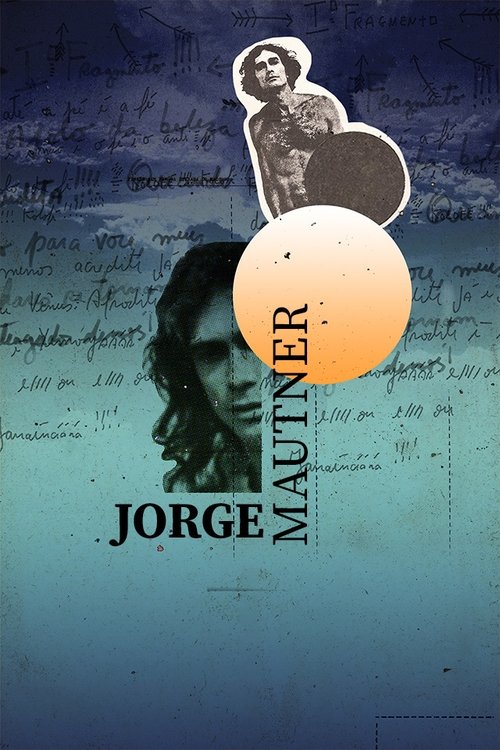
Jorge Mautner: Kaos Em Ação
2020
Centred on Jorge Mautner's 60-year career, the series presents defining moments in Brazil's artistic and political history through unreleased archival footage. Figures such as Gilberto Gil, Caetano Veloso, Maria Bethânia, Fausto Fawcett and Otto retrace Brazil's long journey from the 20th to the 21st century.

Jorge Mautner: Son of the Holocaust
2012
The film follows the birth of Jorge Mautner up to his 17 years. He was born in Brazil shortly after his parents fled the Holocaust. Raised by a nanny who introduced him to Candomblé, Mautner became a precursor of the Tropicália, contributing to the construction of the identity of Brazilian music.
Books

Os 500 Maiores Álbuns Brasileiros de Todos os Tempos
Ricardo Alexandre · 2022
The largest Brazilian music election ever conducted: 162 specialists, spanning journalists, critics, musicians, producers and podcasters, each nominated 50 essential albums, supported by a masterlist of more than 2,000 works. Led by Ricardo Alexandre with tabulation by Sérgio Jomori, it was published in December 2022 as a 200-page hardcover book with graphic design by Fernando Pires.

300 Discos Importantes da Música Brasileira
Charles Gavin, Tárik de Souza, Carlos Calado, Arthur Dapieve · 2008
Conceived by Titãs drummer and musical researcher Charles Gavin, the 434-page book brings together covers and reviews of albums released between 1929 and 2007. The texts were written by journalists Tárik de Souza, Arthur Dapieve and Carlos Calado.
Jorge Mautner
Jorge Mautner · 2007
This book is part of the 'Encontros' collection, the largest and most prestigious series of interviews with Brazilian artists and thinkers. With over 50 titles published, the collection offers a broad overview of Brazil's cultural and intellectual richness. In the volume dedicated to Jorge Mautner, he is presented as a composer, writer, filmmaker, and creator of Kaos, addressing his multifaceted artistic and intellectual trajectory directly from his perspective, which is essential for understanding the context of his works, including the 1974 album.
Analyses
Jorge Mautner – Wikipedia
Wikipedia, the free encyclopaedia
Panfletos da Nova Era - um portal de Jorge Mautner :: Jorge Mautner (1974)
panfletosdanovaera.com.br
The genius of Gilberto Gil's musical direction stands out on this album. Recorded at Havai studio in Rio de Janeiro, it also marks the musical launch of the young instrumentalist Roberto de Carvalho, who played keyboards.
Contracultura, Misticismo E Desatino Em "Um Salto No Escuro" De Jorge ...
seer.franca.unesp.br
Phonogram released experimental albums, such as Jorge Mautner's album and two albums by Jards Macalé, at a more affordable price for the public.

MUSICA&SOM: Jorge Mautner - 1974
tabernanovostempos.blogspot.com
My favourite album by the master, with a very electric sound, mixing rock, Afro beats, samba, blues, funk, and other sonorities with beautiful production by Gilberto Gil and a super team of musicians.
NA PONTA DA AGULHA #298 - Especial 50 anos de "Jorge Mautner - 1974"
napontadaagulha.bandcamp.com
Jorge Mautner's second album and his first recorded in a studio, "Jorge Mautner - 1974" is a precious album, a true masterpiece, which establishes the musical language of the poet, singer, composer, musician, writer, filmmaker, and thinker, a figure of enormous importance for Brazilian culture.