Padê
Juçara Marçal & Kiko Dinucci
2008
Rankings
Why This Album Matters
Padê, released in 2008, represents a fundamental landmark in contemporary Brazilian music, marking the first creative encounter between singer Juçara Marçal and guitarist and composer Kiko Dinucci. This album is a deep immersion into Afro-Brazilian matrices and popular song, built upon the strength of ancestry. The sound of Padê, essentially voice and guitar, stands out for its rawness and authenticity, exploring rhythms and themes that directly reference the African cultural traditions present in Brazil. The album's title, in Yoruba, refers to a Candomblé ceremony in which offerings are made to Exu, serving as an energy catalyst and a way to evoke ancestral protection, which already indicates the spiritual and cultural depth of the work. This singular work established the foundations for an artistic partnership that would prove extremely influential, defining a style that blends Brazil's rich rhythmic heritage with a contemporary and often experimental approach.
Context
Before Padê, Juçara Marçal was already a respected figure on the music scene, having participated in the group A Barca since 1998, deepening her research into Brazilian popular culture and exploring Afro-Brazilian culture. Kiko Dinucci, for his part, was recognised as an innovator of São Paulo samba, but with work that encompassed a vast range of genres, including marchinha, lundu, jongo, batuque, rumba, bolero, embolada, jazz and Afro-Brazilian rhythms, in addition to post-punk influences from his indie and hardcore bands in the 90s. The meeting between Juçara and Kiko occurred in 2004, when the singer was impressed by the composer's artistic quality and mix of influences. Padê emerged four years later, at a time when both already carried strong references from African-matrix religions and Brazilian popular culture, preparing the ground for the joint exploration of this rich musical tapestry.
Recording
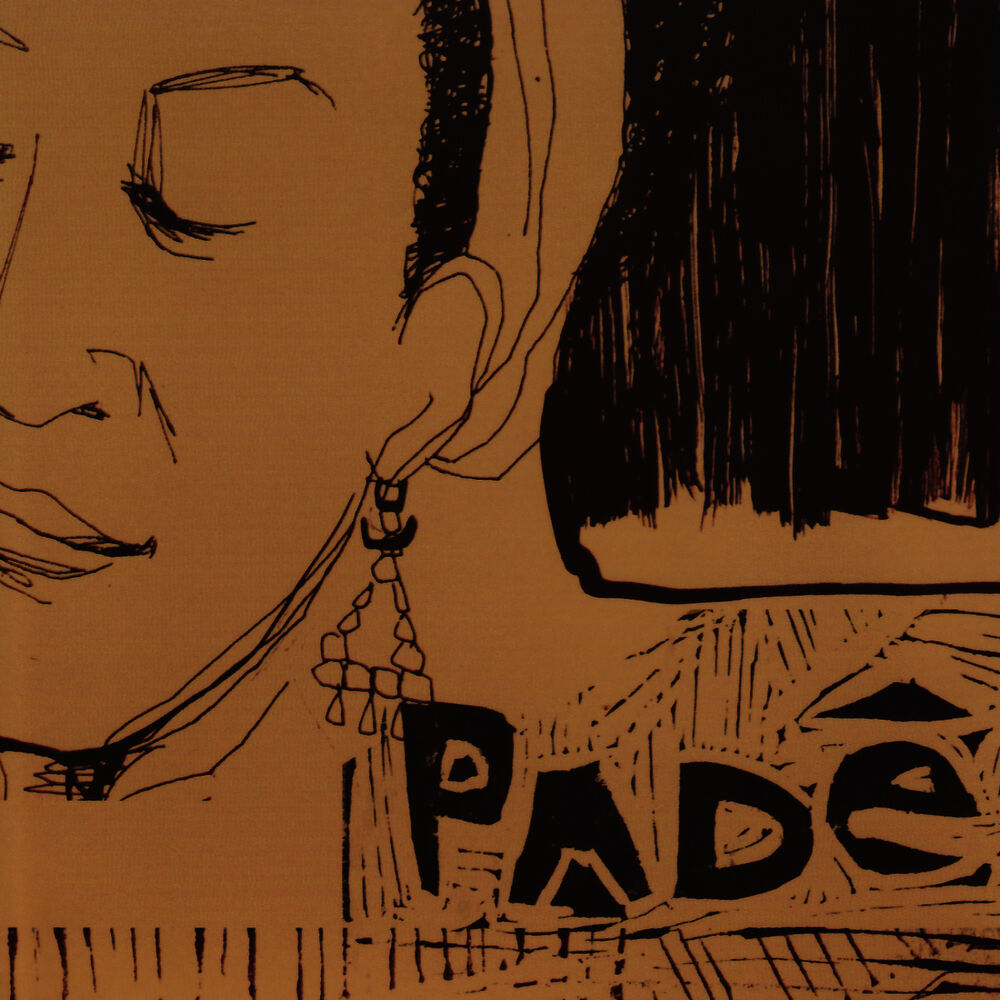
The recording process for Padê took place over several sessions throughout 2006, specifically on 17 and 27 May, 16 June, 20 and 28 September, at Estúdio Zabumba. Mixing was finalised on 12 January and 2 February 2007, also at Estúdio Zabumba, under the responsibility of André Magalhães. Mastering was carried out by André Magalhães at Estúdio Escafandro. The original edition was released on CD in 2008. In 2018, celebrating the tenth anniversary of its release, Padê received its first vinyl version, a deluxe edition limited to 500 copies, pressed on 180g LP by Vinil Brasil. The hardback gatefold cover, pasted with special paper, featured exclusive artwork by Kiko Dinucci, including India ink drawings and a woodcut of Ogum.
Songs
Padê's songs are built upon the foundation of African ancestry and Brazilian popular song, prioritising the expressiveness of voice and guitar. The album features compositions by Kiko Dinucci, who penned eight tracks, and others by names such as Candeia, Nina Alvarenga, Paulo Padilha, Luiz Tatit, Batatinha, Lincoln Antonio and Walter Garcia, and André Bueno. Tracks such as "Padê" itself, "São Jorge", "Machado de Xangô" and "Atotô" highlight the strong connection with Afro-Brazilian culture and religiosity. The lyrics and melodies delve into a universe that evokes rituals and sacred elements, characteristics that would become a hallmark of the collaboration between the artists.
Legacy
Padê is widely considered a gem and a watershed moment in contemporary Brazilian music. Its importance transcended its initial release, being recognised as the starting point for one of the most prolific and iconic partnerships of the decade: the formation of the trio Metá Metá in 2010, with the addition of saxophonist Thiago França. The album's influence is evident in the artists' subsequent careers. The track "São Jorge", for example, was re-recorded and reappeared on Metá Metá's album MetaL MetaL. Critical reception over the years has been consistent, with the album being highly rated by listeners, achieving an average of 4.93 out of 5 stars for the vinyl version and 4.4 out of 5 for the CD version on Discogs, which demonstrates its lasting value and appreciation. The deluxe vinyl reissue in 2018, to celebrate its tenth anniversary, also reaffirms its place as a fundamental work in the artistic trajectory of Juçara Marçal and Kiko Dinucci.
Tracks
Analyses
Kiko Dinucci e Juçara Marçal - Padê (2007) | cenaindie
cenaindie.com
The album 'Padê', by Kiko Dinucci and Juçara Marçal, is a profound exploration of Brazilian musicality with strong African roots. The work traverses genres such as candomblé, tambor de mina, umbanda, and batuques from the Southeast, incorporating elements of samba, lundu, jongo, jazz, and other rhythms.
Juçara Marçal e Kiko Dinucci: Padê - GOMA®
g-o-m-a.com
Four years later, in 2008, the singer and the composer/guitarist recorded Padê, an album built upon the African ancestry present in the heritage of popular Brazilian song. Little did they know, but Padê would be the starting point for a long and prolific artistic partnership.