A Sétima Efervescência
Júpiter Maçã
1997

Rankings
Why This Album Matters
A Sétima Efervescência marks the solo debut of the visionary Júpiter Maçã, establishing a new and audacious path for Brazilian music. Released in 1997, the album is a deep dive into 1960s psychedelia, weaving a sonic tapestry that encompasses psychedelic rock, acid rock, folk, and punk rock. Its distinctive sound recaptures the essence of icons like The Beatles and Syd Barrett, injecting it into a uniquely Brazilian context. This work represents a turning point in the artist's discography, consolidating a musical aesthetic that distanced itself from the conventions of his previous bands. With its innovative approach and well-assimilated influences, the album stands out as a fundamental work for understanding the creative effervescence and experimentation within the national rock scene.

Somewhere between Roberto Carlos, Rita Lee and Syd Barrett, Júpiter feels his body melting, visits planets and talks to imaginary beings.
Alexandre Matias · Rolling Stone Brasil
Context
Before embarking on his solo journey as Júpiter Maçã, Flávio Basso, his birth name, was a prominent figure in the Gaúcha music scene of the 1980s, as a member of the acclaimed bands TNT and Os Cascavelletes. However, in the following decade, Flávio opted for an artistic transformation, adopting the pseudonym Júpiter Maçã and exploring new sounds. In his solo career, the musician sought to distance himself from the glam rock characteristic of Os Cascavelletes, delving into folk before embracing psychedelic rock. This transition allowed him to establish a unique dialogue between British and Brazilian cultures, incorporating elements of 1960s psychedelia and Jovem Guarda into his compositions.
Recording
A Sétima Efervescência was recorded in August 1996 at ACIT studios in Porto Alegre, and released regionally by the Antídoto label in December 1997. Production was handled by Egisto Dal Santo and Júpiter Maçã himself, with a clear intention to replicate the atmosphere of 1969. To achieve this, only analogue equipment was used in the studio. The recording sessions were intense, taking place between midnight and eight in the morning, totalling over 200 hours of studio time. The album was recorded and mixed on 24 channels, employing an analogue system that gave the work its particular sonic texture. Many of the songs featured had been previously released in demo versions on the album Júpiter Maçã & Os Pereiras Azuiz, from 1995, but for this new venture they gained orchestral arrangements by Marcelo Birck. The record also featured special appearances by Frank Jorge and Alexandre Barea, former bandmates of Júpiter Maçã in Os Cascavelletes, enriching the artistic collaboration.
Songs
The repertoire of A Sétima Efervescência is a compendium of musical experiments and references, with a focus on songs that became emblematic. Tracks like “Um Lugar do Caralho” and “Miss Lexotan 6 mg Garota” were so impactful that they were re-recorded by other artists, such as Wander Wildner and the band Ira!, respectively. “Um Lugar do Caralho” is notable for its organ timbres and fuzz distortion on the guitar, being considered an anthem of Gaúcha rock. Among other singles that stood out are “Eu e Minha Ex”, which features an orchestral arrangement inspired by Tropicalista songs, and “Miss Lexotan 6 mg Garota”, which reveals a strong influence from Beatles ballads. Surrealist lyrics characterise songs like “As Tortas e as Cucas” and “Querida Superhist x Mr. Frog”. Meanwhile, “Walter Victor”, which addresses issues of chemical dependency, is one of the compositions inspired by Syd Barrett, while “Pictures and Paintings” echoes punk rock and “Sociedades Humanóides Fantásticas” explores an experimental theme in acid rock. All tracks were composed by Júpiter Maçã, with the exception of “The Freaking Alice”, co-written with Egisto Dal Santo.
Legacy
A Sétima Efervescência consolidated its position as one of the most important albums in Brazilian rock and a landmark for critics. In 2007, Rolling Stone Brasil magazine included it at position 96 on its list of the hundred greatest albums in Brazilian music. In the same year, Aplauso magazine recognised it as the greatest Gaúcha rock album. More recently, in 2022, Cristiano Bastos' book 100 Grandes Álbuns do Rock Gaúcho, placed the record in second position. The album's impact transcended musical spheres in Porto Alegre, influencing the behaviour and aesthetics of young people, who adopted the “Beatle” style and formed bands that emulated the mod symbolisms rescued by Júpiter Maçã. The song “Miss Lexotan 6 mg Garota” even appeared among the 15 most played songs on Ipanema FM radio in 1998, in addition to gaining a music video. The album's influence is evident in the re-recordings of its songs, such as “Um Lugar do Caralho” by Wander Wildner, “Miss Lexotan 6 mg Garota” by the band Ira!, and “Eu e Minha Ex” by Rogério Skylab. In 2015, “Um Lugar do Caralho” gained even more visibility by being included in the soundtrack of the TV Globo telenovela Verdades Secretas. Celebrating Júpiter Maçã's 50th birthday in 2018, the album was remastered from the original master tapes and re-released on double vinyl by Monstro Discos, and also re-edited as a bonus CD for the 2013 compilation The Rough Guide to Psychedelic Brazil.
Tracks
Credits
Egisto Dal Santo, Jupiter Maçã
Emerson Caruso
Glauco Caruso
Jupiter Maçã
Thomas Dreher
Thomas Dreher
Gustavo Dreher
Raul Albornoz
Fetter & Coelho
Marcelo Nunes
Videos
Playlist-S nº. 88 - A Sétima Efervescência (1997) - Júpiter Maçã (Análise Musical)
Playlist Sonora
Books
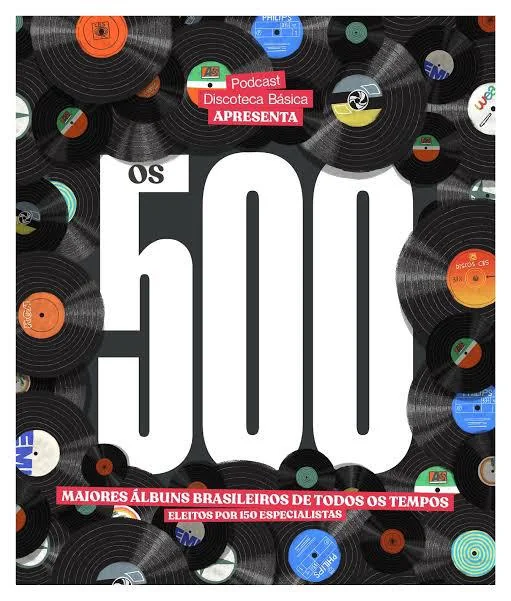
Os 500 Maiores Álbuns Brasileiros de Todos os Tempos
Ricardo Alexandre · 2022
The largest Brazilian music election ever conducted: 162 specialists, spanning journalists, critics, musicians, producers and podcasters, each nominated 50 essential albums, supported by a masterlist of more than 2,000 works. Led by Ricardo Alexandre with tabulation by Sérgio Jomori, it was published in December 2022 as a 200-page hardcover book with graphic design by Fernando Pires.
Júpiter Maçã
Cristiano Bastos , Pedro Brandt · 2017
Júpiter Maçã: A Efervescente Vida & Obra, by Cristiano Bastos and Pedro Brandt, is a comprehensive 500-page biography of Flávio Basso (1968-2015). The work narrates the trajectory of the Gaucho rock icon (TNT, Cascavelletes, and solo career), exploring his genius, psychedelia, struggles with alcoholism, and creative process, being the most complete analysis of the artist behind the album 'A Sétima Efervescência'.
Analyses
A Sétima Efervescência – Wikipedia
Wikipedia, the free encyclopaedia
A Sétima Efervescência – The 100 Greatest Albums of Brazilian Music
Alexandre Matias · Rolling Stone Brasil
Somewhere between Roberto Carlos, Rita Lee and Syd Barrett, Júpiter feels his body melting, visits planets and talks to imaginary beings.

MUSICA&SOM: Júpiter Maçã - "A Sétima Efervescência" (1997)
tabernanovostempos.blogspot.com
Here, two approaches on Flávio Basso, Júpiter Maçã, that shed light on his significance and complexity within the Gaucho and Brazilian rock music scene.
Júpiter Maçã - A Sétima Efervescência - Ouvir todas as 14 músicas
ouvirmusica.com.br
Come and listen to 'Um Lugar Do Caralho', 'As Tortas e As Cucas', 'Querida Superhist X Mr. Frog' and many other songs from the album Júpiter Maçã - A Sétima Efervescência!