Uma Tarde na Fruteira
Júpiter Maçã
2007

Rankings
Why This Album Matters
Uma Tarde na Fruteira, released in 2007, represents a crucial point in the discography of the brilliant Júpiter Maçã, being the fourth and final studio album released during the musician Flávio Basso's lifetime. Distancing itself from its English-focused predecessors, this work stands out for being predominantly sung in Portuguese, marking a return to a more "accessible" psychedelia, rooted in the sound of his acclaimed debut, A Sétima Efervescência. The album was warmly received by critics, being praised by Stewart Mason of AllMusic as " richly melodic and instantly memorable". Its eclectic sound, which moves between progressive rock, psychedelic rock, art rock, folk rock, and even bossa nova, earned comparisons from Bruno Yutaka Saito in Folha de S.Paulo to artists as diverse as Caetano Veloso, Roberto Carlos, and Stereolab. The title "Uma Tarde na Fruteira" is a precise metaphor for the album's concept, revealing itself as a basket of distinct influences and "selves", a true mosaic of the artist's rich musical trajectory.
Context
Flávio Basso, better known as Júpiter Maçã (or Jupiter Apple in his English-language works), built a seminal musical trajectory for Rio Grande do Sul and Brazilian rock. Before his solo career, he was a central figure in influential bands such as TNT and Os Cascavelletes in the late 80s. His solo turn began with the striking A Sétima Efervescência, from 1997, an album that became a watershed moment in Brazilian psychedelia and is frequently cited as one of the great albums of national rock. Uma Tarde na Fruteira arrived after a phase of sonic expansion, with albums like Plastic Soda and Hisscivilization, where Júpiter Maçã incorporated electronic and bossa nova elements. The release of this album was eagerly awaited by fans, marking the return of a studio work under the name Júpiter Maçã after a considerable hiatus since his first album.
Recording
The album Uma Tarde na Fruteira was recorded throughout 2007, with its production handled by Thomas Dreher. Most of the sessions took place at Estúdio Dreher, in Rio Grande do Sul, with additional recordings in São Paulo, specifically at Estúdio Submarino for the track "Tema de Júpiter Maçã" and at Estúdio El Rocha for "A Menina Super Brasil". Júpiter Maçã demonstrated his multi-instrumental versatility by playing vocals, bass, electric and classical guitar, electric organ, piano, drums, kazoo, and percussion on the album. The cast of collaborating musicians was equally diverse, including names like Thalita Freitas and Cuca Medina on backing vocals and percussion, Rodrigo Souto and Luciano Bolobang on drums, Astronauta Pinguim on organ and Moog, Bibiana Graeff on accordion, synthesizer, and marimba, Lúcio Vassaratt on sitar, Ray-Z on electric guitar, and Zé do Trompete on trumpet. Some of the compositions featured on the album had a long gestation, with initial recordings dating back to 2000, made on a four-track portable recorder, at Estúdio Submarino, during a period when Júpiter Maçã was returning to São Paulo after a stay in London.
Songs
Uma Tarde na Fruteira stands out for its predominance of lyrics in Portuguese, a contrast with previous works, and for the richness of genres it encompasses, from progressive and psychedelic rock to art rock, folk rock, and bossa nova. Tracks such as "A Marchinha Psicótica de Dr. Soup", "Mademoiselle Marchand", and "Beatle George" became emblematic. "A Marchinha Psicótica de Dr. Soup" is a masterpiece of psychedelia, with a circus cadence and lyrics that explicitly cite Caetano Veloso, revealing the multiple influences that form the album's "mosaic of a thousand images". "Beatle George" is a direct homage to George Harrison, incorporating sitar elements reminiscent of the former Beatle. Meanwhile, "Mademoiselle Marchand" follows the psychedelic vein, with musical references that evoke Os Mutantes' progressive phase. Other highlights include the retro electronic jazz of "Base Primitiva Revisitada", compared to Stereolab, and the fusion of pop and experimentalism in "A Menina Super Brasil". It is important to note that the album was released in two distinct versions: the original from Elefant Records (2007), which functioned as a compilation with some unreleased tracks, and the re-release from Monstro Discos (2008), which contained only the new compositions, all sung in Portuguese, consolidating the work's identity for the Brazilian public.
Legacy
Uma Tarde na Fruteira was critically acclaimed upon its release, consolidating Júpiter Maçã's reputation as one of the great names in Brazilian music. Stewart Mason, from AllMusic, awarded the album 3.5 out of 5 stars, highlighting its melody and the fact that it is "instantly memorable", drawing parallels with the most effervescent era of Brazilian music, from the birth of bossa nova to Tropicália. Bruno Yutaka Saito, in his review for Folha de S.Paulo, praised the album's "eclectic" sound, comparing it to artists such as Caetano Veloso, Roberto Carlos, and Stereolab. The album's relevance also manifested itself in important best-of lists: Alexandre Matias, from the Trabalho Sujo website, included it in 24th position on his "50 Maiores Álbuns de 2008", and the La Cumbuca website ranked it 198th on its list of the "200 melhores álbuns brasileiros dos anos 2000". The album's influence transcended the artist himself, with Rogério Skylab performing covers of "Na Casa de Mamãe" and "A Marchinha Psicótica de Dr. Soup". Additionally, tracks such as "A Marchinha Psicótica de Dr. Soup" and "As Mesmas Coisas" were included in the soundtrack of the animated film "Wood & Stock: Sexo, Orégano e Rock'n'Roll" (2006). The enduring quality of the work was reaffirmed in 2019 with the release of a deluxe double vinyl edition by Monstro Discos, attesting to its status as a recent classic of Brazilian rock.
Tracks
Credits
Jupiter Maçã
Thomas Dreher
Jupiter Maçã
Cuca Medina, Talitha Freitas
Bibiana Graeff
Jupiter Maçã
Jupiter Maçã
Bolo Bang, Clayton Martin, Jupiter Maçã, Simpson
Cuca Medina, Gustavo Dreher
Jupiter Maçã, Ray-Z
Jupiter Maçã
Bibiana Graeff
Maísa Del Frari
Astronauta Pinguim, Jupiter Maçã
Bolo Bang, Jupiter Maçã, Simpson, Talitha Freitas
Jupiter Maçã
Lúcio Vassarat
Cuca Medina
Zé Do Trumpete
Joana Carolina
Bibiana Morena
Podcasts

Pausa para o Cigarro · Pausa Para O Cigarro
Esse é o primeiro DISCO DA SEMANA, neste quadro ouvimos um disco completo e comentamos faixa a faixa. E a estreia é com o sensacional uma Tarde na fruteira, do Júpiter Maçã.
Videos
"Uma tarde na fruteira" - Júpiter Maçã | Melhores discos brasileiros dos anos 2000 | Alta Fidelidade
Alta Fidelidade
Films


Books
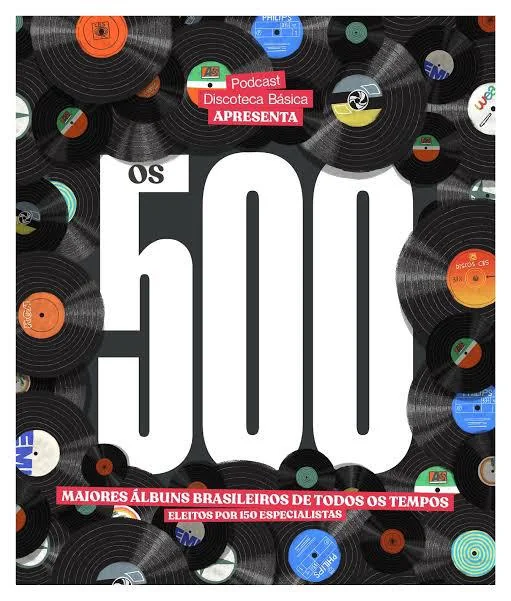
Os 500 Maiores Álbuns Brasileiros de Todos os Tempos
Ricardo Alexandre · 2022
The largest Brazilian music election ever conducted: 162 specialists, spanning journalists, critics, musicians, producers and podcasters, each nominated 50 essential albums, supported by a masterlist of more than 2,000 works. Led by Ricardo Alexandre with tabulation by Sérgio Jomori, it was published in December 2022 as a 200-page hardcover book with graphic design by Fernando Pires.
Júpiter Maçã
Cristiano Bastos , Pedro Brandt · 2017
Júpiter Maçã: A Efervescente Vida & Obra', by Cristiano Bastos and Pedro Brandt, is a comprehensive 500-page biography of Flávio Basso (1968-2015). The work narrates the trajectory of the Gaúcho rock icon (TNT, Cascavelletes and solo), exploring his genius, psychedelia, struggles with alcoholism and his legacy, covering his entire discography, including the album 'Uma Tarde na Fruteira'.
Analyses
Uma Tarde na Fruteira – Wikipedia
Wikipedia, the free encyclopaedia

LP - Júpiter Maçã - Uma Tarde Na Fruteira (Versão BRASIL)
psicobrdiscos.blogspot.com
Note: the album is being re-released on vinyl in both the original Spanish edition and the Brazilian edition. The covers are completely different, while the tracklists are similar, but not exactly identical.
Disco inédito do Júpiter Maçã sai na Espanha - Whiplash.Net
whiplash.net
JÚPITER MAÇÃ's eagerly awaited album, "Uma Tarde na Fruteira", was finally released in Spain by the Elefant label.