Rastilho
Kiko Dinucci
2020

Rankings
Why This Album Matters
Rastilho, released in 2020 by Kiko Dinucci, stands out as a singular work in contemporary Brazilian music, redefining the role of the acoustic guitar through an approach that fuses tradition with a viscerally 'punk' aesthetic. The album absorbs the rich lineage of Brazilian guitarists like Dorival Caymmi, João Gilberto, Baden Powell, Jorge Ben and Gilberto Gil, but filters them through a raw and percussive musical vision. Rastilho's sound is markedly original, exploring textures of folk music with a forceful playing style, where the instrument often overshadows voices and lyrics, evoking the phrase "The wood sings". Lyrically, the work delves deep into Afro-Brazilian culture, addressing themes such as slavery, revolutionary figures, Candomblé and evangelical Christianity, building a conceptual universe that stitches past and present together in a delirious fashion.
Context
Before Rastilho, Kiko Dinucci was already a prominent and innovative name in the Brazilian music scene, known for his participation in seminal groups such as Metá Metá and Passo Torto, and for significant collaborations with artists like Tom Zé, Criolo and Elza Soares. His previous solo work, Cortes Curtos (2017), explored a more electric sound, marked by 'dirty samba' and influences from rock and post-punk. Rastilho represents an intentional return to the acoustic guitar, an instrument with which Dinucci began his musical journey and which he had somewhat set aside to explore the electric guitar. This rediscovery of the acoustic guitar was motivated, in part, by a period of recovery after a skateboarding accident.
Recording
The album Rastilho was meticulously recorded on analogue tape, with the intention of emulating the production techniques of Brazilian records from the 1960s and 1970s. The recording sessions took place over a few days in September 2019, with Bruno Buarque and André Magalhães responsible for the entirely analogue recording and mixing. To achieve the desired atmosphere, Dinucci and the team drew inspiration from old recordings by artists such as Sergio Ricardo and Geraldo Vandré, paying attention to the use of echoes, delays and reverbs. Part of the album's 'dirty' and characteristic sound comes from the capture of noises such as nail scratches and the sound of the strings hitting the guitar's fretboard. Furthermore, a notable technique used in the recording was the placement of a microphone on a tall stepladder outside the recording room, where a speaker made the guitar resonate, capturing the ambient echo for the album's assembly.
Songs
The songs on Rastilho are an exercise in deconstruction and reinvention, giving absolute prominence to Kiko Dinucci's acoustic guitar playing, which is described as an incendiary 'rastilho' for Brazilian music. The opening track, "Exu Odara", is an instrumental piece that evokes Baden Powell's Afro heritage and traditional Candomblé themes. "Olodé" is dedicated to the Orixá Oxóssi, featuring percussive guitar that recalls a one-man samba school, driven by a strong female choir. The album also explores vivid narratives and characters: "Marquito" is an instrumental piece referring to Marco Antônio Brás de Carvalho, a 1960s guerrilla fighter, and is influenced by the film Bacurau. "Dadá" features Ava Rocha and refers to the cangaceira Sérgia Ribeiro da Silva and a character from the film Deus e o Diabo na Terra do Sol. "Gaba", featuring Juçara Marçal, is inspired by the Angolan princess Gaba Zacimba, enslaved in Brazil. The track "Febre do Rato" portrays an unsettling scene of São Paulo's streets and an evangelical church, while "Veneno", featuring Rodrigo Ogi, narrates a story of tragedy amidst magical celebration.
Legacy
Rastilho was widely acclaimed by critics, recognised as one of the most significant works of 2020 and considered one of the 100 best Brazilian music albums. The album was named "Album of the Year" by the Associação Paulista de Críticos de Arte (APCA) in 2020. Additionally, it received two Multishow Awards in 2020, in the categories of "Best Cover Art" and "Best Recording", highlighting the aesthetic and technical quality of the production. The album's repercussion extended beyond Brazil, with international publications like Pitchfork praising its innovative approach. Rastilho solidified Kiko Dinucci's position as one of the most inventive artists in contemporary Brazilian music, opening new avenues for the acoustic guitar and genre fusion, while simultaneously revisiting and subverting the creative identity of national music.
Tracks
Podcasts

Discos e Girafas
Kiko Dinucci é um artista paulista, que depois de sofrer um acidente, foi forçado a pegar o violão e compor o seu primeiro álbum inteiramente de voz e violão. E assim nasceu o 'Rastilho', álbum lançado em 2020 em meio à um Brasil caótico mas que também oferece a beleza de sua ancestralidade e cultura popular que são trazidos no álbum expressos em suas músicas. - Episódio passado: #04 BILLBOARD: Up

Faro Novabrasil · Novabrasil
Conheça um pouco mais sobre o cantor, compositor, instrumentista, artista plástico e diretor de cinema brasileiro, Kiko Dinucci! 💚Kiko começou sua carreira na década de 90, onde foi integrante de diversas bandas de rock. Em 2007 iniciou sua carreira como compositor, no álbum "Padê", da cantora Juçara Marçal. "Rastilho", seu álbum mais recente, foi duplamente premiado no Prêmio Multishow de Música
Vira o disco Podcast · Bruno Buarque
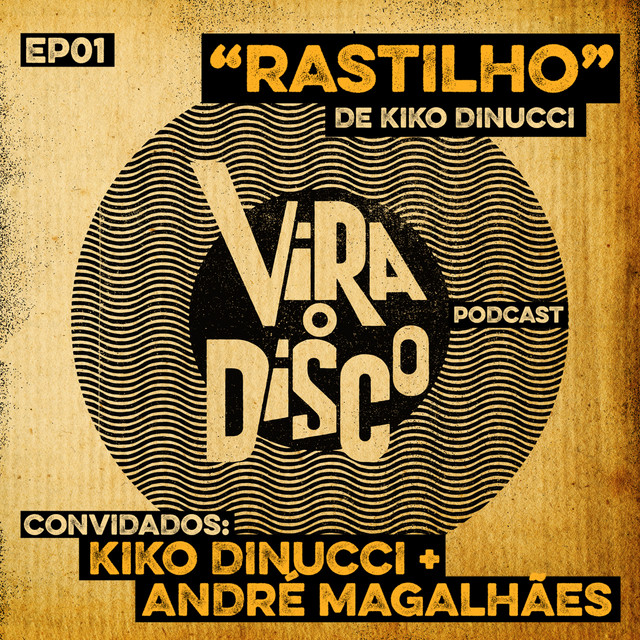
Nesse primeiro episódio dissecamos o disco Rastilho, do artista Kiko Dinucci, gravado no Estúdio Minduca. Uma imersão no universo por trás da produção do disco. Com exemplos sonoros de microfones, detalhes e curiosidades sobre a gravação e mixagem analógica do disco o episódio conta com participações de André Magalhães e Kiko DInucci e é apresentado por Bruno Buarque.
Videos
RASTILHO E O EXPLOSIVO VIOLÃO DE KIKO DINUCCI | ALBUM REVIEW
Som de Peso
RASTILHO - GRAVAÇÃO - GUITARRA (KIKO) - EST. DUNA -JAN/2017
MANOSDELDIABLO
Kiko Dinucci dá espaço ao violão em novo trabalho, 'Rastilho' | Música
Metrópolis
Analyses
Review Kiko Dinucci - Rastilho - Rastilho | Sounds and Colours
soundsandcolours.com
Rastilho ends with the title track (the recent Mais Um re-release features two bonus tracks on the digital release). The track can be interpreted by the album's cover, by Pablo Saborido: a tropical but putrid Brazil that 2020 has exposed.
Kiko Dinucci - Rastilho - Reviews - Album of The Year
albumoftheyear.org
Music Reviews: Rastilho by Kiko Dinucci released in 2020. Genre: Vanguarda Paulista.
Crítica | Kiko Dinucci: "Rastilho" - Música Instantânea
musicainstantanea.com.br
The phrase extracted from the introduction text of Rastilho (2020, Independent), Kiko Dinucci's second solo album, serves as a clear indication of the path taken by the São Paulo-born musician throughout the work.
Resenha: Kiko Dinucci - Rastilho
musicontherun.net
Although less brilliant than its predecessor, "Rastilho" shows how Kiko Dinucci remains very well connected with what happens in a particular niche in São Paulo that he is part of.
Resenha: Kiko Dinucci - Rastilho - Floga-se
botequimdeideias.com.br
When taken as a whole, in its rhythm and its brutality, 'Rastilho', Kiko Dinucci's most recent album, is a deliberate exercise in deconstructing forms, often perceived as self-contained, to propose them as new musical models.