As Quatro Estações
Legião Urbana
1989

Rankings
Why This Album Matters
As Quatro Estações, released in 1989, represents a pivotal landmark in Legião Urbana's discography and in the history of Brazilian rock. This fourth studio album solidified the band as one of the most expressive of its generation, marking a significant aesthetic and lyrical evolution. The work transcends the direct political protests that characterised part of their previous works, delving into deeper reflections on the human condition, love, faith, and existential anxieties. With more elaborate arrangements and a sound that blended alternative rock, post-punk, and elements of folk rock and jangle pop, the album revealed impressive artistic maturity. As Quatro Estações not only solidified the compositional mastery of Renato Russo, Dado Villa-Lobos, and Marcelo Bonfá, but also deeply resonated with an audience eager for poetic and confessional lyrics, which sensitively addressed the daily dramas and internal conflicts of a youth in transition. Its relevance lies in its ability to connect with the innermost feelings of each listener, becoming a soundtrack for the complexities of life.
Context
The release of As Quatro Estações occurred during a period of intense turbulence and anticipation for Legião Urbana. The band, which was approaching the one million copies sold mark with its first three albums, faced a bitter internal atmosphere. The tension was exacerbated by external events, such as the tragic incident at Mané Garrincha Stadium in 1988, which left hundreds injured and profoundly shook the band. Internally, bassist Renato Rocha's situation became untenable due to personal problems and his increasing absence from rehearsals. After six months of work on the record, Rocha was dismissed, solidifying the trio's line-up of Renato Russo, Dado Villa-Lobos, and Marcelo Bonfá, which would endure until the group's end. This context of challenges and changes forced the band to reinvent itself, seeking new musical and lyrical directions that would culminate in the depth of As Quatro Estações.
Recording
The recording of As Quatro Estações was an arduous and extensive process, taking about a year to complete at EMI-Odeon studios in Rio de Janeiro, between July 1988 and August 1989. The band unceasingly sought something that would satisfy them, reaching the point where Renato Russo even considered ending the group. However, Legião Urbana's high reputation with the record label guaranteed them all the necessary time and space for the project's conception. Producer Mayrton Bahia, who had previously worked with the band on the albums Dois and Que País É Este 1978/1987, played a crucial role, reinventing his methodology to capture Legião's essence. He described the process as mutual learning, where they had to 'throw all the tricks away' and 'break several paradigms' of the recording industry, avoiding clichés and seeking authenticity. The intention was to create more varied and 'more elaborate' songs, with more complex arrangements, which required meticulous work of composition and recording, including the technique of cutting and pasting tape segments to resolve the issue of multiple instrumental layers.
Songs
As Quatro Estações features a repertoire of songs that became classics, notable for their poetic and multifaceted lyrics. 'Há Tempos', the first single, opens the album with a striking melody, while 'Pais e Filhos' addresses the delicate theme of suicide and generational misunderstandings, becoming one of the band's biggest hits, despite Renato Russo's discomfort with the festive interpretation of its lyrics. The track 'Feedback Song for a Dying Friend' is an emotional tribute to photographer Robert Mapplethorpe and to friends who suffered from AIDS, including Cazuza. Originally titled 'Rapazes Católicos' and in Portuguese, the lyrics were changed to the English version because they were considered 'unpublishable' by the band, but the album booklet features a notable translation by Millôr Fernandes, who detected Shakespearean wordplay in Russo's composition. 'Monte Castelo' is an example of the album's lyrical depth, blending verses from Apostle Paul's '1 Corinthians 13' with Luís de Camões' 'Sonnet 11', creating a spiritual ode to love. 'Meninos e Meninas' is considered Renato Russo's 'cry of freedom', where he hinted at his bisexuality for the third time, addressing the themes of prejudice and self-acceptance. The lyrics of '1965 (Duas Tribos)' reference 'Revell models' and the Hanna-Barbera studio, while 'Quando o sol bater na janela do teu quarto' was inspired by verses from the book A Doutrina de Buda.
Legacy
Since its release on 27 October 1989, As Quatro Estações achieved tremendous success, selling over 2.6 million copies and becoming Legião Urbana's best-selling album, as well as one of the best-selling in Brazilian history. Critical reception was largely positive, with journalists praising the band's lyrical and musical maturity. Critics such as Paula Pestana from Correio Braziliense defined the work as 'a lean, no-excess record', marking Legião Urbana's maturity in a direction that 'goes beyond political protests', with the 'boldness to show a different work'. O Liberal's team recommended the project, noting that Renato Russo was more interested in 'everyday facts' and that the group opted for musical 'simplicity', reaching its 'most melancholic' phase poetically. Nine of the album's eleven tracks were played on radio, notably including 'Pais e Filhos' in the soundtrack of the soap opera 'Rainha da Sucata' in 1990. The album's commercial and cultural impact is undeniable, solidifying Legião Urbana in the pantheon of Brazilian rock.
Tracks
Credits
Jorge Davidson
Mayrton Bahia
Renato Russo
Marcelo Bonfá
Dado Villa-Lobos
Podcasts

CMM · Crazy Metal Mind
Episódio originalmente publicado em 06/09/2021. No 532º episódio do Podcast mais Rock’n Roll da internets Rômulo Konzen, Daniel Iserhard, Patricia Giovanetti e Flávio Bandeira batem papo sobre o disco As Quatro Estações do Legião Urbana. Trilha sonora do podcast (na ordem): *Legião Urbana - Há Tempos *Legião Urbana - Eu Era Um Lobisomem Juvenil *Legião Urbana - Monte Castelo *Legião Urbana - H

No segundo de uma série de três programas especiais sobre a obra da Legião Urbana, Cleber Facchi (@cleberfacchi) e Nik Silva (@niksilva) conversam sobre o álbum de maior sucesso na carreira do grupo brasiliense: “As Quatro Estações” (1989). Fortemente influenciado pela pandemia de HIV/AIDS, o trabalho revelou alguns das principais composições já produzidas pela banda, como “Pais e Filhos” e “Há Te

Depois de três ótimos álbuns e de uma profusão de hits, a Legião Urbana iniciou as gravações do seu quarto trabalho em um momento delicado. O baixista Renato Rocha foi "convidado a se retirar" do grupo, o processo de composição se mostrava lento e complicado, as letras não vinham e a banda começava a ficar impaciente consigo mesma. Em meio a tudo isso nasce As Quatro Estações, que hoje completa 35
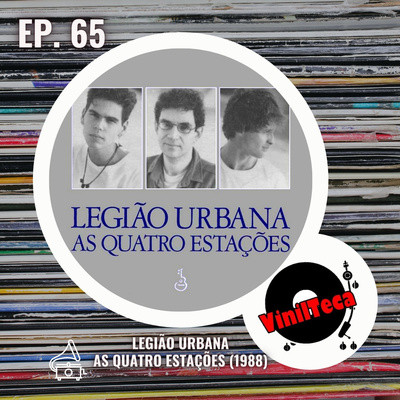
Vinilteca · José Ono Junior e Guilherme Colpani
O desastroso show no Estádio Mané Garrincha, em Brasília, no ano de 1988, deixou claro para a Legião Urbana a proporção que o sucesso da banda havia tomado e o quanto isso podia ser perigoso. Era hora de pisar no freio. O resultado disso foi o quarto disco de estúdio, "As quatro estações", mais ameno, mais poético, que se tornaria o mais vendido da história da Legião. A Vinilteca é um projeto que

Pod Discos · Jorge Andrade
No episódio 30° do Pod Discos, Jorge Andrade faz uma resenha do álbum As Quatro Estações da Legião Urbana!É o quarto disco de estúdio da banda, lançado no dia 26 de Outubro de 1989. O disco é o mais vendido da banda e contém os clássicos como Monte Castelo, Quando O Sol Bater Na Janela Do Teu Quarto, Pais e Filhos e etc. Para este episódio, contamos coma participação especial do Filipe Silva (Pris
Videos
LEGIÃO URBANA E AS QUATRO ESTAÇÕES
Vinilteca
VAMOS FALAR DE ROCK? A LEGIÃO URBANA E AS QUATRO ESTAÇÕES E A TEMPESTADE
Guilherme Claude januario
"As quatro estações" - Legião Urbana | Melhores discos brasileiros dos anos 80 | Alta Fidelidade
Alta Fidelidade
As Quatro Estações (1989) Legião Urbana - Análise do Disco
Pacman Review
A HISTÓRIA E A ANÁLISE DO DISCO:"AS QUATRO ESTAÇÕES",DA LEGIÃO URBANA!!
Mundo Real PoP
DISCOTECA do Kbça – AS QUATRO ESTAÇÕES – LEGIÃO URBANA – Fatos & Curiosidades
Kbça Discos
Films


Books
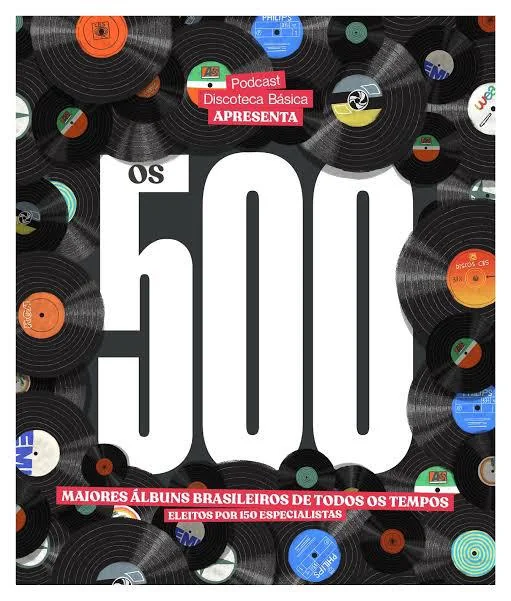
Os 500 Maiores Álbuns Brasileiros de Todos os Tempos
Ricardo Alexandre · 2022
The largest Brazilian music election ever conducted: 162 specialists, spanning journalists, critics, musicians, producers and podcasters, each nominated 50 essential albums, supported by a masterlist of more than 2,000 works. Led by Ricardo Alexandre with tabulation by Sérgio Jomori, it was published in December 2022 as a 200-page hardcover book with graphic design by Fernando Pires.
A Poesia Urbana na Legião de Renato Russo
Maria Yonar Marinho dos Santos · 2020
This book explores the urban poetry present in the lyrics of Legião Urbana and Renato Russo, analysing interpretations of selected songs. The research is enriched by studies of comparative literature, Renato Russo's biography, and the Brazilian historical context, being crucial for understanding the album's compositions.
"A verdadeira Legião Urbana são vocês"
Gustavo dos Santos Prado · 2018
This book investigates the thematic developments in the work of Legião Urbana and the reception process by the public of the Brasília band. It discusses the participation of youth movements linked to rock in the second half of the 20th century, providing context for understanding the band.
Renato Russo
Arthur Dapieve · 2000
This is one of the most complete and acclaimed biographies of Renato Russo, leader of Legião Urbana. The work explores his personal life, influences, creative process, and the band's trajectory, offering an essential overview for understanding the creation of their albums, including 'As Quatro Estações'.
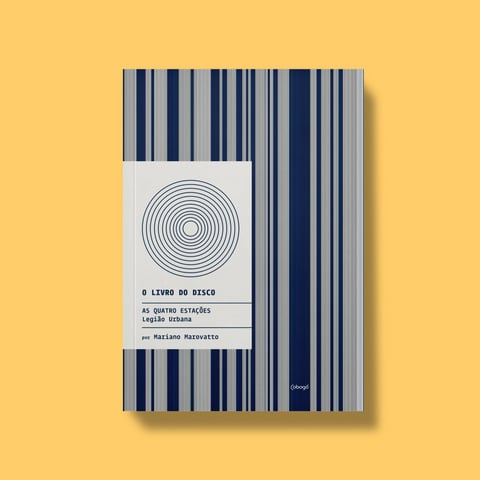
Legião Urbana: As quatro estações - Editora Cobogó
The book As Quatro Estações presents the production context of this album by Legião Urbana, an iconic Brazilian rock band from the 1980s, from composition to studio recordings. Released in 1989, the d...
Analyses
As Quatro Estações – Wikipedia
Wikipedia, the free encyclopaedia
As Quatro Estações 1989 Legião Urbana - by Luciano Siqueira
meusdozemais.substack.com
Analysis of the album As Quatro Estações (1989) by Legião Urbana: context, tracks, arrangement changes, and impact on Brazilian rock.
Como As Quatro Estações (1989) transformou a Legião Urbana em uma lenda ...
collectorsroom.com.br
As Quatro Estações is a collection of stories and feelings that continue to resonate decades later. For those who appreciate Brazilian rock with soul, Renato Russo and company proved that heart and conscience can walk hand in hand.

MUSICA&SOM: Legião Urbana - "As Quatro Estaçoes" (1989)
tabernanovostempos.blogspot.com
And in a balanced moment for Renato, a calm one for the band, we, the fans, were the blessed ones, for receiving, after so much waiting, an enlightened album like 'As Quatro Estações'.
Resenha - As Quatro Estações - Legião Urbana - Whiplash.Net
whiplash.net
'As Quatro Estações' propelled Legião Urbana to break through definitively, an album that contained a barrage of hits, all played to exhaustion on the country's radio stations.