O Dia em Que Faremos Contato
Lenine
1997
Rankings
Why This Album Matters
O Dia em Que Faremos Contato, released in 1997 by Sony BMG, marks a fundamental turning point in Lenine's career, establishing him as a singular and innovative creative force in Brazilian popular music. This was his first solo studio work, after two collaborative experiences, and is widely considered a watershed moment that not only consolidated his name but also propelled MPB to new experimental heights. The album is a bold and organic fusion of genuinely Brazilian rhythms, such as frevo, coco, maracatu, embolada, and samba, with contemporary elements of rock, pop, and electronic music. This sonic alchemy, combined with rich and reflective poetry, created a particular musical language that resonates with a cosmopolitan and universalist aesthetic. Lenine, a self-confessed enthusiast of science fiction, comic books, and cinema, approaches each composition as a short-film script, imbuing the album with a visual and conceptual narrative that profoundly differentiates it.
Context
Before O Dia em Que Faremos Contato, Lenine already had a consolidated, albeit more discreet, musical trajectory, working predominantly as a composer for other artists and in collaborative projects. His previous experiences include the album Baque Solto, from 1983, in partnership with Lula Queiroga, and the acclaimed Olho de Peixe, from 1993, alongside percussionist Marcos Suzano. The latter, an independent work focused on the intimacy of guitar and percussion, already demonstrated the Pernambuco artist's innovative streak. At the time of his arrival in Rio de Janeiro, Lenine faced a scenario where his hybrid sound was viewed with strangeness: it was 'too MPB' for the rock audience and 'too rock n' roll' for MPB purists. With O Dia em Que Faremos Contato, he finally had the opportunity to fully develop his authorial artistic vision, marking his solo debut and presenting to the public the breadth of his ability as a singer, composer, and arranger.
Recording
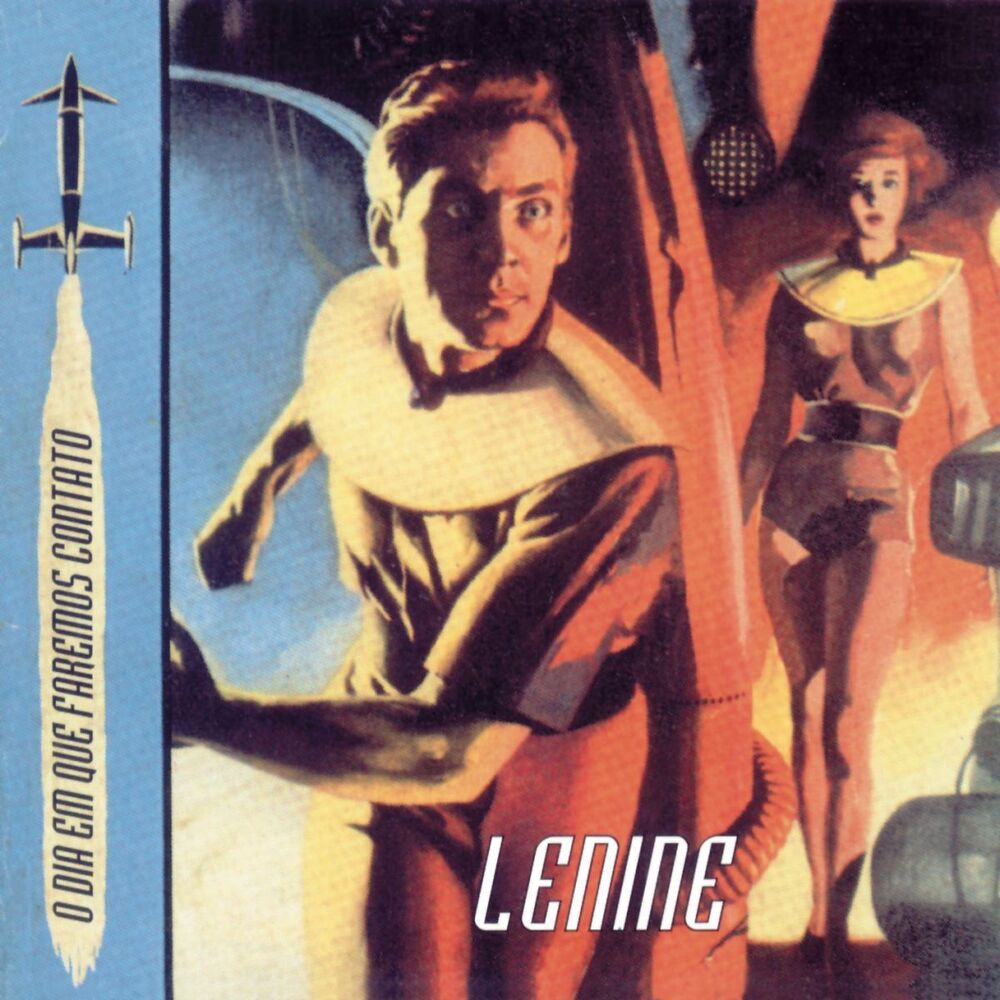
The production of O Dia em Que Faremos Contato was a meticulous process that thoroughly explored the technical possibilities of the studios. The album was produced by Chico Neves and co-produced by Lenine himself, who also took on the musical direction of the project. Recordings took place at Estúdio 302, in Rio de Janeiro, with Chico Neves overseeing sound engineering. One of the production's highlights was the mixing stage, carried out at Peter Gabriel's renowned Real World Studios, in England, under the baton of Ben Findlay, with assistance from Emma Jones. Mastering, in turn, was done at Metropolis studio, in London, by Tony Cousins. Lenine dedicated himself to 'testing the limits of the studio', utilising and 'abusing recording engineering' with digital technology, loops, and samples, in an innovative way and in service of creativity, not merely as an artifice. During the process at Real World Studios, Peter Gabriel even visited the studio and interacted with the team. The album cover, with its science fiction references, reflects this passion of Lenine's and the futuristic concept of the work.
Songs
Comprising fourteen tracks, O Dia em Que Faremos Contato is a sonic and lyrical mosaic that unfolds Lenine's unique vision. The opening, with the song "A Ponte", already captivates with the voice of a street musician, establishing a tone of connection to origins. The title track, "O Dia em Que Faremos Contato", in partnership with Bráulio Tavares, proposes a subversion of expectations by narrating the landing of a spaceship not in major metropolises, but on a 'morro' (hillside favela), where the aliens, even dressed as orixás, come 'to ask for help' and find 'peace' and 'love' on Earth, suggesting a message of universality and harmony originating from a marginalised place. Other highlights include "Candeeiro Encantado", co-written with Paulo C. Pinheiro, and "Dois Olhos Negros", by Lula Queiroga, both songs gaining national prominence upon being included in the soundtracks of Rede Globo telenovelas, Cordel Encantado and Era Uma Vez..., respectively. The album revisits the artist's past with the re-recording of an excerpt from "Mote do Navio", by Pedro Osmar, originally present in Baque Solto. The track "Pernambuco Falando Para o Mundo" is a medley that celebrates the rich musical heritage of Pernambuco, interpreted in the minimalist guitar and percussion style that marked his work with Marcos Suzano on Olho de Peixe. The lyrics explore themes such as love, hope, identity, and the search for a better world, encompassing Lenine's characteristic social and existential poetics.
Legacy
O Dia em Que Faremos Contato was enthusiastically received by critics and the public, consolidating Lenine's position as one of the most important names in contemporary Brazilian music. It received a 4 out of 5-star rating from the AllMusic portal, and praise from major figures such as Caetano Veloso, who described it as 'spectacular'. The critic Hermano Vianna even classified the album as 'a revolutionary landmark in the history of MPB'. The album's repercussion extended beyond specialised recognition, with the inclusion of songs such as "Candeeiro Encantado" and "Dois Olhos Negros" in the soundtracks of popular telenovelas, which amplified its reach among the national public. The album is frequently cited as Lenine's masterpiece, elevating MPB to a level of experimentation and modernity, blending Northeastern percussive grooves, the swing of samba, and viola elements with a global vision. Its impact lay in showing that it was possible to fuse Brazil's rhythmic and poetic richness with a contemporary sound aesthetic, paving the way for the evolution of Brazilian popular music itself.
Tracks
Credits
Jorge Davidson
Chico Neves
Marcos Suzano
Lenine
Marcelo Bueno
Cajú E Castanha, Les Fabulous Trobadors
Toninho Ferragutti
Liminha
Eduardo Morelenbaum
João Barone
Fernando Vidal, Pedro Sá
Carlos Malta
Tony Cousins
Ben Findlay
Emma Jones
Books
Analyses
O Dia em Que Faremos Contato – Wikipedia
Wikipedia, the free encyclopaedia

LENINE - O Dia Em Que Faremos Contato (1997)
tomymostalas.blogspot.com
I hope you enjoy reading our stuff! Saturday, 30 April 2016 LENINE - O Dia Em Que Faremos Contato (1997) Review by: Charly Saenz Album assigned by: Victor Guimarães This is a layman's review on a prominent Brazilian music album (Caetano himself recommended it, so go figure!). God bless you for reading.
Lenine - O Dia em que Faremos Contato (1997)
musicasdonordeste.net
"O Dia em Que Faremos Contato" is an album by Lenine released in 1997. The album is known for its blend of MPB, rock, and electronic music elements, reflecting the artist's versatility. The lyrics address themes such as love, hope, and the search for a better world, with rich and reflective poetry.

Santería: Lenine - (1997) O Dia Em Que Faremos Contato - Blogger
santeriamusica.blogspot.com
This is the singer's best album, in my extremely particular opinion. I was enchanted on my first listen, and my admiration for this work only grew thereafter. This is the masterpiece of the Pernambucan singer and songwriter.
Lenine - O Dia Em Que Faremos Contato (1997) | Altamont
altamont.pt
The bridge mentioned in the song title, and which appears many times sung within it, is the perfect metaphor for the idea and concept of this entire album, which seems to me to be about the connections between the most varied geographical and musical universes of Brazil and the World.