Lô Borges
Lô Borges
1972
Rankings
Why This Album Matters
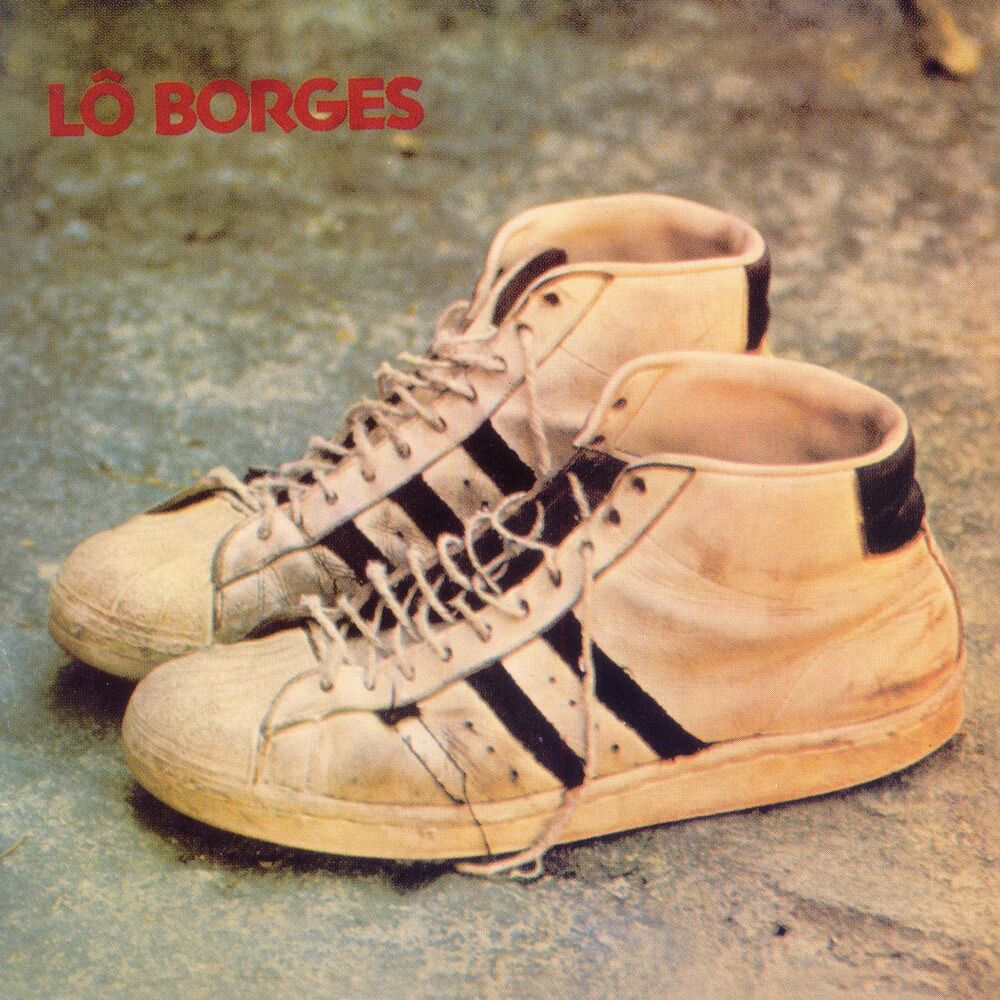
Lô Borges, the eponymous debut album by the 'Mineiro' singer, is a unique jewel of Brazilian music, released in 1972 and popularly known as "Disco do Tênis". This work represents a deep dive into the aesthetic of Clube da Esquina, but with its own voice and identity, marking Lô Borges' definitive arrival as one of Brazil's great composers and interpreters. Its sound combines the melodic delicacy of MPB with the energy of rock and the introspection of folk, creating a dense and moving musical universe. The album stands out for the originality of its compositions, which explore themes such as youth, freedom, nature and the search for new horizons, translated into poetic lyrics and sophisticated arrangements. It is a record that transcends its era, offering a rich and timeless sonic experience. The way Lô Borges manages to articulate harmonic complexity with apparent melodic simplicity is one of his greatest assets, making this work indispensable for any admirer of Brazilian music.
Context
The release of Lô Borges occurred at a moment of creative effervescence for Brazilian music, shortly after the seminal Clube da Esquina, an album that already brought Lô together with Milton Nascimento, Beto Guedes and other talents. At just twenty years old, Lô Borges was urged by the record label to produce his solo album within a tight deadline, a challenge that resulted in a period of intense composition and recording, revealing the young artist's prodigious creative capacity. Despite the pressure, Lô Borges' solo album emerged as a complement and a natural expansion of the ideas conceived within Clube da Esquina, solidifying the 'Mineiro' sound that would come to influence generations. Lô's decision to travel across Brazil selling his record independently, symbolised by the emblematic tennis shoe cover, reflects a desire to detach himself from industry impositions and reaffirm his artistic freedom, marking a hiatus in his recording career that would last seven years, until A Via-Láctea, produced by Milton Nascimento.
Recording
The recording of Lô Borges was a process marked by urgency and collaborative richness, reflecting the atmosphere of intense creativity that permeated the 'Mineiro' group. Despite the short deadline imposed by the EMI-Odeon label, Lô gathered a stellar cast of musicians, many of them companions from Clube da Esquina, to bring his compositions to life. The impressive list includes Beto Guedes (in various roles such as vocals, guitar, bass, organ and percussion), Toninho Horta (bass, guitar, harpsichord), Flávio Venturini (vocals, harpsichord, electric piano), and names like Tenório Jr., Nelson Angelo and Danilo Caymmi, with arrangements and conducting by Dori Caymmi on one of the tracks. Under the musical direction of Maestro Gaya and production assistance from Milton Nascimento and Márcio Borges, the album was conceived with diverse instrumentation that blends acoustic guitars, electric guitars, pianos, organs, percussion and flutes. The combination of these talents resulted in an organic and complex sound, which, although conceived under pressure and with the repertoire being composed as it was recorded, demonstrated the artistic maturity of Lô Borges and his collaborators. The production, although commercially underestimated by the record label, delivered a work of profound technical and artistic quality.
Songs
The songs on the album Lô Borges are a compendium of melody and poetry, each contributing to the unique sonic tapestry of the record. Tracks such as "Trem Azul" and "Paisagem da Janela" became instant classics of MPB, revered for their captivating melodies and introspective lyrics that evoke feelings of freedom, saudade, and contemplation. "Um Girassol da Cor do Seu Cabelo" is another highlight, with its lyrical beauty and an arrangement that highlights the sweetness of the melody. The album also features gems such as "Você fica melhor assim", "Canção postal", "O Caçador" and "Homem da Rua". The compositions, mostly penned by Lô Borges, often in partnership with Márcio Borges, Tavinho Moura and Ronaldo Bastos, reveal a profound sensibility for creating images and atmospheres through music. The lyrics are replete with metaphors and lyricism, addressing universal themes with a particular perspective. The harmonic and melodic inventiveness of the songs, combined with rich and varied instrumentation, solidifies the "Disco do Tênis" as a masterpiece that continues to resonate with new generations of listeners and musicians.

There wasn't yet the fierce competition for the designer item.
Tárik de Souza · 300 Discos Importantes
Legacy
Despite an initially discreet commercial reception, a result of the record label's lack of investment in its promotion, the album Lô Borges achieved the status of a revered classic of Brazilian music over the decades. Its importance was gradually recognised by specialised critics and the public, consolidating it as one of the most relevant albums in MPB history. Although it did not achieve significant sales or awards at the time, its influence manifested in other ways, permeating the work of countless artists. One of the most notable demonstrations of its transgenerational impact is the confessed inspiration that the song "Aos Barões" exerted on Alex Turner, vocalist of the band Arctic Monkeys, for the creation of the album Tranquility Base Hotel & Casino, evidencing the global and timeless reach of Lô Borges' music. In 2018, the artist himself revisited and re-recorded the album live, a testament to the enduring relevance of his work. The "Disco do Tênis" is constantly cited in lists of best Brazilian albums, such as the ranking of 107 Melhores Discos da Música Brasileira, where it features in 26th position, attesting to its lasting artistic value and its prominent position in the pantheon of national music.
Tracks
Credits
Dori Caymmi
Lindolfo Gaya
Milton Miranda
Marcio Borges, Milton Nascimento
Z. J. Merky
Lo Borges, Marcio Borges, Ronaldo Bastos, Tavinho Moura
Flávio Venturini
Lo Borges
Novelli
Nelson Angelo
Toninho Horta
Robertinho Silva
Sirlan
Beto Guedes
Danilo Caymmi
Rubinho
Tenorio Jr.
Zé Geraldo
Reny R. Lippi
Nivaldo Duarte, Toninho
Tadeu Valério
Ronaldo Bastos
Cafi
Podcasts
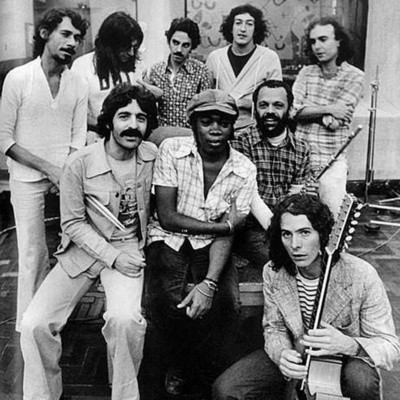
Brazuca Sounds · Leandro Vignoli
In episode #28 we discuss the making of "Clube da Esquina" released in March 1972. Considered one the best albums of Brazilian history, Milton Nascimento decided to come up with a collective effort of musicians signed as a duo with 19-year-old prodigy Lô Borges. It is a double LP impossible to define in one genre: folk, MPB, rock, psychedelia, prog, classical, indigenous. Clube da Esquina is every
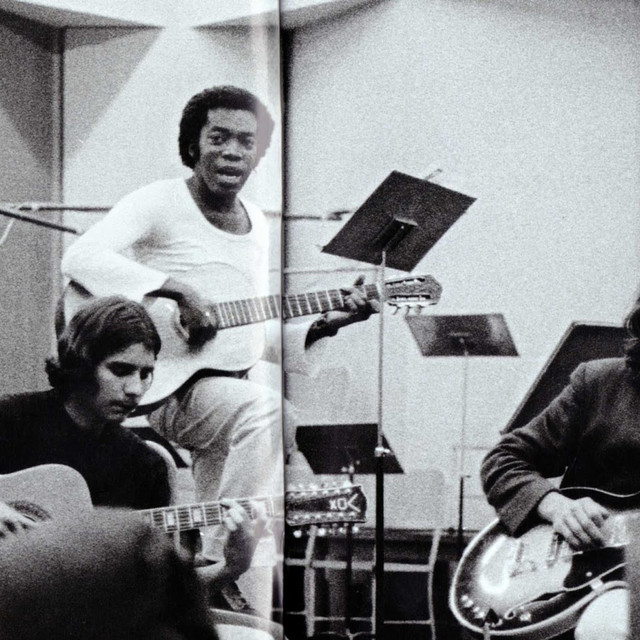
Brazuca Sounds on Patreon · Leandro Vignoli
In episode #28 we discuss the making of "Clube da Esquina" released in March 1972. Considered one the best albums of Brazilian history, Milton Nascimento decided to come up with a collective effort of musicians and ended up even signing as a duo with 19-year-old prodigy Lô Borges. It is a double LP impossible to define in one genre: folk, MPB, tock, psychedelia, prog, classical, indigenous. In thi
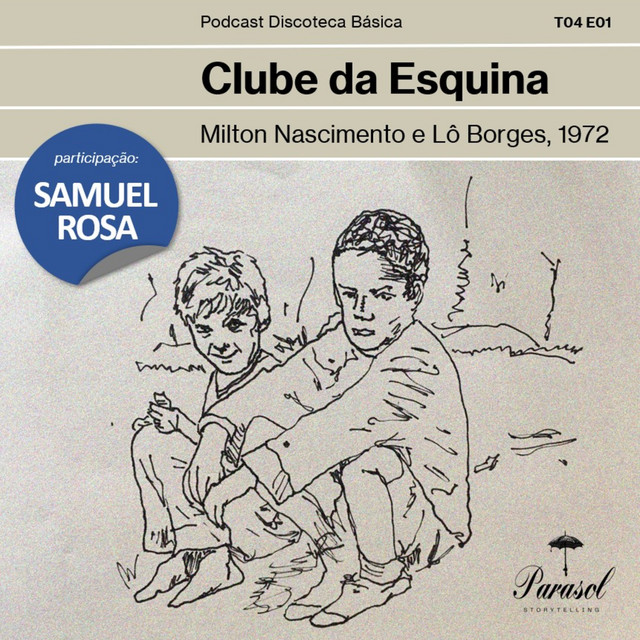
Discoteca Básica Podcast · Parasol Storytelling
OFICIALMENTE, O MAIOR DISCO BRASILEIRO DE TODOS OS TEMPOS: Novos e velhos amigos reunidos numa aventura que rendeu a gravação do maior álbum brasileiro da história, segundo eleição promovida pelo podcast “Discoteca Básica”. Convidado do episódio: Samuel Rosa Assinante do Clube Discoteca Básica tem conteúdo exclusivo. Nesta semana, Lô Borges fala a respeito de sua participação no “Clube da Esquina”

Músicas e suas Histórias · Músicas e Suas Histórias
Gostou? Para saber mais acesse o Canal do YouTube: Músicas e Suas Histórias: https://www.youtube.com/channel/UCBbOHBkyr3Aj5ITUqG_gADw/featured

Diálogos em Musicologia · Kleberson Calanca
Neste episódio especial de Diálogos em Musicologia, prestamos homenagem a Lô Borges (1952–2025) — compositor, cantor e um dos pilares do Clube da Esquina, cuja obra transformou a paisagem sonora e espiritual da música brasileira.Entre montanhas e acordes suspensos, este episódio reconstrói a trajetória de Lô não apenas como músico, mas como símbolo de uma geração que sonhou com liberdade em meio à
Videos
CAETANO VELOSO - TRANSA (1972) | ALBUM REVIEW
Vinilteca
Lô Borges relembra traumas durante a gravação do "Disco do Tênis" (1972) | O Som do Vinil
Canal Brasil
Lô Borges – A História do “Disco do Tênis” (1972)
Vinilteca
Milton Nascimento & Lô Borges - Clube da Esquina (1972) Analysis in Spanish. Opinion
Art Zoom
1972, o ano em que Lô Borges escreveu sua história na MPB
VEJA+
Films

Books
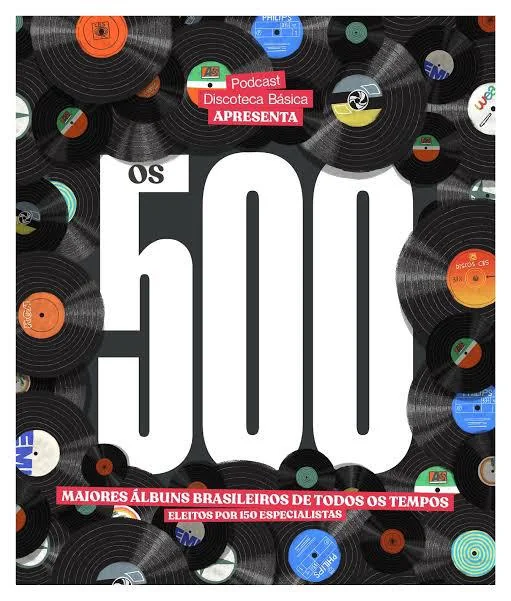
Os 500 Maiores Álbuns Brasileiros de Todos os Tempos
Ricardo Alexandre · 2022
The largest Brazilian music election ever conducted: 162 specialists, spanning journalists, critics, musicians, producers and podcasters, each nominated 50 essential albums, supported by a masterlist of more than 2,000 works. Led by Ricardo Alexandre with tabulation by Sérgio Jomori, it was published in December 2022 as a 200-page hardcover book with graphic design by Fernando Pires.
Milton Nascimento and Lô Borges's The Corner Club
Jonathon Grasse · 2020
This book explores the context of 1972, the year in which a group of Brazilian musicians and poets, led by Milton Nascimento, recorded the historical landmark 'Clube da Esquina'. The work addresses the creation of this double album, with original songs by Milton and other collaborators, including Lô Borges, whose eponymous solo album was released in the same year and is intrinsically linked to this movement.
Lô Borges e Milton Nascimento, Clube da Esquina
Charles Gavin, Milton Nascimento, Lô Borges · 2015
This book presents the full interviews of Lô Borges and Milton Nascimento for Charles Gavin, from the programme Som do Vinil, addressing their careers and the creation of one of the most emblematic Brazilian albums: 'Clube da Esquina' (EMI, 1972). It is a valuable primary source for understanding the creative process and the context of Lô Borges' solo album, released in the same year and part of the same movement.

300 Discos Importantes da Música Brasileira
Charles Gavin, Tárik de Souza, Carlos Calado, Arthur Dapieve · 2008
Conceived by Titãs drummer and musical researcher Charles Gavin, the 434-page book brings together covers and reviews of albums released between 1929 and 2007. The texts were written by journalists Tárik de Souza, Arthur Dapieve and Carlos Calado.
Analyses
Lô Borges – Wikipedia
Wikipedia, the free encyclopaedia
Lô Borges (1972): o disco que ensinou a música brasileira a andar ...
teoriacultural.com.br
A sensitive and in-depth reading of Lô Borges (1972), an essential album that expresses youth, city, and silence in Brazilian music.
Lô Borges 1972 é um disco pequeno por fora e enorme por dentro
cantinhododisco.com.br
Lô Borges' solo album, released in 1972, is exactly that. A work of stripped-down, almost always fast songs, that sound like whispered conversations. There's no excessive arrangement, no attention-grabbing studio trickery, and no desire to prove anything.

PAÍS DO BAURETS: TEM QUE OUVIR: Lô Borges - Lô Borges (1972)
paisdobaurets.blogspot.com
That's exactly what happened to Lô Borges in 1972. With the undeniable artistic success achieved, the record label financed Lô's next steps. Even without a repertoire and without knowing exactly what to do, he agreed that same year to produce what became known as the 'Disco do Tênis'.
"Lô Borges": A incrível estreia solo de Lô Borges.
entreacordes.blog
Also known as the 'Disco do Tênis', the 1972 "Lô Borges" is the solo debut of the great musician Lô Borges. This album was conceived during the recordings of the monumental "Clube da Esquina" from the same year, an album that Lô Borges produced alongside Milton Nascimento.