A História do Nordeste na Voz de Luiz Gonzaga
Luiz Gonzaga
1955

Rankings
Why This Album Matters
Released in 1955 by the RCA Victor label, A História do Nordeste na Voz de Luiz Gonzaga is not only the first studio album in LP format by the unparalleled Luiz Gonzaga, but a definitive milestone in the history of Brazilian music and, in particular, Northeastern music. This record is a celebration and a consolidation of forró and baião, rhythms that the 'King of Baião' popularised throughout the country, transforming regional sounds into a national phenomenon. By bringing together songs that were already an intrinsic part of popular music, the album served as a poetic and cultural record of life in the sertão, presenting it to the wider public in an accessible and engaging way.
Context
Luiz Gonzaga, born in the Pernambucan sertão, in Exu, received his musical training in childhood, accompanying his father, Januário, on the accordion. After a period in the army, he arrived in Rio de Janeiro in the late 1930s and, throughout the 1940s, emerged as a giant of Brazilian music, popularising baião and xote through numerous singles. In 1955, a time when LPs were gaining ground in the phonographic market, Gonzaga was already an established idol. The release of this album capitalised on his growing popularity and the need for a more comprehensive recording of his work in a long-play format.
Recording
The album A História do Nordeste na Voz de Luiz Gonzaga was released by RCA Victor in 1955, consolidating the artist's work on an 8-inch LP. Although released in this year, some of the tracks had already been recorded between 1947 and 1955, reflecting a period of intense productivity and success for the artist. The record features eight numbers representative of Northeastern musical literature, six of which were co-authored by Luiz Gonzaga himself. The characteristic instrumentation, with accordion, zabumba, and triangle, established by Gonzaga, was fundamental to the sound he brought to Brazil.
Songs
The album's track selection is a true anthology of Northeastern sensibility, with notable collaborations from Humberto Teixeira and Zé Dantas. "Asa Branca", perhaps his most emblematic song, portrays the harsh reality of drought and the hope for rain in the sertão. "Paraíba" expresses the pain of leaving one's homeland, while exalting the strength of Northeastern women with the famous phrase "Paraíba masculina, mulher macho, sim senhor". "O Xote das Meninas" conveys the transition from childhood to adolescence with lightness and an engaging rhythm. Meanwhile, "Respeita Januário" is a tribute to his father and musical mentor. "ABC do Sertão" entertains by highlighting the peculiar pronunciation of the alphabet in the region, while "Acauã" sings about the bird that announces the drought, and "Algodão" celebrates the work and reward of the harvest. The record also offers "Saudade de Pernambuco", an affectionate portrayal of the singer's homeland.
Legacy
A História do Nordeste na Voz de Luiz Gonzaga is revered as one of the most important albums in Brazilian music, an honour reaffirmed in 2022 when it was elected to lists of national relevance. The record consolidated Luiz Gonzaga's figure as the “Sound Ambassador of the Sertão” and “King of Baião”, legitimising Northeastern culture throughout Brazil. His work not only entertained, but also documented and valued the linguistic and cultural particularities of the Northeastern people, becoming a symbol of identity for thousands of migrants seeking refuge in other regions of the country. This album remains a cornerstone that influenced generations of artists and solidified forró as one of the pillars of rich Brazilian musical diversity.
Tracks
Films


Books
Dois Migrantes
Ruberval José da Silva · 2022
This book analyses the trajectory of Luiz Gonzaga and the musical genre Baião, his insertion and performance in the Brazilian phonographic market, from the city of Rio de Janeiro, between the mid-1940s and the late 1970s. It is an in-depth analysis of the artist and his work, directly relevant to the 1955 album.
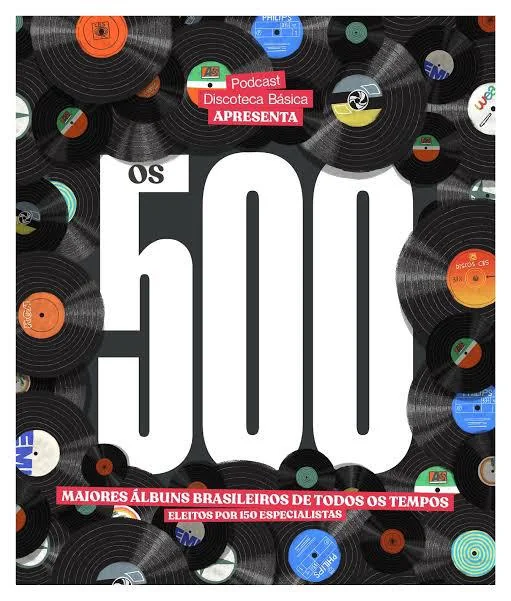
Os 500 Maiores Álbuns Brasileiros de Todos os Tempos
Ricardo Alexandre · 2022
The largest Brazilian music election ever conducted: 162 specialists, spanning journalists, critics, musicians, producers and podcasters, each nominated 50 essential albums, supported by a masterlist of more than 2,000 works. Led by Ricardo Alexandre with tabulation by Sérgio Jomori, it was published in December 2022 as a 200-page hardcover book with graphic design by Fernando Pires.
Analyses
A História do Nordeste na Voz de Luiz Gonzaga – Wikipedia
Wikipedia, the free encyclopaedia
Review: A História do Nordeste na Voz de Luiz Gonzaga
notasnoturnas.substack.com
I am launching my project to visit the great names of Brazilian music, 'Brasil na Música', with none other than the King of Baião: Luiz Gonzaga. 'A História do Nordeste na Voz de Luiz Gonzaga' is the singer and composer's first studio album, released by the RCA Victor label in 1955.

"A História Do Nordeste Na Voz De Luiz Gonzaga" (RCA Victor, 1955 ...
discosessenciais.blogspot.com
Across the album's eight tracks, Luiz Gonzaga translates the Nordeste into music: from June festivals to arduous work in the sertão. His lyrics tell stories of resistance, while his accordion echoes the warm wind that shapes the Northeastern life of his time.

"A História Do Nordeste Na Voz De Luiz Gonzaga" (RCA Victor, 1955 ...
tabernanovostempos.blogspot.com
Across the album's eight tracks, Luiz Gonzaga translates the Nordeste into music: from June festivals to arduous work in the sertão. His lyrics tell stories of resistance, while his accordion echoes the warm wind that shapes the Northeastern life of his time.
A história do nordeste - Na voz de Luiz Gonzaga
forroemvinil.com
This is evidently Luiz Gonzaga, affectionately nicknamed "Lua". Luiz Gonzaga drew on themes from his homeland and incorporated them into brilliant musical compositions featured on this album.