Mamonas Assassinas
Mamonas Assassinas
1995
Rankings
Why This Album Matters
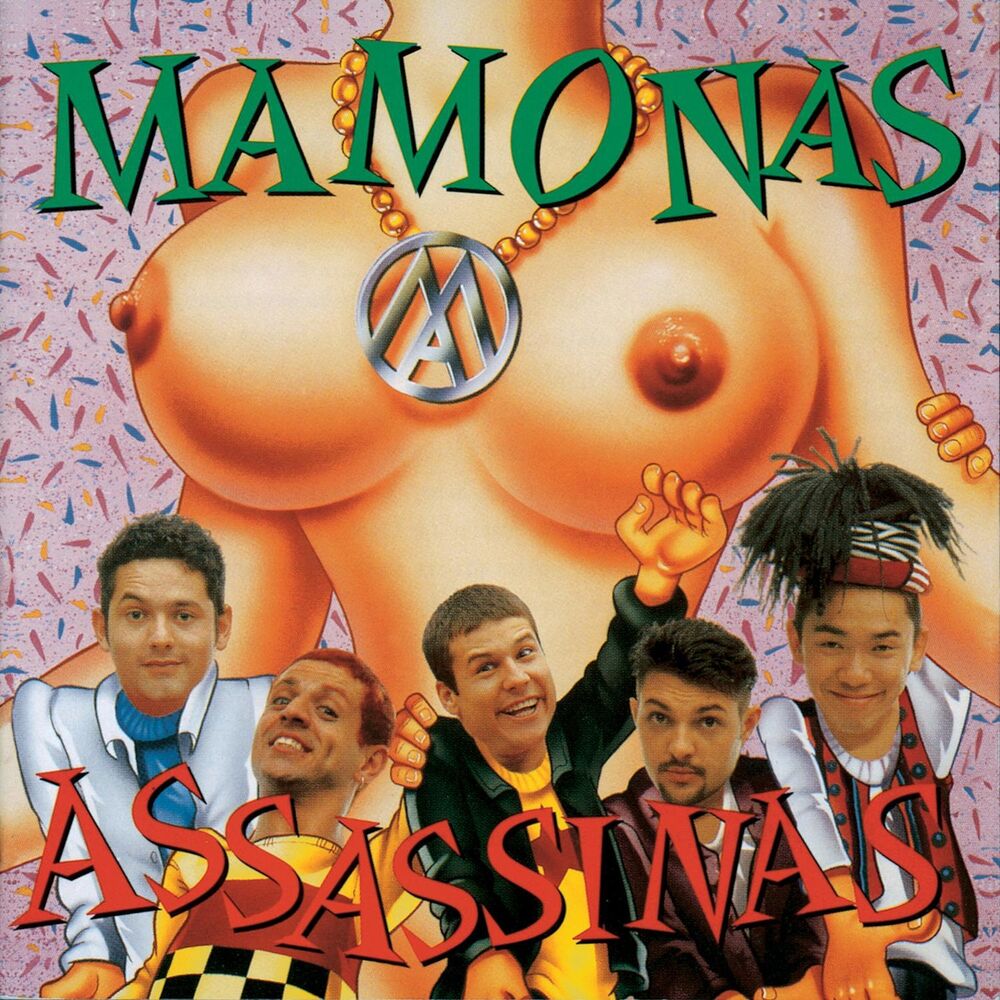
Mamonas Assassinas is the iconic debut album by the eponymous Brazilian comedy rock band, a work that, despite being the group's only recorded album, etched its name into the history of national music. Released in 1995, the album stands out for its musical versatility, expertly navigating a wide range of genres, such as heavy metal, forró, fado, baião, pagode, pop, pop rock, and brega. This eclecticism, combined with irreverent and shrewd humour, caused the album to become an instant cultural phenomenon, capturing the attention of the public and critics across Brazil. The group's comedic style, which did not shy away from criticising society and uniquely blending cultural references, allowed the songs to invade Brazilian radio stations. The irreverence and intelligence behind the compositions led Mamonas Assassinas to conquer the country overwhelmingly, cementing its place as a landmark for its originality and ability to entertain and provoke thought simultaneously.
Context
Before recording their debut album, the group Mamonas Assassinas already had an initial repertoire, with three songs, including "Jumento Celestino", "Pelados em Santos", and "Robocop Gay", which had already been composed and independently recorded on a demo tape. However, the band faced the challenge of completing the material required by the EMI label, which requested a minimum of ten tracks for the album's release. In an intense creative effort, the members, especially Dinho and Júlio Rasec, composed the twelve additional tracks in just one week, demonstrating the creative effervescence of the period.
Recording
The recording and production of the album Mamonas Assassinas were carried out by Rick Bonadio at his studio, with the assistance of Rodrigo Castanho and Junior Lane. The process began in October 1994 and was completed between March and June 1995. During the sessions, Bonadio earned the nickname "Creuzebek", a hilarious mistake by Dinho when trying to pronounce the name of an accordionist recording in the adjacent studio, and the nickname stuck. A notable fact of the production was the speed at which a large part of the album was composed: the EMI label required a minimum of ten songs, but the band only had three ready. In one week, the members, especially Dinho and Júlio Rasec, who composed the majority, created the twelve additional tracks. One of the songs, "Não Peide Aqui Baby", a parody of The Beatles' "Twist and Shout", was discarded from the album for containing an excessive amount of expletives. The recordings took place in São Paulo, at Bonadio's studio, and the final mixing was carried out at The Enterprise, in Los Angeles, United States.
Songs
Most of the songs on the album Mamonas Assassinas were composed by the band itself, with Dinho and Júlio Rasec's contributions standing out, except for "Sabão Crá-Crá", a folk song of unknown authorship, and "Sábado de Sol", composed by the band Baba Cósmica. The repertoire is full of references and parodies, such as in "Pelados em Santos", which alludes to Elton John's "Crocodile Rock", and "Chopis Centis", which parodies the opening riff of The Clash's "Should I Stay or Should I Go". "1406" alludes to a popular TV shopping channel at the time, while "Vira-Vira" is a satire of the Portuguese musical genre, inspired by a joke by Costinha. The album also features "Uma Arlinda Mulher", a parody of romantic music with references to Belchior and musical allusions to Radiohead's "Fake Plastic Trees" and "Creep". Other notable tracks include "Cabeça de Bagre II", inspired by Dinho's school experiences and parodying Titãs' "Cabeça Dinossauro", and "Robocop Gay", which pays homage to Jô Soares' Capitão Gay, with imitations of Eduardo Dussek and citations to Raul Seixas' "Doce, Doce Amor". The group's versatility is evident in "Bois Don't Cry", a parody of sertaneja music with influences from The Cure, Waldick Soriano, Rush and Dream Theater, and in "Débil Metal", a play on heavy metal with disjointed lyrics and vocals reminiscent of Sepultura's Max Cavalera. The album also features "Lá Vem o Alemão", a parody of the pagode "Lá Vem o Negão", with contributions from members of Negritude Júnior and Art Popular.
Legacy
Mamonas Assassinas became an unprecedented commercial phenomenon in Brazil, selling over 3 million copies and achieving diamond album certification. The album broke several records, becoming the best-selling debut album in the country's history and the fastest-selling in a single day, with 25,000 copies in just 12 hours. In less than 100 days, it reached the 1 million copies mark, doubling that number to 2 million in just six months, cementing its status as the fastest-selling album of all time in Brazil. In Portugal, the album also achieved success, selling over 20,000 copies and receiving gold certification, making it the second best-selling album in the country in 1996. Critical reception highlighted the album's success due to its ability to address social issues of the time with humour. Critics such as Iule Karalkovas and Igor Miranda emphasised the band's musical versatility and instrumental skill, which allowed them to navigate various genres with ease, while Luciana Gifoni pointed to the performance and lyrics, shaped by their "unrestrained comicality", as primary factors in winning over the public. The album's legacy extended beyond sales, with songs like "Sabão Crá-Crá" and "Robocop Gay" being included in soap opera soundtracks, solidifying the group's lasting influence on Brazilian pop culture.
Tracks
Credits
Rick Bonadio
Mamonas Assassinas
Creuzebek
César Do Acordeon
Leandro Lehart
Rick Bonadio
Fabinho
Paquito
Dinho
Samuel Reoli
Sérgio Reoli
Bento Hinoto
Júlio Rasec
Jerry Napier
Júnior Lanne
Roger Sommers
João Augusto
Mário Busch, Patricia Delgado
Carlos Sá
André Paoliello
Intek
Podcasts
Peças Raras - Você em sintonia com o rádio · Peças Raras
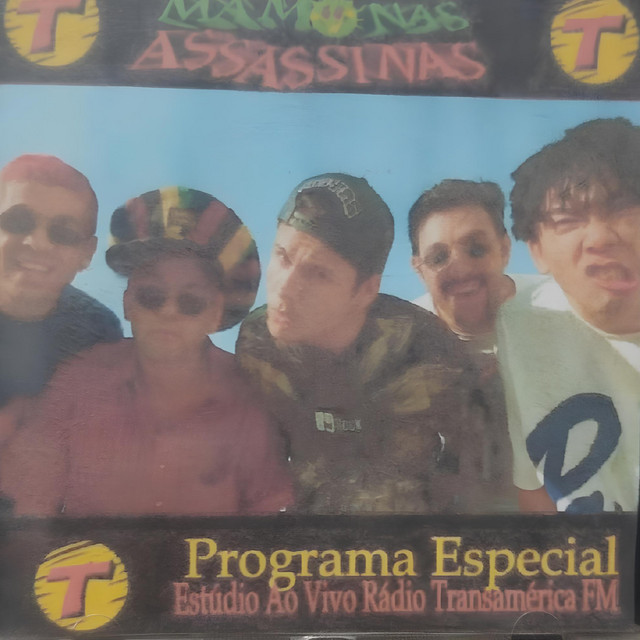
A Rádio Transamérica encerra as atividades neste domingo, dia 12 de outubro, após mais de 50 anos de história. Uma das muitas páginas marcantes que vão ficar na memória de quem ouviu a rádio é o Estúdio Transamérica. E, talvez, o mais divertido e, posteriormente, emocionante de todos tenha sido o programa que contou com a participação dos Mamonas Assassinas. Em 1995, a banda surgia como o maior fe

Vinilteca · José Ono Junior e Guilherme Colpani
Neste episódio da Vinilteca, abrimos o disco Mamonas Assassinas (1995) para contar a história completa de um dos maiores fenômenos da música brasileira. Em menos de 100 dias, cinco garotos de Guarulhos venderam mais de 1 milhão de discos e mudaram para sempre o pop rock nacional.Mais do que humor escrachado, o álbum mistura rock, forró, pagode, brega e heavy metal com inteligência musical, referên

QUER QUE EU RESENHE? · André Marx
No seu vídeo da semana, Geordival dá mais uma aula numa resenha mais que inusitada: ao resenhar o disco homônimo da banda Mamonas Assassinas, faz um recorte interessante sobre as "homenagens" feitas pela banda. Sejam bem-vind@s ao Canal/Podcast QUER QUE EU RESENHE? e esperamos que vocês gostem.
Já ouviu esse disco? · Danilo de Almeida
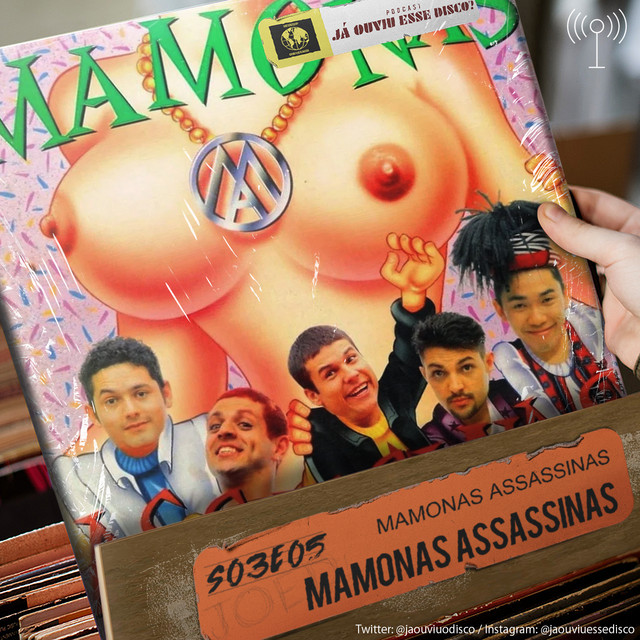
Eu sou Danilo de Almeida e nesse episódio do podcast 'Já ouviu esse disco?' eu falo sobre um dos maiores fenômenos musicais que o Brasil já viu, hoje falo sobre o primeiro e único álbum que marcou a carreira meteórica dos Mamonas Assassinas. Siga: http://twitter.com/jaouviuodisco http://instagram.com/jaouviuessedisco/
Videos
Mamonas Assassinas - Mamonas Assassinas (1995) | ALBUM REVIEW
QUER QUE EU RESENHE?
Mamonas Assassinas (álbum de 1995) - Mamonas Assassinas | Resenha | Campeões de vendas BR
Guilherme Mattar
20 Anos Sem Mamonas Assassinas (1995) | Resenha 03
Discobri
Films


Mamonas Assassinas: A Série
2025
This attraction invites the public on an emotional journey into the past. The production is a fiction inspired by real events, with actors portraying the group that defined generations. The story begins in 1992, when Dinho (Ruy Brissac), Sérgio (Rhener Freitas), Samuel (Adriano Tunes), Júlio (Robson Lima) and Bento (Beto Hinoto) were young men from Guarulhos, in Greater São Paulo, trying to make a living from their art, without imagining that a few years later they would become part of the biggest Brazilian musical phenomenon of the 1990s: Mamonas Assassinas. The quintet conquered the country meteorically with the release of their only album in 1995. They dominated the airwaves and sold millions of copies with hits like "Pelados em Santos" and "Vira-Vira", until their journey was cut short by a tragic plane crash on 2 March 1996. The series will tell this story, from the difficulties of their early career to the conquest of their first album, their fame, and their career cut short at its peak, so prematurely.

Mamonas Assassinas: The Movie
2023
The life and times of comedy rock band Mamonas Assassinas, from their beginning to their breakthrough in the late 1990s.

Por Toda Minha Vida - Mamonas Assassinas
2008
The trajectory of the five irreverent boys who conquered Brazil with hits like Pelados em Santos and Vira-Vira was the theme of this special.
MTV na Estrada: Mamonas Assassinas
1996
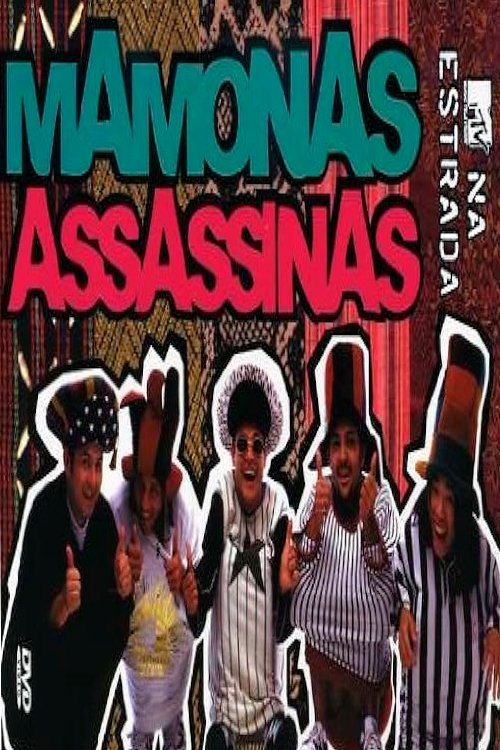
MTV na Estrada: Mamonas Assassinas is a documentary by Mamonas Assassinas, shown by MTV Brasil in 1996. It was released on VHS in 1996 and re-released on DVD in 2003. It follows the group in several shows held throughout Brazil in 1995, where there are records of the band's visit to Porto Alegre and Florianópolis, and excerpts from the respective shows, as well as interviews with the members.
Books
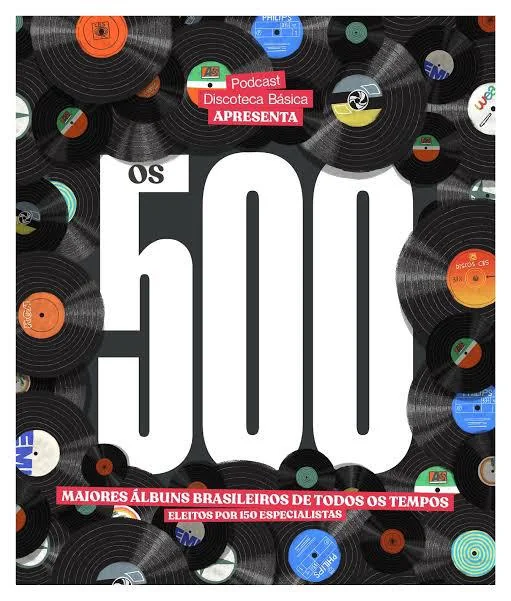
Os 500 Maiores Álbuns Brasileiros de Todos os Tempos
Ricardo Alexandre · 2022
The largest Brazilian music election ever conducted: 162 specialists, spanning journalists, critics, musicians, producers and podcasters, each nominated 50 essential albums, supported by a masterlist of more than 2,000 works. Led by Ricardo Alexandre with tabulation by Sérgio Jomori, it was published in December 2022 as a 200-page hardcover book with graphic design by Fernando Pires.
Mamonas Assassinas
Revista Personalidades, Guia Personalidades, Música, Entretenimento, On Line Editora · 2016
This magazine, from the 'Personalities' series, focuses on Mamonas Assassinas, celebrating the band's impact in the 1990s. It addresses the irreverence of the lyrics and the lively nature of the compositions that became the soundtrack to many moments of relaxation in Brazil, offering an insight into the group's trajectory and legacy.
Analyses
Mamonas Assassinas – Wikipedia
Wikipedia, the free encyclopaedia

Mamonas Assassinas: Album Review | Second Shine
secondshineblog.wordpress.com
Mamonas Assassinas, which was released in 1995, is the only official studio album recorded by the Brazilian band Mamonas Assassinas. The CD is a "Comedy Rock" album, with funny songs that have regional slangs, for example, the song "Jumento Celestino" that talks about the Northern culture, of course, with a funny approach. The band was sent to Los Angeles, California to record the ...
Nostalgia 03 | Mamonas Assassinas (1995) - De volta para o vinil
devoltaparaovinil.com.br
'Mamonas Assassinas' was released in 1995 and was the only official studio album released by the Brazilian band Mamonas Assassinas. The album sold over three million copies, thus receiving a Diamond Disc certification in 1995, according to the ABPD.
Mamonas Assassinas (1995) - A História do Disco
ahistoriadodisco.com.br
In 1995, there was a fierce 'ratings war' on Sundays, with Gugu on one side and Faustão on the other. At that time I was 4 years old, and I really liked Mamonas Assassinas, so much so that my mother recorded the day the band appeared on Gugu's show on a cassette tape.

S03E05 Mamonas Assassinas (1995) - Podcast Já ouviu esse disco?
podcastjaouviuessedisco.blogspot.com
I'm Danilo de Almeida (@22daniloalmeida) and in this episode of the podcast 'Já ouviu esse disco?' I talk about one of the biggest musical phenomena Brazil has ever seen. Today I'm talking about the first and only album that marked the meteoric career of Mamonas Assassinas.