Boogie Naipe
Mano Brown
2016
Rankings
Why This Album Matters
Boogie Naipe, released in 2016, marks the eagerly anticipated solo debut of Mano Brown, one of the pillars of Brazilian rap and leader of Racionais MC's. The album represents a bold and surprising aesthetic shift in his career, moving away from the politically engaged hip-hop that established him to delve deeply into the roots of black music. It pays homage to funk, soul, R&B, and disco music from the 1970s and 1980s, both national and international, offering a danceable, sophisticated sound permeated by captivating nostalgia. In this project, Brown adopts a "gangster lover" persona, navigating themes of love, romance, passions, disillusionment, and urban daily life, a lyrical contrast to the striking social denunciations of his work with Racionais. In addition to his rhymes, the rapper further explores his melodic side, venturing as a singer on several tracks. Boogie Naipe is, in essence, a vibrant tribute to a glorious musical past, reinterpreted with a new and modern chemistry, consolidating itself as a landmark in the trajectory of one of the country's most influential artists.
Context
Mano Brown's career, Pedro Paulo Soares Pereira, is inseparable from the history of Racionais MC's, a group he formed in 1988 and with which he built an essential discography for Brazilian hip-hop culture, marked by sharp lyrics that denounced police violence, social inequality, and racial prejudice. After more than two decades at the helm of Racionais, Boogie Naipe emerges as a manifestation of his personal and artistic evolution, a longing to explore other sounds and themes. The project matured over several years, with some songs composed up to a decade before its release. Brown, who grew up immersed in São Paulo's black music dance party culture, influenced by names such as Tim Maia, Jorge Ben Jor, and Motown, sought the freedom to tread new musical paths. The album can be seen as a response to the rigidity of certain "rap fundamentalists" who criticised the exploration of other genres, with Brown defending the freedom to take risks and surrender to his musical passions.
Recording
Boogie Naipe was an intensely collaborative project, produced by Mano Brown himself alongside São Paulo rapper and soulman Lino Krizz, who also performs as a backing vocalist for Racionais MC's and is a central figure on the album. The recording process stretched for almost two years, carried out during breaks in Racionais' busy schedule. The album featured a robust band, backing vocals, and a stellar cast of special appearances, reflecting the richness of Brazilian black music. The executive production was carried out by Boogie Naipe, Brown's and his wife's production company, without resorting to sponsorships or cultural incentive laws, which reinforces the authorial and independent nature of the work. The mastering, in turn, was finalised at the renowned Quad Studios, in New York.
Songs
The album is an extensive work, comprising 22 tracks totalling just over an hour in length, immersing the listener in a black music dance party atmosphere. The songs are enriched by a team of notable guests, including Lino Krizz on several tracks, Seu Jorge, Ellen Oléria, Hyldon, Don Pixote, William Magalhães, Carlos Dafé, Max de Castro, and the legendary Leon Ware, Marvin Gaye's collaborator. Among the highlights of the repertoire are "Gangsta Boogie", with its aggressive rhymes over classic beats; "Mal de Amor", which addresses romantic disillusionment; "Boa Noite São Paulo", which narrates a night in São Paulo; and "Mulher Elétrica", with an intense groove and lyrics that celebrate the female figure. The album also makes intelligent use of samples from funk and soul classics, such as "Chicago Gangsters" and "Soup for One" by Chic. Various vignettes punctuate the album, such as "Sinta-se Bem com o Boogie Naipe" and "Boogie Naipe, Baby!", reinforcing the conceptual atmosphere of a continuous party.
Legacy
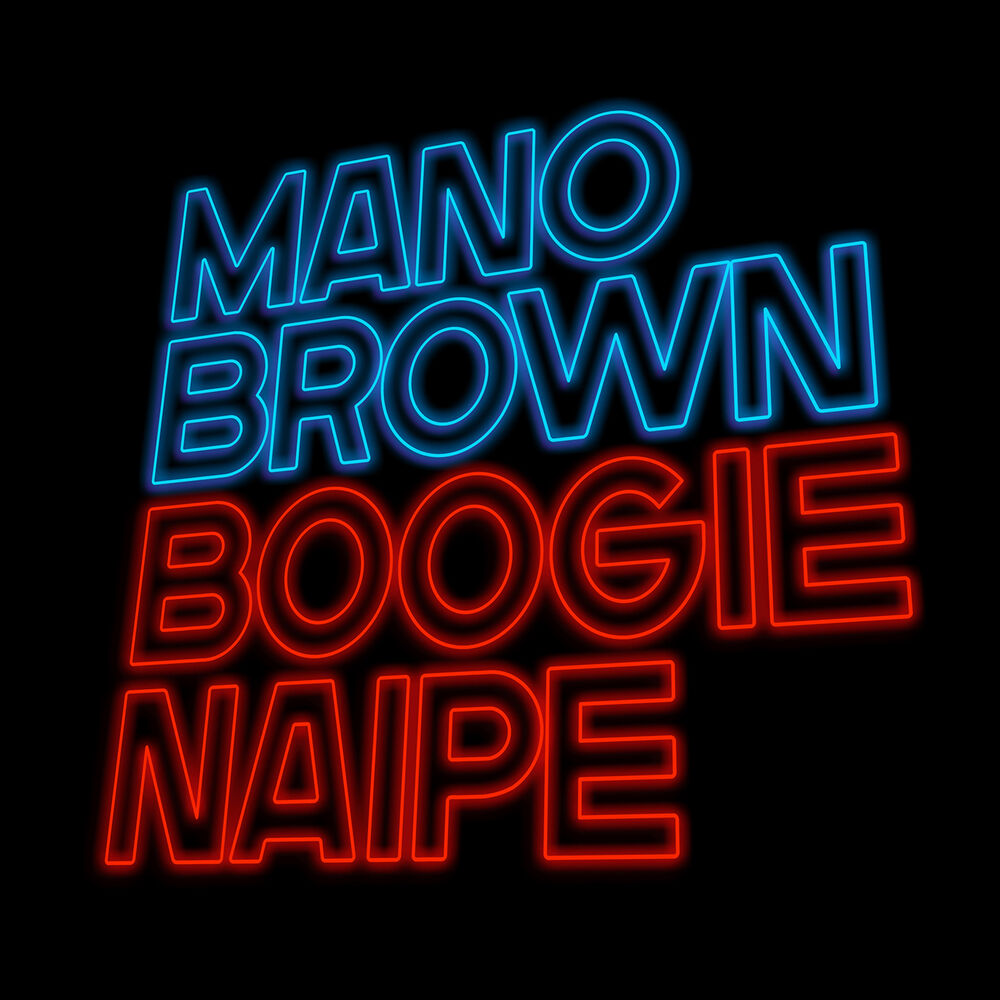
Boogie Naipe was met with widespread critical and popular success, marking significant recognition for Mano Brown's solo career. In 2016, Rolling Stone Brasil magazine chose it as the 4th best Brazilian album of the year, and the track "Gangsta Boogie" was highlighted as one of the ten best songs by the publication's critics. In 2017, the album gained international prominence by being nominated for a Latin Grammy in the category of Best Contemporary Pop Album in Portuguese Language. The album's impact extended to the stage, leading Mano Brown and the Boogie Naipe band to perform at major music festivals across the country, such as Rock in Rio, Lollapalooza, Circo Voador, and C6 Fest. The double vinyl edition, released in blue and red colours, with photographs by Klaus Mitteldorf, attests to the artistic and cultural value of the work. In 2020, the album also received a series of 12 animations for IGTV, visually expanding its narrative.
Tracks
Podcasts
A idéia desta série de Podcasts é bater um papo sobre um único disco que já está na agulha da galera, mas que gostariamos de dar a nossa opinião e abrir a discussão com você, querido ouvinte!
Videos
Resenha Mano Brown, Boogie Naipe
NonaOrelha
MANO BROWN FALA SOBRE A BOOGIE NAIPE 4/4
Só Cortes
Mano Brown fala sobre a importância do álbum ‘Boogie Naipe’ | Reverb Entrevista
RVRB
Books
Analyses
Boogie Naipe – Wikipedia
Wikipedia, the free encyclopaedia
Review: Mano Brown - Boogie Naipe (2016)
collectorsroom.com.br
Long, but rewarding, Boogie Naipe demonstrates the artistic maturity achieved by Mano Brown, capable of taking one of the most emblematic names in Brazilian rap down a totally new and unexpected path, but one that is just as fascinating as his work alongside Racionais MC's.
Resenha: "Boogie Naipe", Mano Brown - Música Instantânea
musicainstantanea.com.br
A permanent dialogue with the past that develops authorially in Mano Brown's first solo album. Divided between the lightness of soul, groove and rhymes, the vibrant Boogie Naipe (2016) floats nostalgically between the sound produced over four decades ago and the current scene.

MUSICA&SOM: Review: Mano Brown - Boogie Naipe (2016)
tabernanovostempos.blogspot.com
At the end of a 2016 that seems like it will never end, Mano Brown released his first solo album. Boogie Naipe is a surprising album, not because of its mentor's recognised creative ability, but rather for showing another side of Brown.
Mano Brown - Boogie Naipe - Monkeybuzz
monkeybuzz.com.br
Being at the helm of Brazil's biggest rap group for 26 years is not simple. Mano Brown knows this, and his figure became as enigmatic as it was scarce for much of that period. Naturally, age and success itself led him to open doors for new ventures.