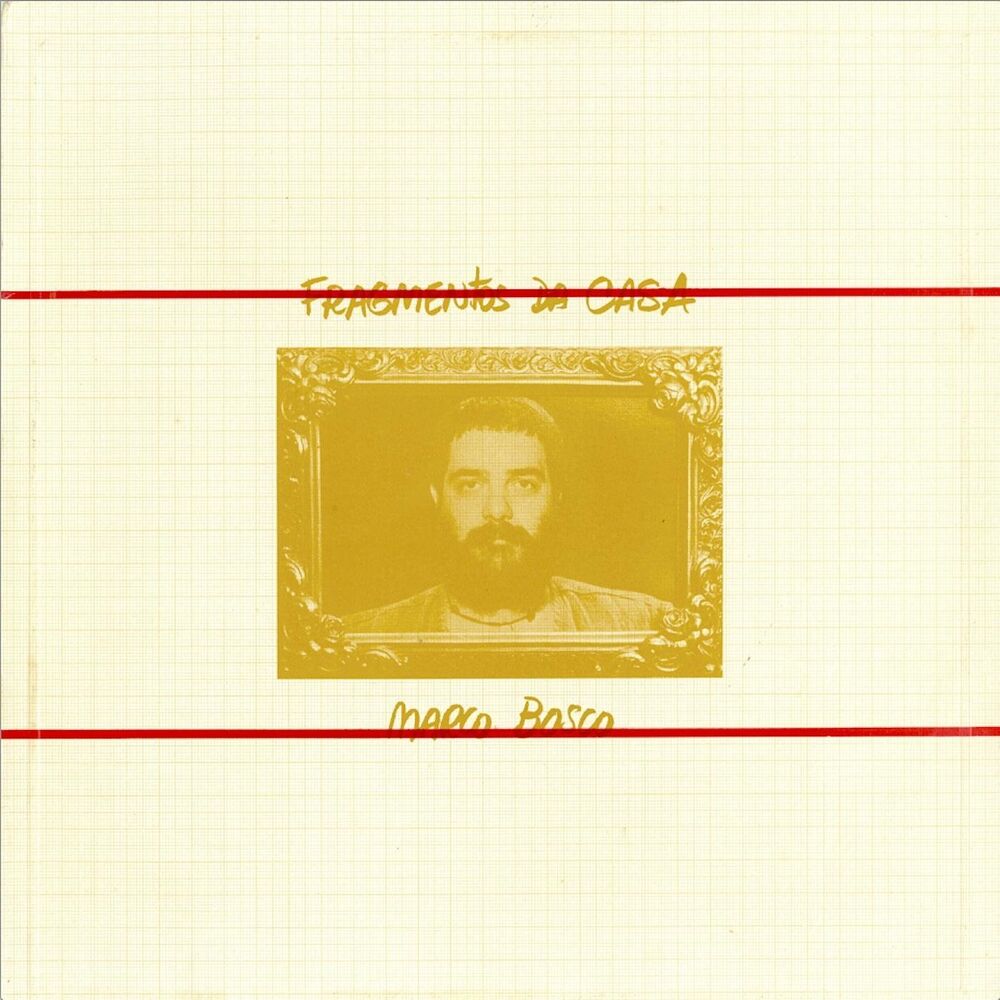
Fragmentos Da Casa
Marco Bosco
1986
Rankings
Why This Album Matters
Fragmentos Da Casa, released in 1986 by Marco Bosco, is a singular album that stands out in MPB for its experimental approach and genre fusion. The work transcends conventional classifications, navigating between jazz, Latin music, and electronic experimentalism, creating a sound that is both organic and futuristic. It is a work that underscores the percussionist's ingenuity in exploring new sonic textures. The album is conceived as a musical interpretation of a journey through the rooms of an imaginary house, traversing a cycle of a night and a day. This conceptual narrative lends the album remarkable artistic depth, inviting the listener to an immersive and contemplative experience. Bosco's genius lies in his ability to harmonise a vast acoustic percussive arsenal with the avant-garde synthesizers and digital equipment of the era, emphasising the timbral characteristics of Brazilian percussion. This hybrid aesthetic not only defines the album's identity but also positions it as a work of daring and innovation in the Brazilian musical landscape of the 1980s.
Context
Marco Bosco began his musical journey as a percussionist in 1974, honing his studies with maestros and musicians from symphony orchestras in Campinas and São Paulo. Before Fragmentos Da Casa, Bosco had already demonstrated his experimental vein with the release of his first solo album, Metalmadeira, in 1983. This pioneering work already blended acoustic and electronic sounds, laying the foundations for the sonic explorations that would be deepened in his subsequent album. Fragmentos Da Casa was released by the Carmo label, owned by the renowned musician Egberto Gismonti, an environment that naturally fostered creative freedom and experimentalism.
Recording
The album was released in 1986 by the Carmo label, and featured the collaboration of notable instrumentalists. Marco Bosco himself handled percussion, vocals, and operated synthesizers such as Emulator and Poly 6, in addition to a DX digital drum machine. Egberto Gismonti, the label owner, participated by playing keyboards on tracks like "Fragmentos" and "Quarto". Among the guest musicians were Paulo Calasans, who contributed with a Yamaha CP 70 electric piano and various synthesizers (DX 7, Six Track, Mini-Moog), and Luis Lopes, also responsible for synthesizers (DX 7, Six Track, Prophet 5). Aroldo Santarosa added electric (GR707 + GR700) and acoustic guitars, as well as vocals and craviola. The timbral richness was enhanced by Oswaldinho do Acordeon on accordion in "Sala", Carioca on nordestina cithara in "Fragmentos" and "Tua Casa, Minha Casa", and Alaor Neves on the Simmons SDS8 drum machine in "Cozinha". The recording process integrated Bosco's peculiar percussive arsenal, which included chizanzhi, caxixis, purrinhola, reco-reco, xequeres, berimbaus, and tongue drum. The fusion of these acoustic instruments with the synthesizers and digital equipment of the era was a crucial point in the album's sound, with Bosco describing the arrival of these electronic resources as "the best thing that happened on the planet".
Songs
The thematic concept of Fragmentos Da Casa unfolds as a musical journey through an imaginary home, reflecting the cycle of a day and a night. Side A of the LP features more extensive and experimental compositions, starting with the suite "Fragmentos", which is divided into "Noite Escura", "Crescendo o Medo", and "Despertar Das Águas", establishing a narrative arc that culminates in "Dia Claro". Side B, however, explores more accessible sounds, such as the song "Tua Casa, Minha Casa" by Sá & Guarabyra, which opens this side of the album. It is a soft ballad with an 80s atmosphere, where synthesizers and percussion act as central elements, creating immersive soundscapes. Other notable tracks include "Sol da Manhã", "Quarto" (featuring Egberto Gismonti), "Sala", "Cozinha", and "Pela Janela", each contributing to the exploration of different environments and sensations within the conceptual "house".
Legacy
Fragmentos Da Casa is widely considered one of the 100 best Brazilian music albums, a testament to its relevance and lasting impact. The album gained international recognition, being reissued and standing out as a "cult classic" and a "highly sought-after experimental album". The track "Sol da Manhã", in particular, was selected for the influential compilation Outro Tempo (Electronic and Contemporary Music from Brazil 1978-1992), curated by DJ John Gomez, further solidifying the album's status in the global electronic and contemporary music scene. Critical reception over the years has been consistently positive, with an average of 4.67 out of 5 stars across 12 reviews on Discogs. The album's reissue included new testimonials from Marco Bosco and a substantial article by Bento Araujo, author of the book series Lindo Sonho Delirante, which is dedicated to investigating the audacious and fearless music produced in the Brazilian underground. This critical acclaim and inclusion in prestigious compilations attest to the originality and perennial influence of Fragmentos Da Casa in Brazilian music and beyond.
Tracks
Analyses
Fragmentos da Casa | Marco Bosco | Discos Nada
discosnada.bandcamp.com
Fragmentos da Casa, his second solo album, had a striking concept, explained by the artist himself, from the original press release : "Antagonizing the synthesized universe of digital equipment and instruments to an acoustic aesthetics; plus emphasizing the timbristic characteristics of percussion: Fragmentos da Casa is a musical ...
Marco Bosco - Fragmentos da Casa (LP) - Soundohm
soundohm.com
Fragmentos da Casa, his second solo album, had a striking concept, explained by the artist himself, from the original press release : "Antagonizing the synthesized universe of digital equipment and instruments to an acoustic aesthetics; plus emphasizing the timbristic characteristics of percussion: Fragmentos da Casa is a musical ...
FRAGMENTOS DA CASA - MARCO BOSCO | Rush Hour
rushhour.nl
Reissued for the first time, "Fragmentos da Casa" by Brazilian percussionist Marco Bosco, was originally released in 1986, by Carmo, owned by Egberto Gismonti. Carmo also released albums by Gismonti, Piry Reis, Fernando Falcao, Nando Carneiro and Andr Geraissati, among others. In 1986, Marco Bosco's percussive arsenal was unique and extremely peculiar, containing chizanzhi, caxixis, purrinhola ...
Marco Bosco - Fragmentos da Casa (1986) - CrocoDiscos
crocodiscos.com
A 'VG' record shows more visible marks, and these marks cause light crackling in some parts of the record, or perhaps some occasional pops. Even so, listening to a 'VG' record is an enjoyable experience because, as stated at the beginning of the chart, we only sell well-preserved records!
Marco Bosco: Fragmentos Da Casa - GOMA®
g-o-m-a.com
Marco Bosco's second solo album, the album deepens the fusion between acoustic percussions and electronic sounds: vocoders, synthesisers, and sequencers, in a sonic narrative inspired by an imaginary journey through different rooms of a house.