Vento Sul
Marcos Valle
1972

Rankings
Why This Album Matters
Vento Sul, released by Marcos Valle in 1972, represents a singular work and a radical turning point in his artistic career. Far from the bossa nova sound that made his name, this album is a deep dive into 'super-spatial' and psychedelic-folk sonorities, revealing Valle at his 'cosmic' and 'hippiedelic' peak. It is considered a 'minor classic' and a 'remarkable achievement' of this period, blending the artist's Brazilian musical roots with the eccentricity of acid rock and a deep emotional charge. The work is highly experimental, conceived in a communal spirit and marking Marcos Valle's 'hippie' phase. Vento Sul stands out for its innovative fusion of pop, rock, soul and psychedelic elements, establishing itself as an essential piece for understanding the diversity and audacity of 70s Brazilian popular music.
Context
In the early 70s, Marcos Valle, already recognised as a talented composer of the second generation of bossa nova, sought to expand his musical horizons. Feeling restricted by the demands of commercial works, such as the soundtrack for the telenovela "Selva de Pedra", Valle wished to explore new influences and creative directions. Following the success of his previous album, Garra, Marcos Valle and his brother Paulo Sérgio Valle, along with friends and their partners, sought refuge in Búzios, a fishing village, in the summer of 1971. In this environment of 'soul-searching' and experimentation, typical of the 'hippie' movement of the time, the inspiration for Vento Sul was born. The objective was clear: to 'take a few more risks' and incorporate a 'rock influence'.
Recording
The production of Vento Sul was overseen by Milton Miranda, Lindolfo Gaya and Renato Corrêa. For this work, Marcos Valle took on not only vocals, but also a variety of instruments, such as piano, harpsichord, organ and viola caipira. A crucial element for the album's sound was the collaboration with the Brazilian progressive rock band O Terço, which solidified the album's experimental approach. Vento Sul's credits include notable musicians such as Robertinho Silva on drums and percussion, Vinícius Cantuária on drums, and Cezar de Mercês on bass. The arrangements and orchestrations were handled by Hugo Bellard and Ian Guest, contributing to the work's textural richness.
Songs
The compositions on Vento Sul reflect Marcos Valle's 'melancholy mood' and his shift towards a 'dreamy and psychedelic' aesthetic. The album features tracks that have become 'absolute masterpieces', such as "Vôo Cego" and "Deixa o mundo e o sol entrar". The song "Democústico" exhibits 'touches of recent Tropicalismo', with a rhythmic and phonetic poem over a continuously transforming musical base. "Bodas de Sangue" is a 'sublimely beautiful' instrumental, while the title track, "Vento Sul", is considered 'killer'. The album's musical breadth is 'disconcerting', and many of its pieces are described as 'small sonic worlds', showcasing the compositional genius of Marcos and Paulo Sérgio Valle, lyricist partner on several songs.
Legacy
Vento Sul is widely recognised as one of the most significant albums and 'greatest works' in Marcos Valle's discography, a testament to his constant artistic evolution. The period from 1970 to 1974 in Valle's career, which includes this album, is frequently cited as a creative peak 'rarely achieved in popular music'. While it may not have generated 'obvious hits' at the time, the album was positively received by critics and its 'sales' and 'critical reception' were not harmed by its experimental nature. Later re-releases consolidated it as a 'magical album' and a valuable addition to any South American music collection, influencing Brazilian psychedelic-folk and progressive music.
Tracks
Credits
Lindolfo Gaya
Milton Miranda
Renato Corrêa
Z. J. Merky
Cezar De Mercês, Cláudio Guimarães, Frederiko, Paulo Guimarães, Renato Corrêa, Sérgio Hinds, Vinicius Cantuária
Cláudio Guimarães, Marcos Valle, Sérgio Hinds
Cezar De Mercês, Cláudio Guimarães, Mauricio Maestro
Vinicius Cantuária
Paulo Guimarães
Robertinho Silva, Vinicius Cantuária
Cláudio Guimarães, Frederiko, Sérgio Hinds
Sérgio Hinds
Frederiko, Sérgio Hinds
Cláudio Guimarães, Frederiko, Sérgio Hinds
Paulo Guimarães
Paulo Guimarães
Paulo Guimarães
Cláudio Guimarães, Frederiko
Robertinho Silva, Vinicius Cantuária
Cláudio Guimarães
Paulo Guimarães
Cezar De Mercês
Marcos Valle
Quarteto de Cordas de Peter Dauelsberg
Robertinho Silva
Nivaldo Duarte, Zilmar De Araujo
Reny R. Lippi
Juarez Machado
Marcos Valle
Podcasts

Sons e Histórias · Daniel Queiroz
Neste episódio #109 do Sons e Histórias, Daniel Queiroz, Raildo Vasconcelos e Júnior Bito mergulham na genialidade e na transição musical de Marcos Valle, focando no emblemático álbum "Vento Sul" (1972).Esqueça a Bossa Nova clássica ou os hits de academia dos anos 80 como "Estrelar". Neste papo, dissecamos a fase em que Marcos Valle se juntou às bandas O Terço e Som Imaginário para criar um som re
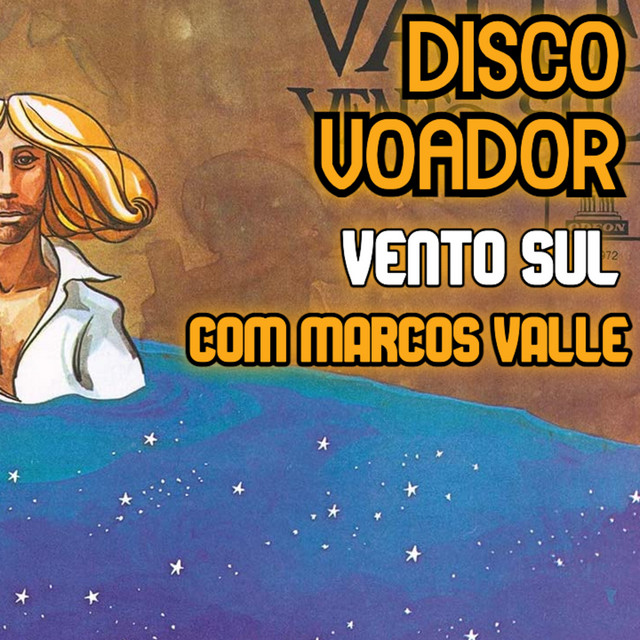
Disco Voador · Ramon Duccini
Falar de Marcos Valle é falar de sucessos atemporais como "Samba de Verão", "Viola Enluarada" e "Preciso Aprender a Ser Só", entre tantos outros. Músico ativo da chamada "segunda fase" da Bossa Nova, Marcos escreveu capítulos importantíssimos da música brasileira daquele momento. Seus discos dos anos 70 e 80 estão entre os mais cultuados entre os discos de música brasileira mundo afora. Mas você
Analyses
Album: Vento sul. Artist/Band: Marcos Valle. Year: 1972.
staimusic.com
Review "Vento Sul" serves as a testament to Marcos Valle's artistic vision, where each track is meticulously crafted to transport listeners to a sun-soaked landscape of Brazilian culture. The album juxtaposes vibrant rhythms with introspective lyrics, creating a sonic experience that is both uplifting and reflective. Valle's vocal delivery is smooth and enchanting, perfectly complementing the ...
MUSiC: Marcos Valle, Vento Sul, 1972 - Seb Palmer
sebpalmer.com
Personally I feel that Valle's music between 1970-4 reaches a peak the likes of which is rarely attained in popular music. As I type this Bodas de Sangue is playing: the fifth track on the album, it's a sublimely beautiful instrumental that moves through several segments, ranging from filmic, to classical chamber music.
Marcos Valle - Vento Sul (1972) | Toque Musical
toque-musicall.com
As I said yesterday, this week we continue, every other day, presenting some of the best albums by the great Marcos Valle. I've been alternating with other titles/artists so that the medication can take effect.

MUSICA&SOM: Marcos Valle - Vento Sul (1972)
tabernanovostempos.blogspot.com
I've already written in these pages about my beloved Nick Cave. Apropos of an album, and also about a particular song from this The Boatman'...
Cliquemusic : Disco : VENTO SUL
cliquemusic.com.br
1972 Odeon SMOFB 3725 Tracks 1 Revolução orgânica (Paulo Sergio Valle, Marcos Valle) 2 Malena (Paulo Sergio Valle, Marcos Valle) 3 Pista 02 (Paulo Sergio Valle, Marcos Valle) 4 Vôo cego (Cláudio Guimarães) 5 Bôdas de sangue (Marcos Valle) 6 Democústico (Paulo Sergio Valle, Marcos Valle) 7 Vento Sul (Paulo Sergio Valle, Marcos Valle)