Álibi
Maria Bethânia
1978

Rankings
Why This Album Matters
Álibi, Maria Bethânia's eighth studio album, released in 1978, represents a watershed moment in the singer's career and in Brazilian Popular Music itself. With it, Bethânia not only solidified her position as one of the country's greatest interpreters, but also democratised MPB, breaking down the stigma that the genre was exclusive to a more elitist and intellectualised audience. The album is a celebration of the power of the female voice, of dramatic quality, and of emotion, intrinsic characteristics of Bethânia's art. It stands out for its careful selection of repertoire, which blends established and emerging composers, and for the intensity of the interpretations, which range from the lyrical to the popular, from samba to bolero, without losing artistic coherence. Álibi proved that quality and popular appeal could coexist, opening new horizons for Brazilian music and establishing Maria Bethânia as a true queen of national music.

With Álibi, Maria Bethânia surpassed a barrier hitherto unheard of in Brazilian music for a female performer: the astronomical mark of over 1 million copies sold.
Antônio do Amaral Rocha · Rolling Stone Brasil
Context
Before Álibi, Maria Bethânia was already a critically acclaimed singer, admired for her deep, distinctive voice and the theatricality of her shows, but her audience was more restricted, concentrated among the intellectual and university elite. Her popularity began to expand with successes such as "Olhos nos Olhos" (1976) and the albums Pássaro Proibido (1976) and Pássaro da Manhã (1977), which earned her the first Gold Discs. The formation of the supergroup Doces Bárbaros in 1976, alongside Caetano Veloso, Gilberto Gil, and Gal Costa, also increased her visibility. The release of Álibi in 1978 coincided with a crucial period in Brazilian history, the beginning of political opening after years of repression by the military dictatorship, which had stifled MPB with censorship. The album, and particularly the interpretation of "Cálice" on the programme Fantástico, in line with the extinction of AI-5 in early 1979, symbolised a moment of renewal and hope, resonating deeply with the country's sentiment.
Recording
Álibi was released in 1978 by Polygram/Philips (now Universal Music), consolidating the singer's partnership with one of the largest record labels of the era. Album production was handled by Perinho Albuquerque and Maria Bethânia herself, a collaboration that ensured fidelity to the interpreter's artistic vision. Perinho Albuquerque not only produced the record, but was also responsible for the arrangements and musical direction, crucial elements for the album's cohesive and engaging sound. The team of musicians included talents such as Jamil Joanes, Luizão, and Moacyr Albuquerque on bass, and the notable participation of Rosinha de Valença, who contributed cavaquinho and classical guitar, enriching the instrumental texture.
Songs
The album Álibi is a true compendium of classics, with songs that became iconic in Maria Bethânia's voice. The title track, "Álibi", by Djavan, set a tone of intensity and passion, becoming one of her greatest successes. Other highlights include the unforgettable duet with Gal Costa on "Sonho Meu", by Dona Ivone Lara and Délcio Carvalho, a bold choice by the singer who initially considered Alcione for the partnership. The partnership with Alcione, in turn, materialised in the powerful interpretation of "O Meu Amor", a composition by Chico Buarque originally written for the musical Ópera do Malandro. The repertoire also treats the listener to the dramatic quality of "Ronda", by Paulo Vanzolini, and the explosion of feelings in "Explode Coração (Não Dá Mais Pra Segurar)", by Gonzaguinha, which became one of the biggest successes of her career. "Cálice", by Chico Buarque and Gilberto Gil, prohibited by the dictatorship since 1973, received a powerful interpretation, becoming a symbol of resistance and the political opening of the era.
Legacy
Álibi was not only a critical success, but an unprecedented commercial phenomenon for a Brazilian female singer. It was the first album by a woman in Brazil to surpass the 900,000 copies sold mark, with some sources indicating over one million, a feat until then exclusive to Roberto Carlos. The eponymous single, "Álibi", also received a gold disc and sold over 785,000 copies. Considered one of the best albums of the singer's career, Álibi is positioned 79th on Rolling Stone Brasil's prestigious List of the 100 greatest Brazilian music albums. In addition to sales and critical acclaim, the album popularised Maria Bethânia's career, transforming her into the most popular singer in the country and redefining MPB's relationship with the general public. Its success opened doors for other artists of the genre to also achieve national prominence.
Tracks
Credits
Perinho Albuquerque
Jamil Joanes, Luizão, Moacyr Albuquerque
Rosinha de Valença
Rosinha de Valença
Enéas Costa, Paulinho Braga, Tutty Moreno
Mauro Senise
Perinho Albuquerque
Mauricio Einhorn
Djalma Correa, Tutty Moreno
Perna Fróes, Tomas Improta
Edmundo Maciel
Ivan Lisnik
Barrozo
Ary Carvalhaes
Ary Carvalhaes
Julinho, Vitor Farias
Luciano Figueiredo, Oscar Ramos
Marisa Alvarez Lima
Januário Garcia
Podcasts
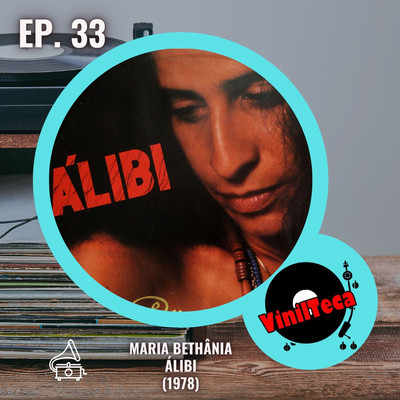
Vinilteca · José Ono Junior e Guilherme Colpani
Em 1978, o início de uma abertura política no Brasil trouxe leveza pra música popular brasileira, depois de tanta censura enfrentada por cantores e compositores. Essa nova fase foi encabeçada pelo sucesso do disco "Álibi", de Maria Bethânia, que vendeu 1 milhão de cópias e elevou a voz feminina na MPB a patamares até então não alcançados. A Vinilteca é um projeto que nasceu no YouTube em 2016 e m
Videos
MARIA BETHÂNIA - ÁLIBI (1978) | ALBUM REVIEW
Vinilteca
TUDO SOBRE O ÁLIBI DA MARIA BETHÂNIA
Escuta esse disco!
Books
Os 500 Maiores Álbuns Brasileiros de Todos os Tempos
Ricardo Alexandre · 2022
The largest Brazilian music election ever conducted: 162 specialists, spanning journalists, critics, musicians, producers and podcasters, each nominated 50 essential albums, supported by a masterlist of more than 2,000 works. Led by Ricardo Alexandre with tabulation by Sérgio Jomori, it was published in December 2022 as a 200-page hardcover book with graphic design by Fernando Pires.
Vozes do Brasil
Patricia Palumbo · 2019
This work, in a new revised and expanded edition, 'Vozes do Brasil: entrevistas reunidas' ('Voices of Brazil: collected interviews'), offers an overview of the life and work of important MPB personalities, through interviews conducted by journalist Patricia Palumbo. Given Maria Bethânia's relevance in the MPB scene and the impact of the album 'Álibi' as her first gold record, it is highly probable that an interview with the artist will address this significant work in her discography.
Analyses
Álibi – Wikipedia
Wikipedia, the free encyclopaedia
Álibi – The 100 Greatest Albums of Brazilian Music
Antônio do Amaral Rocha · Rolling Stone Brasil
With Álibi, Maria Bethânia surpassed a barrier hitherto unheard of in Brazilian music for a female performer: the astronomical mark of over 1 million copies sold.

"Álibi" (Philips, 1978), Maria Bethânia
discosessenciais.blogspot.com
But the major leap in Maria Bethânia's career happened with the album Álibi, released in December 1978. Unlike previous albums, Álibi featured songs that became big hits and would mark Bethânia's entire career.

Maria Bethânia - Álibi (1978) | Documentos Revelados
docrevelados.wordpress.com
A truly remarkable album by Maria Bethânia. Released in 1978, it is one of the best albums, if not the best, of her career. The way this album was constructed says a lot about its beauty and its importance. Among countless reasons, one was the beautiful reinterpretations of Chico Buarque's songs, for example. The...
Álibi, de Maria Bethânia: há 40 anos, disco deu vigor feminino à MPB
metropoles.com
With Álibi, Maria Bethânia gave a feminine personality to the Brazilian music of the time, breaking the stigma of being an elitist MPB singer, with all tracks becoming radio hits. Another hit from the album Álibi that will be highlighted in the singer's performance in Brasília is Sonho Meu.