Brasileirinho
Maria Bethânia
2003

Rankings
Why This Album Matters
Released in 2003, Brasileirinho, Maria Bethânia's twenty-fourth studio album, marks a crucial point in her discography, solidifying itself as an ambitious project delving into the vast Brazilian cultural identity. Produced through her newly created Quitanda label, in partnership with Biscoito Fino, this work transcends a mere collection of songs, proposing itself as a panorama of Brazil's diversity, moving away from a Bahian centrality to embrace the country's multiple 'Brazils'. The album distinguishes itself through its interdisciplinary approach, intertwining music with the poetry and literature of modernist authors such as Mário de Andrade, Guimarães Rosa, and Vinicius de Moraes. This fusion of languages not only elevates the artistic experience but also deepens the discussion on the formation of national identity, cultural hybridism, and the valorisation of marginalised expressions, such as African-derived religions and indigenous deities. Considered one of the most significant and acclaimed titles in the singer's career, Brasileirinho reaffirms Bethânia as one of the great interpreters and promoters of Brazilian culture.
Context
Brasileirinho emerged at a moment of consolidation for Maria Bethânia, being her 24th studio album and the first to be released by the Quitanda label, a personal initiative by the artist within the Biscoito Fino record company. This endeavour represented a step towards greater artistic independence and the materialisation of projects with a more authorial and comprehensive concept. Since the beginning of her career in 1965, with the emblematic show "Opinião", Bethânia had already demonstrated a predilection for blending different artistic elements and addressing Brazilian social and cultural issues. Her trajectory is marked by the constant promotion of Brazil's culture in its essence, integrating music, literature, and performance in a singular way, which paved the path for Brasileirinho's thematic depth.
Recording
Brasileirinho's production was spearheaded by Maria Bethânia herself, with musical direction by her long-time collaborator, Jaime Alem. The album featured an exquisite musical arrangement, centred around a trio that included Jaime Alem on acoustic guitar, Jorge Helder on bass, and Marcelo Costa on percussion. The studio album, recorded in 2003, was enriched by special guest appearances that underscore its plural and Brazilian character. Miúcha and Nana Caymmi lent their voices in striking duets, while the Minas Gerais group Uakti added unique sound textures. Furthermore, the album included poem recitations by Ferreira Gullar and Denise Stoklos, who gave voice to texts by Mário de Andrade, sewing music to the country's rich literary tradition.
Songs
Brasileirinho's repertoire is a mosaic of Brazilian identity, meticulously selected by Maria Bethânia to explore the country's roots and diverse cultural nuances. Tracks such as "Salve as Folhas", "Yáyá Massemba", "Capitão do Mato", "Cabocla Jurema", "Santo Antônio", "Padroeiro do Brasil", "São João Xangô Menino", "Cigarro de Paia / Boiadeiro", "Sussuarana", "Senhor da Floresta", "Purificar o Subaé", and "Melodia Sentimental" weave narratives that traverse indigenous Brazil, Black identity, the hinterlands, and the richness of classical music. The album's genius lies in the integration of literary texts directly into the songs or through recitations, transforming it into a poetic-musical experience. Excerpts from Mário de Andrade, Guimarães Rosa, and Vinicius de Moraes are poetically stitched together, offering an additional layer of meaning. Religiosity, both of African and Catholic origin, is a recurring theme, as in "Salve as Folhas", which evokes Aroni, and "São João Xangô Menino", which celebrates the orixá Xangô. Highlights include the collaboration of the group Uakti on "Salve as Folhas", and Bethânia's duets with Miúcha on "Cabocla Jurema" and with Nana Caymmi on "Sussuarana", evidencing the plurality of voices and styles that make up Brazil's soundscape.
Legacy
Brasileirinho was met with great acclaim, being considered by many critics and fans as one of the best and most fundamental albums in Maria Bethânia's vast career. Its release marked a period of renewal and consecration for the artist, solidifying her role as a guardian and supreme interpreter of Brazilian culture. The album's impact extended beyond the studio format, generating an "anthological" and "moving" show that was widely applauded. This performance was recorded and released as a DVD, Brasileirinho ao Vivo, in 2004, and its audio received a digital version in 2015, expanding the project's reach and longevity. The work reinforced Bethânia's relevance in promoting national culture and exploring Brazilian identity, valorising marginalised expressions and fostering debate on hybridism and interculturality. Although the text does not specify direct awards for the album, Brasileirinho's strong critical reception contributes to Bethânia's image as the most honoured artist in the history of the Prêmio da Música Brasileira.
Tracks
Credits
Tira Poeira, Uakti
Jaime Alem
Jorge Helder
Sergio Krakowski
Marcelo Costa
Podcasts

Transe Hub Podcast · Transehub
Audiostyle dedicado à escuta e à prosa sobre o álbum Brasileirinho, de Maria Bethânia, de 2003, com curadoria de Abayomi Mandela. Confere o blog audiostyle20.wordpress.com para acessares o texto preparado pelo Abay e o encarte com as letras do disco.
Videos
"Brasileirinho - Maria Bethânia | Melhores discos brasileiros dos anos 2000 | Alta Fidelidade
Alta Fidelidade
Books
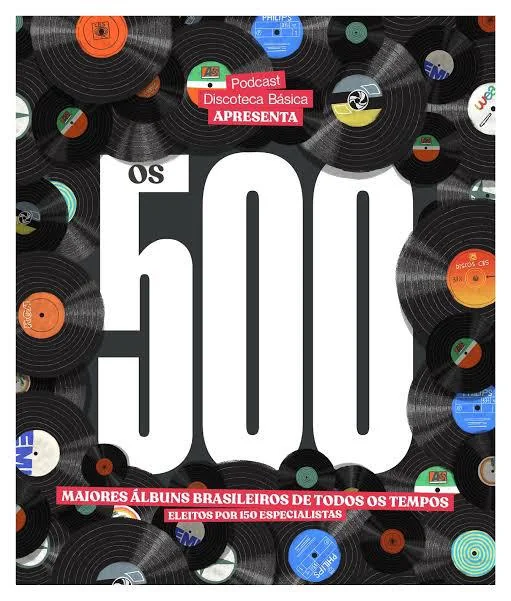
Os 500 Maiores Álbuns Brasileiros de Todos os Tempos
Ricardo Alexandre · 2022
The largest Brazilian music election ever conducted: 162 specialists, spanning journalists, critics, musicians, producers and podcasters, each nominated 50 essential albums, supported by a masterlist of more than 2,000 works. Led by Ricardo Alexandre with tabulation by Sérgio Jomori, it was published in December 2022 as a 200-page hardcover book with graphic design by Fernando Pires.
Waldir Azevedo
Marco Antonio Bernardo · 2004
This book addresses the life and work of Waldir Azevedo, one of the greatest choro composers and instrumentalists, a musical genre that is the central focus of Maria Bethânia's album 'Brasileirinho'. It is fundamental for understanding the musical context and the roots of the record, which revisits and celebrates this very important genre.
Analyses
Brasileirinho – Wikipedia
Wikipedia, the free encyclopaedia
"Brasileirinho" - por Rayssa Santos. - Uai, Maria Bethânia
uaimariabethania.com.br
Released in 2003, 'Brasileirinho' is the album that launched the Quitanda label – a label developed in partnership with the Biscoito Fino record company so that singer Maria Bethânia could conceive her projects 'freely, without market pressure'.

Criatura de Sebo: Brasileirinho - 2003 - Maria Bethânia
criaturadesebo.blogspot.com
They say that Bethânia released the CD Brasileirinho on a label opened to record albums with less commercial appeal. If beauty has no commercial appeal, then this album must have sold very little indeed, as its aesthetic grandeur is tremendous!
A brasilidade de Maria Bethânia em uma breve análise da estética ...
revistasuninter.com
This study, based on a Literature Review and Text Analysis, presents a brief analysis of 'brasilidade' (Brazilian-ness) in Maria Bethânia's music, drawing from the historical recording of Brasileirinho (Quitanda/Biscoito Fino, 2003-2004).
18 Anos de Brasileirinho, de Maria Bethânia: uma pesquisa ... - UFRGS
seer.ufrgs.br
With the aim of analysing aspects of Brazilian cultural diversity present in Maria Bethânia's work Brasileirinho (2003), we present the research, spanning various art segments (music, literature, painting), in an attempt to paint a significant picture of Brazilian identities within their geo...