Barulhinho Bom - Uma Viagem Musical
Marisa Monte
1996

Rankings
Why This Album Matters
Barulhinho Bom, released with the subtitle Uma Viagem Musical, represents a singular milestone in Marisa Monte's discography, standing out for its innovative structure as a double album blending studio recordings and live performances. This hybrid approach offers listeners a multifaceted panorama of the artist, balancing the intimacy of her unreleased compositions with the contagious energy of her stage performances. The album solidifies Monte's reputation as one of MPB's most versatile voices, capable of moving fluidly between various genres such as pop, samba, bossa nova, rock, and jazz, always with her characteristic and captivating vocal delivery. Beyond its musical richness, Barulhinho Bom gained immediate notoriety due to its cover art, a provocative illustration by the porn-naif comic artist Carlos Zéfiro. The choice of image generated wide controversy and discussions, turning the album into an object of cultural debate and adding a layer of audacity and originality to its identity. Marisa Monte explained that the intention was to create a dialogue between music and popular visual arts, and that the voyeurism explored in the image related to the interaction between audience and artist. This visual element, combined with the sonic proposal, cemented Barulhinho Bom's status as a complete and intriguing work of art.
Context
Before Barulhinho Bom, Marisa Monte had already established a trajectory of success and recognition within the Brazilian music scene. Her career took off with her live debut album, MM (1989), followed by the acclaimed studio albums Mais (1991) and Verde, Anil, Amarelo, Cor-de-Rosa e Carvão (1994). These works established her as a central figure in Música Popular Brasileira, celebrated for her expressive voice, her sonic experimentation, and her creative partnerships with names such as Arnaldo Antunes, Nando Reis, and Carlinhos Brown. The recording of Barulhinho Bom's live sections took place amidst the successful tour for Verde, Anil, Amarelo, Cor-de-Rosa e Carvão, demonstrating a period of intense activity and artistic maturity for the singer. This sequence of well-received albums paved the way for Barulhinho Bom, her fourth consecutive work, to also reach the top of the charts in Brazil, underlining her growing influence and appeal to the public.
Recording
The production of Barulhinho Bom was an intricate and geographically dispersed process, reflecting Marisa Monte's artistic ambition. The live sections of the album were captured at two distinct times and locations: at Teatro Guararapes, in Recife, Pernambuco, between 13 and 14 October 1995, and at Teatro Carlos Gomes, in Rio de Janeiro, on 28 March 1996. These recordings were made during the acclaimed tour for the album Verde, Anil, Amarelo, Cor-de-Rosa e Carvão, conveying the energy and spontaneity of her performances. Meanwhile, the studio sessions that make up the other half of the album took place at Impressão Digital studios, in Rio de Janeiro, in June 1996, and at the renowned Kampo Audio/Video, in New York, in July of the same year. The album's production was handled by Marisa Monte herself in collaboration with experienced musician and producer Arto Lindsay, who had previously played a significant role in the singer's earlier works. This international collaboration and the careful selection of recording locations contributed to the project's rich and polished sound.
Songs
The album Barulhinho Bom is a sonic tapestry weaving unreleased songs with interpretations of classics and previous successes by Marisa Monte, reflecting a "walk through her affective memory". The studio disc features three unreleased songs by Carlinhos Brown: "Arrepio", "Maraçá", and "Magamalabares", which stand out for the partnership's characteristic inventiveness and rhythm. Among her own compositions, "Blanco" is particularly notable for being the musicalisation of a poem by Octavio Paz, translated by Haroldo de Campos, demonstrating Monte's inclination towards the fusion of different art forms. Complementing the original material, the album includes highly expressive covers, such as Moraes Moreira's "Chuva no Brejo", Gilberto Gil's "Cérebro Eletrônico", and Lulu Santos's iconic "Tempos Modernos", which gain new layers of meaning in her voice. The live part of the album revisits hits that had already marked the singer's career, such as "Segue o Seco", "Ao Meu Redor", "Bem Leve", "Ainda Lembro", and "Beija Eu", in addition to other covers, allowing Marisa Monte's vibrant performance to re-signify these songs for the audience.
Legacy
Barulhinho Bom quickly became a resounding success, debuting at number one on Brazil's best-selling album charts and marking Marisa Monte's fourth consecutive album to achieve this feat. Its repercussions were amplified by the controversy surrounding the cover, which featured a drawing by the artist Carlos Zéfiro. The image generated debate, and in the United States, where it was released as A Great Noise, the cover was censored with a black strip over the drawing's breasts, while in Brazil, some stores packaged it with colourful plastics, increasing curiosity and buzz around the work. The album was acclaimed by specialised critics, who recognised Marisa Monte's "extraordinary talent" and "authenticity", highlighting her ability to surprise with a live album full of magic and emotion, in a contemporary and delicate style. The audacity and musical quality of Barulhinho Bom consolidated it as an iconic album in Brazilian music. Years later, in June 2020, the album's legacy was extended with the digital release of "Hotel Tapes", an extra collection of live tracks recorded in December 1996, as part of the Cinephonia project, offering even more recordings from this creative period of the artist.
Tracks
Credits
João Augusto
Carlinhos Brown
Leonardo Netto
Arto Lindsay, Marisa Monte
Suely Aguiar
Newton Maciel
Mauro Bianchi
Antoine Midani
Guilherme Calicchio, Marcio Barros
Suely Aguiar
Fernando Caneca
UE Nastasi
Fernando Aponte, Patrick Dillett
Alex De Jonge
Dave Robbins, Jim McNamara
Claudemir Rufo
Jorge Nunes, Roberto Marques, Zorro
Alex De Jonge, Dave Robbins, Jim McNamara
Marco Hoffer, Marcos Vicente
Fernando Aponte, Patrick Dillett
Bruno Porto
Leonardo Eyer
Gringo Cardia
Patricia Fernandes
Carlos Zéfiro
Marisa Monte
Books
Marisa Monte: notas além da música
Emerson Rossetti · 2025
This book offers a unique record of Marisa Monte's entire body of work, combining history, aesthetic and linguistic analysis. It is an in-depth study that covers the singer's complete career, making it highly probable that it dedicates significant attention to important albums like 'Barulhinho Bom'.
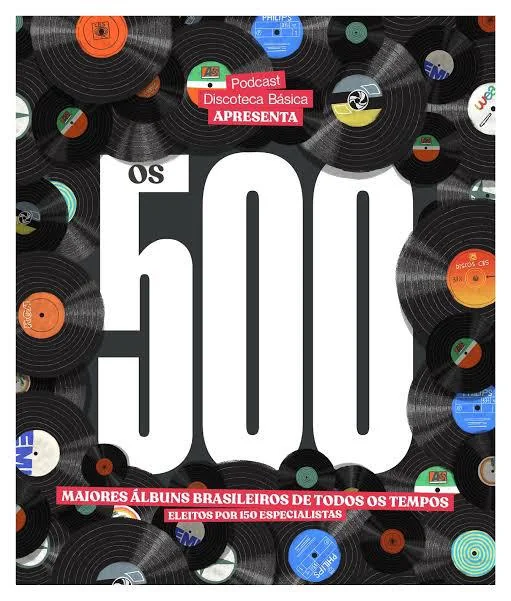
Os 500 Maiores Álbuns Brasileiros de Todos os Tempos
Ricardo Alexandre · 2022
The largest Brazilian music election ever conducted: 162 specialists, spanning journalists, critics, musicians, producers and podcasters, each nominated 50 essential albums, supported by a masterlist of more than 2,000 works. Led by Ricardo Alexandre with tabulation by Sérgio Jomori, it was published in December 2022 as a 200-page hardcover book with graphic design by Fernando Pires.
Analyses
Barulhinho Bom - Uma Viagem Musical – Wikipedia
Wikipedia, the free encyclopaedia
Marisa Monte - "Barulhinho Bom - Uma Viagem Musical" [1996]
lyricstranslate.com
Barulhinho Bom - Uma Viagem Musical is a double album released by Brazilian singer Marisa Monte in 1996. The first CD contains live tracks registered during stops in Monte's 1995 and 1996 tour, while the second one contains new tracks, recorded in a studio. In the USA, the album was retitled A Great Noise, and had its cover censored.
30 anos depois, "Barulhinho Bom", de Marisa Monte, continua icônico ...
noize.com.br
We list five interesting facts that explain the importance of this album and how it still echoes loud and clear even 30 years after its release.
Disco 4: Barulhinho Bom - Marisa Monte
facom.ufba.br
"Barulhinho Bom" was one of the best CDs of '96. It is Marisa Monte's fourth album, featuring two CDs – one live, with 11 songs recorded between Recife and Rio, and another with seven studio tracks.
Edição Especial - Barulhinho Bom (1996)
newslettermm.substack.com
"Barulhinho Bom, uma viagem musical" came from the idea of transforming the show "Verde, Anil, Amarelo, Cor de Rosa e Carvão" into an album, blending stage scenes with encounters between Marisa Monte and special guests.