Minas
Milton Nascimento
1975

Rankings
Why This Album Matters
Minas, Milton Nascimento's seventh studio album, released in 1975, represents a landmark in the artist's career and in Brazilian popular music. This unique work solidifies the essence of the *mineira* sound that Milton had been exploring, intertwining it with influences from jazz, folk, and progressive rock to create a rich and original musical tapestry. Bituca's unmistakable voice, described by many as a pure tenor that glides into an ethereal falsetto, is the guiding thread of an album overflowing with melancholy and beauty, establishing a unique and profound atmosphere. The album is a celebration of 'mineiridade' and Afro-Brazilian identity, with powerful and often political lyrics, presented through varied instrumental arrangements and sweet vocals. Its ability to evoke an inland setting, whilst embracing harmonic and melodic complexities, lends Minas a timeless charm. It is a work that demands multiple listens to reveal its layers, transforming into an increasingly engaging experience with each encounter, and establishing itself as one of the most acclaimed and best-selling albums in his vast discography.
Context
Released in 1975, Minas emerged during a period of intense repression in Brazil, under the aegis of the military dictatorship that lasted from 1964 to 1985. Censorship was a constant reality, and MPB artists, including Milton Nascimento, frequently employed metaphors and subtle lyricism to convey messages of resistance and hope, inviting the public to reflect on the country's trajectory. Music, in its various forms, became a soundtrack for the political opening that was being rehearsed, with social engagement linked to subjectivity and humanist affirmation. Born in Rio de Janeiro but raised in Três Pontas, Minas Gerais, Milton always had his roots in the state that gave him the affectionate nickname Bituca. Before Minas, Milton had already established himself as a prominent figure in the *mineira* music scene, being one of the pillars of the Clube da Esquina movement, known for blending regional sounds with global pop sensibilities. The album was also preceded by his collaboration with saxophonist Wayne Shorter on Native Dancer (1974), which boosted his international recognition, and Minas became the first of two albums explicitly dedicated to his home state, followed by Geraes in 1976.
Recording
Minas was recorded in October 1975 at the renowned EMI-Odeon Studios, a location for many iconic Brazilian music productions. Artistic production was handled by Ronaldo Bastos, a constant and fundamental partner in Milton's career, with musical direction and arrangements entrusted to Wagner Tiso. This already consolidated partnership is a testament to the 'formula' for success that Milton had been employing in his previous works, ensuring aesthetic and sonic continuity. The album's credits reveal a constellation of talents who contributed to its instrumental and vocal richness. Names such as Beto Guedes, Toninho Horta, and Novelli, central figures of the Clube da Esquina, were present, with Milton Nascimento contributing not only vocals and acoustic guitar, but also piano and percussion. The recording featured a dedicated technical team, including Toninho and Dacy on recording and Nivaldo Duarte on remixing, ensuring the sound quality that became a hallmark of Milton's works. The meticulousness in the production, from the musical ambience by Wagner Tiso and Milton Nascimento, to the details of stage management and even the coffee, evidences the care taken in the creation of this work.
Songs
Minas is a kaleidoscope of songs that, together, form an emotive and engaged narrative. Tracks such as "Fé Cega, Faca Amolada", "Ponta de Areia" and "Saudade dos Aviões da Panair (Conversando no Bar)" are some of the standout gems, with lyrics that, whilst poetic, carry a political dimension and a longing for a freer Brazil, reflecting the hopes and frustrations of the military dictatorship era. "Paula e Bebeto", a collaboration with Caetano Veloso, is another striking moment, exemplifying Milton's ability to connect with other great composers. Musical inventiveness overflows in songs like "Leila (Venha Ser Feliz)", which uses an instrumental base from the track "Milagre dos Peixes" from the eponymous 1973 album Milagre dos Peixes, demonstrating the interconnectedness and evolution of his work. The album is an amalgam of genres, smoothly transitioning between folk, soul, jazz, and tropicália, always with Nascimento's characteristic melancholy. The arrangements are frequently dense and innovative, with the use of contrapuntal voices, including children's choirs, which intertwine with Milton's voice at unexpected angles, creating an almost dreamlike and deeply emotional sound.
Legacy
Minas was widely popular in Brazil since its release, establishing itself as one of Milton Nascimento's best-selling albums and one of the most praised of his career. Its importance is corroborated by specialised critics, with AllMusic rating it 4.5 out of 5 stars and the Rolling Stone Record Guide evaluating it with 4 stars. On BestEverAlbums.com, the album is ranked in the top 4% of all albums, occupying the 8978th overall position and 127th among 1975 releases, a testament to its lasting value. Considered a classic song cycle, Minas has been compared to works by artists such as Tim Buckley and Joni Mitchell, such is its beauty and depth. The album solidified Milton Nascimento's reputation as a central figure in the *mineira* music scene and as an artist in constant evolution. It is frequently recommended as a starting point for those wishing to explore Milton's vast and rich discography, being an exquisite example of how Milton and his partners, such as Toninho Horta (whose influence would extend even to musicians like Pat Metheny), managed to infuse lyricism and political engagement into a captivating and timeless sonic artwork.
Tracks
Credits
Ronaldo Bastos
Milton Nascimento, Wagner Tiso
Novelli, Renato Sbragia
Atelisa De Salles, Edmundo Oliani, Eugen Ranevsky, Giorgio Bariola, Marcio Mallard, Peter Dauelsberg, Rudolf Janecka, Watson Clis, Zygmunt Stanislaw Kubala
Danilo Caymmi, Mauro Senise, Paulo Guimarães, Paulo Jobim, Raul Mascarenhas
Gianni Fumagalli
Antonio Cândido, Ari Paulo Da Silva, Geraldo Pereira de Mello, Zdenek Svab
Toninho Vicente
Seu Nonato
Zenio De Alencar
Arlindo Penteado, Bedrich Preuss, Edmundo Blois, Gerson Flinkas, Géza Kiszely, Hindemburgo Pereira, Jandovy de Almeida, Maria Léa Lugão, Murilo Da Silva Loures, Nelson De Macedo
Adolpho Pissarenko, Ernani Bordinhao, GianCarlo Pareschi, Jorge Faini, João Daltro, Nathercia Teixeira, Pesach Nisembau, Ricardo Wagner, Robert Arnaud, Salvador Piersanti, Santino Parpinelli, Wilson Teodoro
Ladimar
Osmar Furtado
Nivaldo Duarte
Dacy Rodrigues, Toninho
Sérgio Bittencourt
Ivan Cunha
Cafi
Cafi, Noguchi, Ronaldo Bastos
Milton Nascimento
Noguchi, Sebastião Barbosa, Wanderlen
Cafi
Podcasts
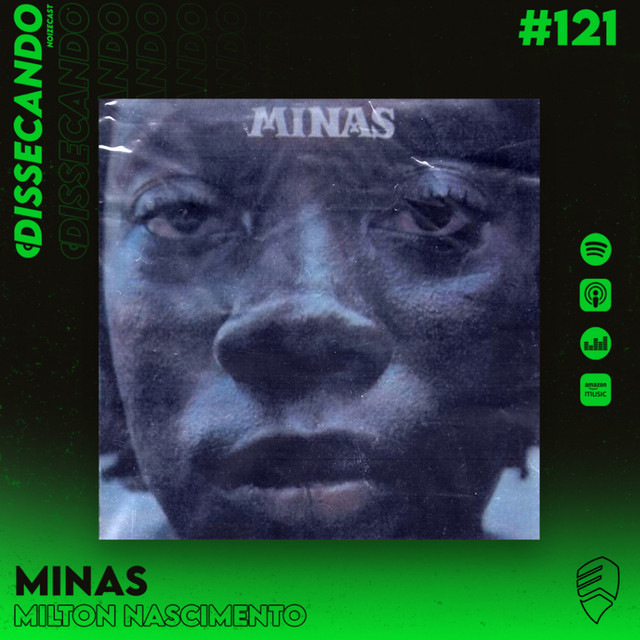
No episódio de hoje celebramos os 50 anos de um clássico nacional. Minas, um dos melhores discos de Milton Nascimento e que consideramos a melhor forma de se iniciar a ouvir este grande artista mundial. Falamos da época, detalhes e cada faixa que forma este grande trabalho. Siga o @Noizecast_ . Feito por: Bruno Fonseca (@brunofonsecaxx) . Arte e design : Alex Almeida (@alxmd)
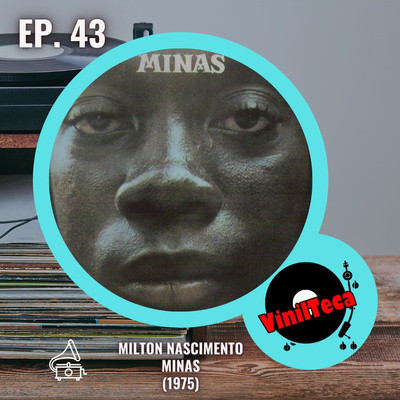
Vinilteca · José Ono Junior e Guilherme Colpani
Em 1975, num Brasil governado por militares, Milton Nascimento ganhava o mundo com sua música e enfrentava problemas com a censura. Nesse cenário, o cantor e compositor lançava o disco Minas, que relembrava sua infância, seus amigos e falava da ânsia por liberdade. A Vinilteca é um projeto que nasceu no YouTube em 2016 e migrou para o rádio e para o podcast, com apresentação dos atores e colecion

Mpb Importance - O Podcast Da Mpb · Anderson Heredia
Minas é o sétimo álbum de estúdio do cantor, violonista e compositor brasileiro Milton Nascimento lançado pela gravadora EMI-Odeon em 1975. A origem do título do disco Minas, deve-se a um garoto chamado Rúbio que juntou as primeiras sílabas do nome e sobrenome do cantor e sugeriu como título para o próximo trabalho do artista. O disco segue a trazer a mesma fórmula dos discos anteriores: produçã
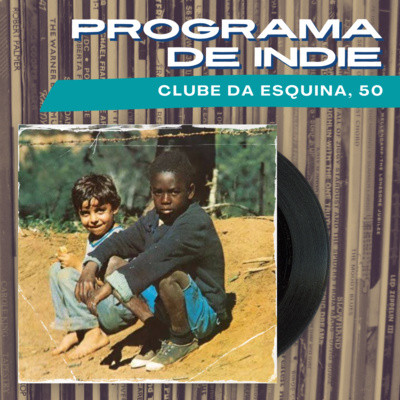
Há exatos 50 anos, chegava às lojas do Brasil um disco que faria nada ser como antes: o Clube da Esquina de Milton, Lô e outros tantos mineiros. Mais do que só um disco, uma proposta diferente de como a música brasileira poderia soar, em uma amálgama de estilos e influências resultando em algo que até hoje ainda soa fresco. Para celebrar esse jubileu de ouro, Igor Muller e Bruno Capelas calçam o t
Videos
Milton Nascimento e o álbum "Minas" | O Som do Vinil
Canal Brasil
Análise Ponta de Areia, na gravação de Milton nascimento no disco MINAS
Flavio Mendes
Do Clube da Esquina ao Mundo: Celebração aos álbuns Minas e Geraes de Milton Nascimento
Pitadas do Sal
Films

Books
Hearing Brazil
Jonathon Grasse · 2022
Minas Gerais is a state in southeastern Brazil deeply connected to the nation's slave-owning past and home to many traditions related to the African diaspora. Addressing a wide range of traditions that help define the region, ethnomusicologist Jonathon Grasse examines the complexity of Minas Gerais. This book is highly relevant for understanding the cultural and musical context that informs and is celebrated in Milton Nascimento's album 'Minas'.
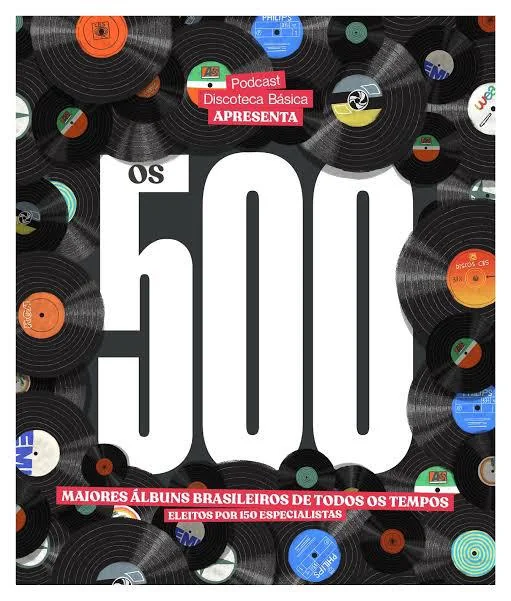
Os 500 Maiores Álbuns Brasileiros de Todos os Tempos
Ricardo Alexandre · 2022
The largest Brazilian music election ever conducted: 162 specialists, spanning journalists, critics, musicians, producers and podcasters, each nominated 50 essential albums, supported by a masterlist of more than 2,000 works. Led by Ricardo Alexandre with tabulation by Sérgio Jomori, it was published in December 2022 as a 200-page hardcover book with graphic design by Fernando Pires.

Travessia: A Vida de Milton Nascimento
Maria Dolores · 2006
This is a comprehensive biography of Milton Nascimento, covering his life and artistic career. As one of the most important albums in his discography, 'Minas' would inevitably be analysed in depth in this work, offering context about the album's creation and impact.
Analyses
Minas – Wikipedia
Wikipedia, the free encyclopaedia
Milton Nascimento- Minas (EMI, 1975) | Jive Time Records
jivetimerecords.com
Our Blog Milton Nascimento- Minas (EMI, 1975) Some albums just ooze a singular atmosphere and vibe that transcend language or rational thought. Milton Nascimento's Minas is one of those albums.

Musicology: Milton Nascimento - Minas 1975 - Blogger
madshoesmusicology.blogspot.com
This is another of the must-have classic albums by Milton Nascimento. Released in 1975, the album opens with the wonderful "Minas" (Novelli), a tribute to all sacred music traditions in the Minas Gerais state, which was deeply influential in Nascimento's sensibility.
MINAS - MILTON NASCIMENTO (1975) - Universal Music Brasil
universalmusic.com.br
In 1975, Milton Nascimento released his seventh album, "Minas", whose title combines the first syllables of his name and refers to Minas Gerais. The striking cover reinforces his Afro-Brazilian identity and was designed by Cafi, photographer, Noguchi, art director, and Ronaldo Bastos, the album's producer.
'Minas', de Milton Nascimento, faz 50 anos; relembre o espetacular disco
cartacapital.com.br
Milton Nascimento's album Minas (1975), which turns 50 in 2025, is intricate. The singer uses his voice as an instrument and features a choir (of adults and children), incidental music, bold arrangements, Beto Guedes' high-pitched voice, and critical themes.