Monarco
Monarco
1976
Rankings
Why This Album Matters
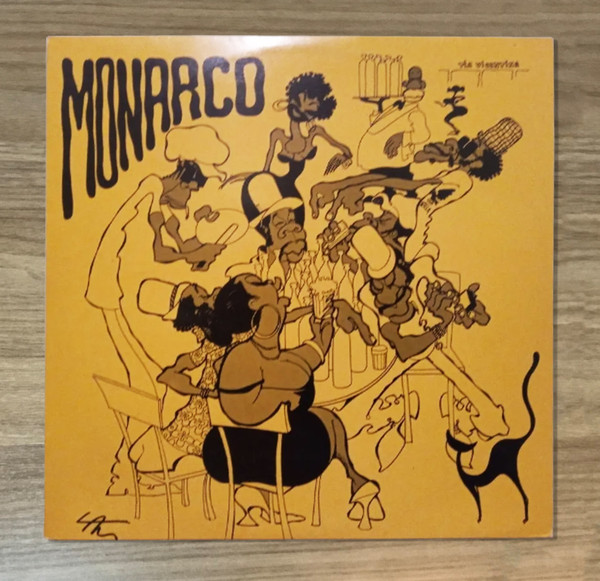
The Monarco album, launched in 1976, represents a fundamental milestone in the career of Hildemar Diniz, known as Monarco, being his first solo work and solidifying his voice as one of the greatest stalwarts of authentic samba. On this record, the Portela sambista presents his essence with the elegance and nobility that characterise him, bringing to light 'sambas de quadra' that would become symbols of the collective cultural heritage of the school and of Rio's samba as a whole. Through his compositions, Monarco offers an immersion into the purest tradition of samba, with refined melodies and lyrics of notable poetic quality. The album is a testament to the richness and depth of traditional samba, serving as a bridge between generations of sambistas and preserving the memory of one of Brazil's most emblematic samba schools.
Context
Before the release of his solo album in 1976, Monarco already had a respectable career in the world of samba. Born Hildemar Diniz in 1933, in Rio de Janeiro, he was, still young at 17, invited to join the composers' wing of Portela, his passion and a stronghold of great samba names. Living alongside legendary figures such as Paulo da Portela and Manacéa, Monarco became a master in the art of 'sambas de quadra', although his first major recognition as a composer came in 1973, when Martinho da Vila recorded "Tudo Menos Amor", a partnership with Walter Rosa. His solo recording career began in the wake of this success, opening market doors for his voice and his compositions. Five years earlier, in 1970, Monarco had already recorded the album Portela Passado de Glória alongside the Velha Guarda da Portela, produced by Paulinho da Viola.
Recording
The 1976 Monarco album was released by the Continental record label. The album's production was handled by Romeo Nunes, while the arrangements were signed by Zé Menezes. The recording featured a first-class team of musicians, including names such as Wilson das Neves on drums, Marçal, Luizão on double bass, Abel Ferreira and Dino 7 Cordas, all of whom contributed to the authentic and rich sound of Monarco's samba. Although the musicians were not specified per track in the original technical sheet, the presence of three cavaquinistas and two guitarists indicated the instrumental density characteristic of authentic samba.
Songs
The album comprises twelve tracks, many of them signed by Monarco himself, frequently in partnership with other notable sambistas. Among the standout songs are "O Quitandeiro", a collaboration with Paulo da Portela, and "Lenço", a partnership with Francisco Santana (Chico Santana), both of which became celebrated in the samba repertoire. Other notable compositions include "Ingratidão", with José Mauro, "Amor Verdadeiro", "Tudo Menos Amor" (with Walter Rosa), "Mangueira e Suas Glórias" and "Glórias do Samba", all exemplifying his ability to explore emotive themes and portray characters from Rio's daily life through engaging melodies. The track "Desengano" is a composition by Aniceto da Portela, and "Conselho" was written in partnership with Manacéa. The album's lyrics reflect the poetic nature of samba, addressing romantic disappointments, the beauty of everyday life, and the exaltation of samba school traditions, with colloquial language deeply connected to Rio's popular culture.
Legacy
The Monarco album, from 1976, marked the beginning of a significant solo discography for the artist, being reissued on CD in 2000. Monarco's work, propelled by this release, sparked international interest, culminating in the launch of the CD A Voz do Samba in Japan in 1995, which earned him the Sharp Award for best samba singer in Brazil. Songs from the album, such as "Lenço", were re-recorded by important names like Beth Carvalho, and "Tudo Menos Amor" was popularised by Martinho da Vila even before the solo record, paving the way for Monarco in the phonographic market. Monarco became an essential figure in the preservation of authentic samba and in the memory of Portela, with his work being recognised in various tributes. In 2008, the trajectory of Monarco and the Velha Guarda da Portela was the theme of the documentary Mistério do Samba, produced by Marisa Monte, with Monarco having a prominent participation. His influence extends to various musicians, who revered him as a master, and he continued to release albums and projects until his final years, solidifying a legacy that transcends generations.
Tracks
Books
Analyses

Loronix: Monarco - Monarco (1976) - Blogger
loronix.blogspot.com
Sunday, March 09, 2008 Monarco - Monarco (1976) I think this is a perfect close of our first 2008 Samba Saturday at Loronix. Monarco is considered one of the greatest Samba composers in Brazil and never had an approach at Loronix. This is one of the greatest findings of my mother, an album where everything works close to perfection.

Monarco - Monarco | 1976 - discosqueouvi.blogspot.com
discosqueouvi.blogspot.com
I would like to share one of the 5 texts contained on the album's back cover, written by Sérgio Cabral. "If the fact that samba has come into fashion had no other merit, this alone would suffice: the best and purest composers are finally finding their opportunity to have their records."
1º álbum do eterno baluarte Monarco faz 50 anos com o ... - CartaCapital
cartacapital.com.br
Hildemar Diniz, Monarco, would release his first solo album in 1976. The album, which bears his name, is a masterclass in roots samba, the kind made by composers to be performed at gatherings of sambistas in the samba school's court, outside of carnival.
Monarco celebra 50 anos do 1º álbum com o melhor do samba de raiz
portaltela.com
Monarco's first solo album was released in 1976, bearing his name, and celebrates fifty years. The album is a masterclass in roots samba, linked to the samba school courts and gatherings of sambistas, outside of carnival.
Monarco - 1976 - Acervo Origens
acervoorigens.com
Here, we present a 1976 LP, in which Monarco brings us some of his compositions, accompanied by a top-tier team including Zé Menezes, Wilson das Neves, Marçal, Luizão, Abel Ferreira, Dino 7 Cordas, and many others.