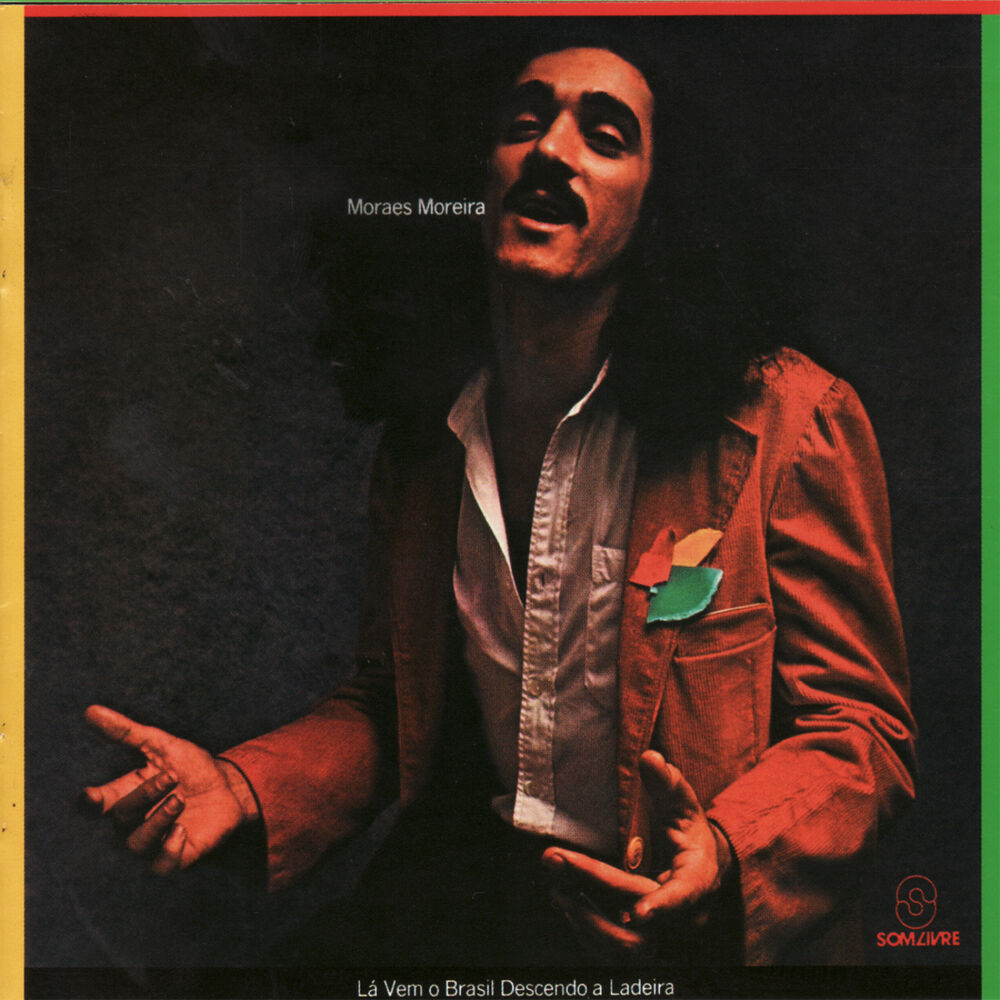
Lá Vem o Brasil Descendo a Ladeira
Moraes Moreira
1979
Rankings
Why This Album Matters
Lá Vem o Brasil Descendo a Ladeira (1979) is a fundamental work in Moraes Moreira's solo discography, celebrated for its ability to synthesise the richness of Brazilian music with contemporary influences. The album stands out for expanding the artist's characteristic electric sound, integrating rhythms such as samba, xote, and frevo with elements of rock and reggae, but without losing its deeply national essence. The record, in its essence, is a vibrant exaltation of Brazilian culture and people. The title track, for example, conveys an affirmative and energetic vision, inspired by the grace and strength of Brazilian women, transforming an everyday scene into a symbol of vitality and resistance. Moraes Moreira makes it clear that the intention was to celebrate, not criticise, the Brazilian capacity to overcome challenges. With a sound that blends the spontaneity of carnival with sophisticated arrangements, the album presents ijexá in a more stylised and accessible way, demonstrating Moraes's mastery in innovating within tradition. It is a work that represents the artist's genius in creating music that is both popular and of high artistic quality.
Context
Before releasing Lá Vem o Brasil Descendo a Ladeira, Moraes Moreira had already established a solid career as a founding member and main composer of Novos Baianos, a group that left its mark on Brazilian music between 1969 and 1975. After his departure, he began a prolific solo career in 1975, releasing albums such as Moraes Moreira (1975), Cara e Coração (1977), and Alto Falante (1978). During this solo period, Moraes had already achieved national success with the song "Pombo Correio", featured on Cara e Coração, which was included in the soundtrack of a TV Globo soap opera, boosting his visibility. He was also a pioneer in becoming the first trio elétrico singer in Brazil, solidifying his strong connection with carnival.
Recording
The album Lá Vem o Brasil Descendo a Ladeira was recorded in 1979 at Som Livre's SIGLA studios, located in Rio de Janeiro. Production was carefully handled by Guto Graça Mello. Moraes Moreira enlisted a cast of talented musicians, including former Novos Baianos bandmates such as Pepeu Gomes on guitar, Dadi Carvalho on bass (who was already a member of A Cor do Som at the time), Jorginho Gomes on drums, and percussionists Charles Chalita and Baixinho. The album also featured special appearances by Oswaldinho do Acordeon and the band A Cor do Som itself, with arrangements and conducting by Moraes, Pepeu Gomes, and Armandinho.
Songs
The album's songs are a vivid portrayal of Moraes Moreira's musical diversity. The title track, "Lá Vem o Brasil Descendo a Ladeira", composed with Pepeu Gomes, originated from João Gilberto's observation of the grace of a woman descending a hill in Rio, which inspired him to add a chord to the melody. The lyrics celebrate the vitality, swing, and strength of Brazilian women and the people as a whole, with iconic verses such as "Quem desce do morro / Não morre no asfalto". Other highlights include "Chão da Praça", one of the album's greatest successes, co-written with the Ceará poet and lyricist Fausto Nilo, who also penned "Coração Nativo" (with Armandinho) and "Som Moleque". "Pelas Capitais" is a partnership with Jorge Mautner. The album also features tracks such as "Eu Sou O Carnaval" (with Antônio Rizério), "O Prometeu" (with Antônio Cícero), the instrumental "Frevo Dobrado Nº 3", and "Dodô no Céu Osmar na Terra (Passo Double Carnaval)", a tribute to one of the creators of the trio elétrico. Songs like "Paxorô" and "Axé do Gandhi", the latter with Pepeu Gomes, introduce the ijexá atmosphere of Salvador's afoxés.
Legacy
Lá Vem o Brasil Descendo a Ladeira is widely considered by many critics to be the best album of Moraes Moreira's solo career, marking a watershed moment in his trajectory. Its electrifying sound and the stylised introduction of Afro-Brazilian rhythms position it as a precursor, anticipating the sound that would become known as axé music in the 1980s. The album's success solidified Moraes Moreira's position as a sought-after composer in MPB, and the title track became one of his greatest hits. Songs such as "Eu Sou O Carnaval", "Chão da Praça", "Pelas Capitais", and "Assim Pintou Moçambique" were widely played on the radios of the time. Moraes Moreira is recognised as one of the most important names in Brazilian music, and in 2012, Rolling Stone Brasil magazine elected him as the 57th greatest artist in national music, attesting to the enduring relevance of his work, including this album of excellent technical and artistic quality.
Tracks
Credits
Sergio Mello
Guto Graça Mello
Aderi Costa
Podcasts

Paiquerê Letra e Música · PQRLetraeMusica
Moraes Moreira – Lá Vem o Brasil Descendo a Ladeira Quadro Paiquerê Letra e Música. Um podcast produzido pela Rádio Paiquerê 91,7 de Londrina-PR, publicado toda quarta-feira, 15h.
Videos
Moraes Moreira e "Lá vem o Brasil descendo a ladeira" | O Som do Vinil
Canal Brasil
Films


Books

Os 500 Maiores Álbuns Brasileiros de Todos os Tempos
Ricardo Alexandre · 2022
The largest Brazilian music election ever conducted: 162 specialists, spanning journalists, critics, musicians, producers and podcasters, each nominated 50 essential albums, supported by a masterlist of more than 2,000 works. Led by Ricardo Alexandre with tabulation by Sérgio Jomori, it was published in December 2022 as a 200-page hardcover book with graphic design by Fernando Pires.

300 Discos Importantes da Música Brasileira
Charles Gavin, Tárik de Souza, Carlos Calado, Arthur Dapieve · 2008
Conceived by Titãs drummer and musical researcher Charles Gavin, the 434-page book brings together covers and reviews of albums released between 1929 and 2007. The texts were written by journalists Tárik de Souza, Arthur Dapieve and Carlos Calado.
Analyses

"Lá Vem O Brasil Descendo A Ladeira" (Som Livre, 1979), Moraes Moreira
discosessenciais.blogspot.com
Cover of Moraes Moreira's first, self-titled solo album, released in 1975. But acclaim came with his fourth solo album, Lá Vem O Brasil Descendo A Ladeira, considered by many critics to be the best album of Moraes Moreira's solo career.
É reeditado o álbum de 1979 com o qual Moraes sacudiu o chão da ... - G1
g1.globo.com
With the album, of excellent technical and artistic quality, Moraes Moreira made waves and, going against the grain of Brazil, climbed to prominence towards the acclaimed 1980s.

"Lá Vem O Brasil Descendo A Ladeira" (Som Livre, 1979), Moraes Moreira
tabernanovostempos.blogspot.com
Cover of Moraes Moreira's first, self-titled solo album, released in 1975. But acclaim came with his fourth solo album, Lá Vem O Brasil Descendo A Ladeira, considered by many critics to be the best album of Moraes Moreira's solo career.
Discos Escondidos #079: Moraes Moreira - Lá Vem o Brasil Descendo a ...
ojardimeletrico.com
Featuring great compositions and Moraes Moreira's unparalleled rhythms, this 1979 album is definitely one of the major highlights of a discography that features masterpieces such as Acabou Chorare (1972), Novos Baianos F.C. (1973) and over 20 solo albums.
Tudo Sobre A Música Lá Vem o Brasil Descendo a Ladeira - Moraes Moreira ...
canalparadahits.com
With passages describing street life and popular culture, the song becomes a portrait of Brazil, highlighting the resilience and joy of its people, even in difficult times. The song, therefore, is not just a fun set of lyrics; it speaks of a collective feeling of overcoming adversity and love for life.