Nara
Nara Leão
1964
Rankings
Why This Album Matters
Released in 1964, the album Nara marks Nara Leão's phonographic debut and stands out as a fundamental document in the transition from Bossa Nova to Música Popular Brasileira (MPB). This inaugural work presents a Nara who, although still associated with the birthplace of Bossa Nova, was already signalling a detachment from the genre's lighter themes, seeking a broader sound rooted in Brazilian culture. The record reveals an interpreter with a 'sweet and delicious' voice, exploring intelligent and warm arrangements that move away from Bossa Nova introspection to embrace sambas de morro and compositions with greater social appeal. Nara is a testament to the singer's versatility and artistic sensitivity, as she aimed to go further, incorporating rhythms and lyrics that reflected a cultural and social effervescence. The album represents a turning point, showcasing the artist who would become known for her ability to 'discover the new and value the forgotten', establishing her as one of the great voices of Brazilian music who sought a more comprehensive musical identity.
Context
The release of Nara in February 1964 occurred during a period of great turbulence in Brazil, shortly before the military coup that established the dictatorship. The Bossa Nova music scene, in which Nara Leão was a central figure, was beginning to fragment and 'ease up', with the singer positioning herself against the movement she considered 'alienating' in the face of the country's social and political reality. Nara Leão, whose Copacabana apartment served as one of the salons where Bossa Nova was born, bringing together names like Tom Jobim, João Gilberto, Vinicius de Moraes and Carlos Lyra, began to feel the need for music that connected more directly with the issues of the Brazilian people. Her first album already showed signs of this search, by including sambas de morro and songs with a social character, marking the beginning of a trajectory that would soon lead her to become an active voice against the dictatorship.
Recording
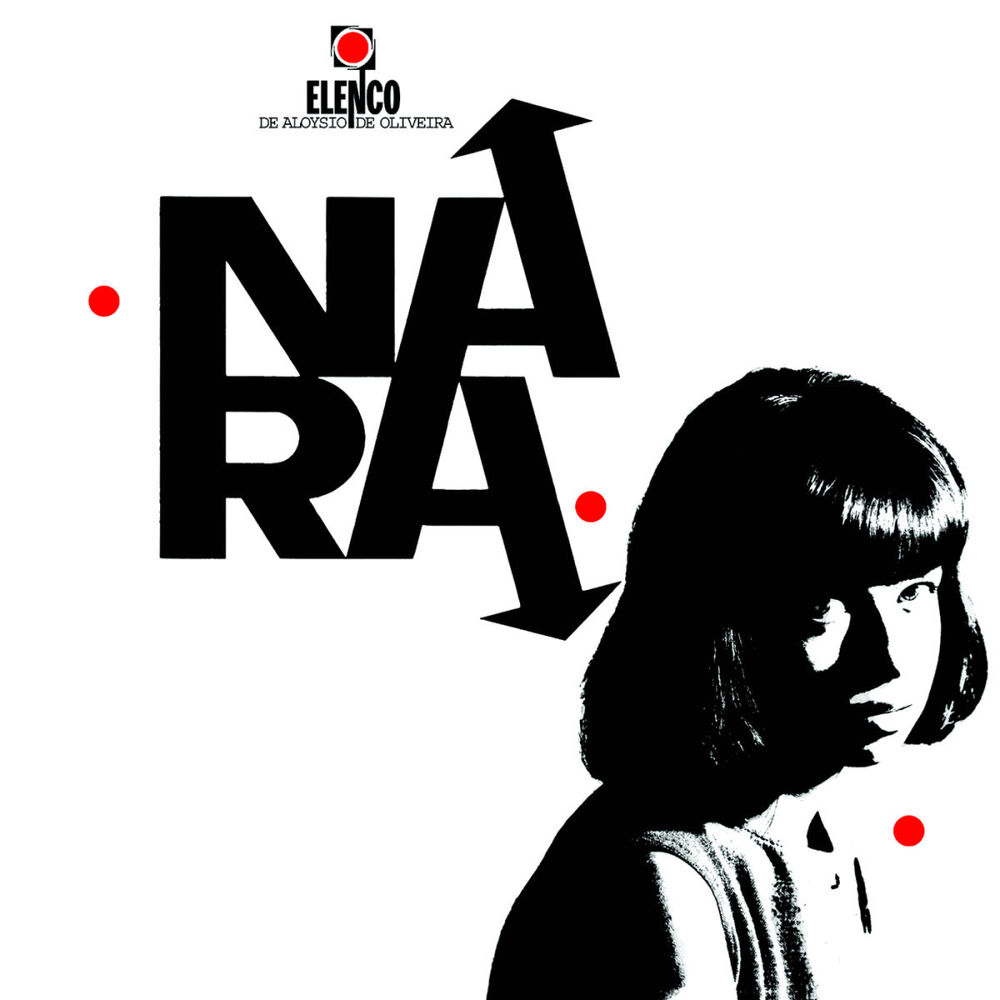
The album Nara was recorded at Riosom studio, with production and direction by Aloysio de Oliveira, a legendary figure in Brazilian music and founder of the Elenco label. Aloysio de Oliveira, known for his talent as an art director and for having produced historical moments such as the recording of "Chega de Saudade", from which Bossa Nova was born, established Elenco in 1963 with the aim of launching talented musicians of the genre. The album's arrangements were elaborated by Gaya for most tracks and by Moacyr Santos for the song "Nanã". Norman Sternberg was the engineer and recording technician. The visual aesthetic of the Elenco label, with its innovative and minimalist covers, always on a white background with black and red details, also became a hallmark of Bossa Nova, although it arose from the need for cost containment.
Songs
The album Nara features a diverse repertoire that reflects the bridge between Bossa Nova and traditional samba, with the inclusion of compositions by great names in Brazilian music. Among the tracks, notable ones include "Diz Que Fui Por Aí" by Zé Keti and Horondino Silva, "O Sol Nascerá" (A Sorrir) by Cartola and Elton Medeiros, and "Maria Moita" by Carlos Lyra and Vinicius de Moraes. In addition to these, the record includes "Marcha da Quarta-feira de Cinzas", "O Morro (Feio, Não É Bonito)", "Canção da Terra", "Luz Negra", "Berimbau", "Vou Por Aí", "Réquiem Por Um Amor", "Consolação" and "Nanã". The inclusion of sambas de morro by a young middle-class artist like Nara was considered controversial at the time, highlighting her intention to address deeper themes and move away from the 'alienation' she perceived in Bossa Nova.
Legacy
Nara is widely considered a beautiful album of great importance to Nara Leão's discography and to Brazilian music. The record was an initial step in her journey to become one of Brazil's most influential singers, capable of moving between different styles and questioning the musical norms of her time. Although there is no specific information about sales or chart positions, the album is recognised for its quality and for being the harbinger of Nara Leão's shift towards a more engaged repertoire and a broader Música Popular Brasileira, breaking with the thematic limits of Bossa Nova. Subsequently, Nara would publicly distance herself from Bossa Nova, seeking a musical identity that embraced the diversity of Brazilian culture and resonated with the country's political context.
Tracks
Credits
Oscar Castro-Neves
Aloysio De Oliveira
Lan
Estampa (Gaúcho)
Videos
Tom Cardoso: "Ninguém pode com Nara Leão" | Entrevista | Alta Fidelidade
Alta Fidelidade
Nara Leão - Nara (1964) | Contracapa
Sala de Estar
Opinião de Nara | Nara Leão | Resenha 🤓
História e Cultura na Agulha
Films


Por Toda Minha Vida - Nara Leão
2007
The special tells the story of Nara Leão, who witnessed bossa nova emerge in her living room, during soirées with musicians such as Carlos Lyra, Sérgio Mendes, Roberto Menescal, and Ronaldo Bôscoli.

O Canto Livre de Nara Leão
2022
Nara Leão revolutionized Brazilian music, broke prejudices, confronted the military dictatorship, opened paths for women. All this without changing the tone of her voice.
Books
Nara Leão: Nara - 1964
Hugo Sukman · 2022
Nara Leão's first album was a revolutionary work. In Nara, released in 1964, the "muse" broke with bossa nova to give voice to samba and protest songs, valuing composers like Zé Keti, Nelson Cavaquinho, and Cartola. This revolution – which, carried out with gentle means, lyricism, and beautiful melodies.
Os 500 Maiores Álbuns Brasileiros de Todos os Tempos
Ricardo Alexandre · 2022
The largest Brazilian music election ever conducted: 162 specialists, spanning journalists, critics, musicians, producers and podcasters, each nominated 50 essential albums, supported by a masterlist of more than 2,000 works. Led by Ricardo Alexandre with tabulation by Sérgio Jomori, it was published in December 2022 as a 200-page hardcover book with graphic design by Fernando Pires.
Nara Leão: uma biografia
Sérgio Cabral · 2016
An expert in the history of Brazilian popular music, the journalist and writer Sérgio Cabral compiles an account of the singer's life, a voice that not only was at the forefront of the main moments of modern Brazilian music, but also engaged in the politics of her time like few others.

300 Discos Importantes da Música Brasileira
Charles Gavin, Tárik de Souza, Carlos Calado, Arthur Dapieve · 2008
Conceived by Titãs drummer and musical researcher Charles Gavin, the 434-page book brings together covers and reviews of albums released between 1929 and 2007. The texts were written by journalists Tárik de Souza, Arthur Dapieve and Carlos Calado.
Analyses
Nara Leão "Nara" (1964) - Gira-Discos
giradiscos.me
Released in 1964, Nara Leão's debut album reflected a change in habits and goals in the singer's life and work, and paved the way for bigger changes on the map of Brazilian popular music.

Mundo Facundo: Resenha CD's: Nara Leão - Nara (1964)
mundo-facundo.blogspot.com
The cover of Nara looked incredibly modern, truly conveying to the public, with clear fidelity, a Nara Leão with a cool bob haircut, a girl who, from the cover, one effortlessly realises is a fan of literature and enjoys debating politics with friends in bars or on her apartment's balcony.
Nara Leão: Nara - 1964 - LiteraturaBr
literaturabr.com
While guiding the reader through a fascinating history not only of Brazilian music but also of Brazil and its culture, Hugo Sukman illuminates the trajectory of the visionary artist that was Nara Leão.
Nara Leão tem disco de estreia analisado em livro, obra de samba e ...
agazeta.com.br
When she released the inaugural "Nara" in February 1964, she was only 22 years old. The historic album, which marked what would become known as música popular brasileira, or MPB, has its story told in the book "Nara Leão: Nara - 1964", by the journalist, music critic, and writer Hugo Sukman.
Livro sobre primeiro disco de Nara Leão tem obviedade do título ... - G1
g1.globo.com
Nara, the emblematic album released by the singer in 1964, is of such fundamental importance that its genesis has already been exposed and debated in books about the evolution of Bossa Nova, in the three ...