É Ferro na Boneca
Novos Baianos
1970
Rankings
Why This Album Matters
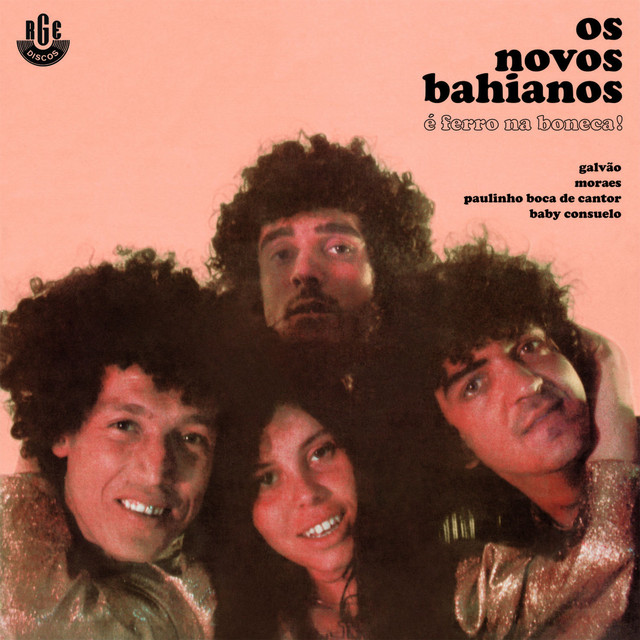
É Ferro na Boneca, the debut album by Novos Baianos released in 1970 by RGE, holds a unique place in the group's discography. Distinct from its acclaimed successor, Acabou Chorare, this initial work presents a sound more directly linked to traditional rock of the early 70s, with psychedelic nuances and an experimental freshness that precedes the deep incorporation of samba into their music. This album is a testament to the band's more 'underground' and stripped-back phase, where the energy of rock meets the cultural effervescence of the era, yet without the full influence of masters like João Gilberto, who would later significantly shape the group's sound. It is a fundamental work for understanding the evolution of Novos Baianos, revealing their rock and roll roots and the embryonic genius of its members during a period of intense creativity in Brazilian music.
Context
In the late 1960s, in Salvador, the group Novos Baianos began to take shape, initially bringing together Moraes Moreira, Luiz Galvão, Paulinho Boca de Cantor and Baby Consuelo, who would later be joined by Pepeu Gomes and Dadi. Influenced by counterculture, Jovem Guarda, and the emerging Tropicália, they lived communally, seeking a new aesthetic for sound and life. Brazil was living under the repression of the military dictatorship, a period that encouraged many artists to explore creative freedom as a form of resistance and expression. It was against this backdrop of experimentation and cultural effervescence that Novos Baianos entered the V Festival de Música Popular Brasileira of Rede Record in 1969 with the song "De Vera", which, despite being disqualified, marked the group's first major appearance and paved the way for the recording of their debut album.
Recording
The album É Ferro na Boneca was recorded and released in 1970 by the RGE record label, one of Brazil's important phonographic companies at the time. The album's production was overseen by João Araújo, with arrangements by Chiquinho de Moraes and Héctor Lagna Fietta. For this work, the band had the support of Os Leifs, a group that included Pepeu Gomes and Jorginho Gomes, who would later definitively join Novos Baianos. Although specific studio details are not widely publicised, the album's sound reflects a production characteristic of the transition between psychedelic rock and more elaborate pop at the turn of the decade, with a raw and spontaneous touch that marked the band's early works.
Songs
The thirteen tracks on É Ferro na Boneca were mostly composed by Luiz Galvão and Moraes Moreira, with the exception of "Juventude Sexta e Sábado", which also featured songwriting by Paulinho Boca de Cantor. The repertoire is dominated by a rock sound, with psychedelic and Tropicália influences, highlighting Pepeu Gomes's guitar and the distinct vocals of Moraes Moreira, Baby Consuelo, and Paulinho Boca de Cantor. The song "De Vera" is often pointed to as the album's main track, having been performed at the V Festival de Música Popular Brasileira. Other tracks like the title song "Ferro na Boneca" capture the band's energy and experimentalism, using period slang to express intensity and freedom, whilst lyrics such as those in "A Casca de Banana Que Eu Pisei" demonstrate Galvão's poetic and humorous streak.
Legacy
Despite enjoying relative initial success and some tracks receiving radio play, such as "Ferro na Boneca" and "De Vera", the album É Ferro na Boneca did not achieve the same commercial recognition or immediate critical acclaim as its successor, Acabou Chorare. However, over time, the album gained cult classic status, being re-evaluated as an important document of the group's early and more rock-oriented phase. The album served as the soundtrack for two 'cinema marginal' films of the era, "Caveira, My Friend" and "Meteorango Kid", demonstrating its cultural relevance within the Brazilian countercultural context. 180-gram vinyl reissues, such as those by Polysom, attest to the continued interest in this seminal phase of Novos Baianos, solidifying its place as a vital precursor to one of the most influential groups in Brazilian music.
Tracks
Credits
Chiquinho de Moraes, Héctor Lagna Fietta, Os Leifs
João Araujo
Luis Galvão
Baby Consuelo, Paulinho Boca De Cantor
Moraes Moreira
Milton Rodrigues, Rogerio Gauss
Nicolau
Augusto De Campos
Estudio 13
Books
Os 500 Maiores Álbuns Brasileiros de Todos os Tempos
Ricardo Alexandre · 2022
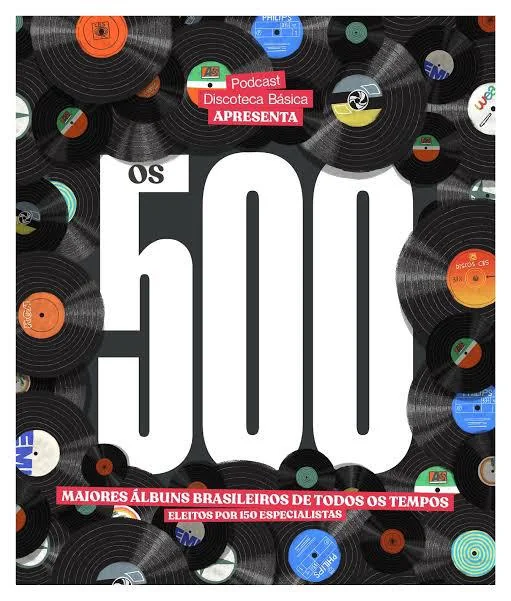
The largest Brazilian music election ever conducted: 162 specialists, spanning journalists, critics, musicians, producers and podcasters, each nominated 50 essential albums, supported by a masterlist of more than 2,000 works. Led by Ricardo Alexandre with tabulation by Sérgio Jomori, it was published in December 2022 as a 200-page hardcover book with graphic design by Fernando Pires.

A Visita de João Gilberto aos Novos Baianos
Sérgio Rodrigues · 2019
In this highly original book of short stories, the award-winning author Sérgio Rodrigues 'plays with serious matters', exploring the legendary encounter of João Gilberto with the Novos Baianos. Although it is a work of fiction, it addresses a crucial formative period for the band, making it relevant for understanding the influences and context in which albums like 'É Ferro na Boneca' were created.
Analyses
É Ferro na Boneca – Wikipedia
Wikipedia, the free encyclopaedia
Aquela Musica Apresenta "É Ferro Na Boneca! - 1970"
aquelamusica.com
This first album by the band Os Novos Baianos (on the album, they also spelled it as OS NOVOS BAHIANOS), released by RGE in 1970, is a direct result of the partnership between Moraes and Galvão, who wrote all 13 songs on the album.
n_novos_baianos___1970___ferro_na_boneca - Consultoria do Rock
consultoriadorock.com
Homepage 25 May 2015 Commented Discographies: Novos Baianos n_novos_baianos___1970___ferro_na_boneca
Novos Baianos - É Ferro na Boneca (1970)
musicasdonordeste.net
With a slightly different style from its successor, the album was a great debut, announcing the arrival of one of the greatest groups in MPB. 'É Ferro na Boneca' is composed of 13 tracks, all written by Moraes and Galvão.