Grito Suburbano
Olho Seco, Inocentes, Cólera
1982
Rankings
Why This Album Matters
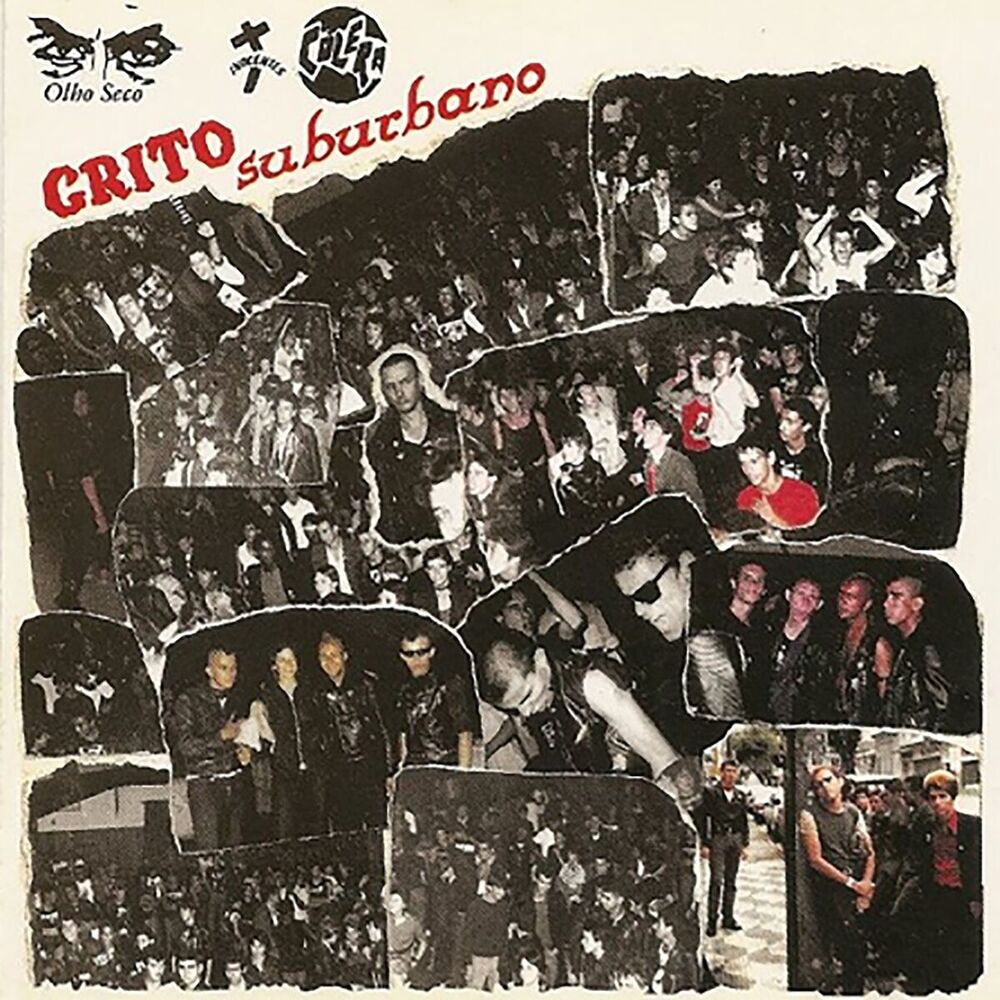
Grito Suburbano, launched in 1982, is a fundamental landmark in the history of Brazilian music, being the first compilation of national punk rock bands. This album is not merely a sound recording, but an explosion of energy and revolt that paved the way for the consolidation of the punk scene in Brazil. It brought together three of the most influential bands of the time, Olho Seco, Inocentes and Cólera, each contributing four tracks that captured the raw and urgent essence of the movement. More than a simple musical release, Grito Suburbano represented the materialisation of the "do-it-yourself" (DIY) spirit in the São Paulo underground scene. In a country still under military dictatorship, the album gave voice to a youth seeking to express their discontent with social inequalities, violence and repression. Its aggressive sound, direct lyrics, and the visceral energy of its performances established the standard for Brazilian punk rock and inspired countless other bands to follow the same path of protest and self-expression.
Context
The launch of Grito Suburbano in 1982 occurred during a period of profound transformations in Brazil. The country was experiencing the end of the military dictatorship, with the "political opening" underway, but still marked by economic crises, such as the external debt, and the suppression of individual rights and freedoms. In this scenario of social and political effervescence, youth, especially those from the São Paulo peripheries, found in punk rock a powerful tool for expression and resistance. The participating bands, Olho Seco, Inocentes and Cólera, emerged from São Paulo's underground scene, where the punk movement began to gain strength from the late 70s, inspired by international references like Sex Pistols and Ramones. They represented the voice of a generation that did not identify with the commercial music of the time and that saw in punk an authentic form of protest against the established system, establishing a counterpoint to the dominant culture of the time.
Recording
The recording of Grito Suburbano was a notable achievement, driven by the independent spirit and passion for punk. Fábio Sampaio, vocalist of Olho Seco and owner of the Punk Rock Discos label, rented an eight-track studio at Gravodisc, in São Paulo, so that the bands could record their music. With only 12 hours available, divided into two periods, the objective was to capture the anger and urgency of that generation authentically and live. The studio technicians, more accustomed to recording sertanejo artists, were caught by surprise by the 'chainsaw-like' sound of the distortion pedals, which completely contrasted with their usual environment. The time pressure and the rawness of the process resulted in challenges, such as the poor quality of the initial recordings by bands Anarkólatras and M-19, which ended up being excluded from the compilation due to the impossibility of re-recording in good time.
Songs
The twelve tracks on Grito Suburbano, four from each band, are a visceral portrait of the anguish and revolt that characterised Brazilian punk rock of the time. Songs such as Olho Seco's "Desespero" and "Sinto", Inocentes' "Medo de Morrer" and "Garotos do Subúrbio", and Cólera's "João" and "Gritar", reverberate the dissatisfaction with social and political reality. On side B, Olho Seco's "Lutar, Matar" and "Eu Não Sei", Inocentes' "Guerra Nuclear" and "Pânico em SP", and Cólera's "Subúrbio Geral" and "Hhei!", reinforce the urban themes, the critique of violence and the sense of chaos. The lyrics, direct and straightforward, united with a noisy, aggressive and fast sound, typical of the genre, expressed the resentment in revolt of the most disadvantaged segments of São Paulo society, translating the discontent and the search for a fairer and freer world.
Legacy
Grito Suburbano consolidated itself as the "cornerstone" of Brazilian punk rock and its impact was lasting and multifaceted. As the first album by Brazilian bands of this genre, it not only documented the scene, but also legitimised and propelled it, inspiring the formation of countless other groups and independent labels. Although it took a year to sell a thousand copies, the album was crucial for building the independent scene in Brazil. The album was re-released in Germany in 1984 as Volks Grito, and in CD format in 2000, with bonus tracks from the launch show, demonstrating its international relevance and continuous demand. In 2016, Rolling Stone Brasil magazine elected it as the 4th best punk rock album in Brazil, a recognition that underlines its historical and artistic importance. Its influence extends beyond punk, reaching bands from the so-called Rock Brasil that would emerge later, inspired by the attitude and raw sound that Grito Suburbano helped to establish.
Tracks
Credits
Cólera, Inocentes, Olho Seco
Gordo
Fábio R. Sampaio, Mauricio
Val Pinheiro
Clemente Tadeu Nascimento
Marcelino, Pierre, Sartana
Callegari, Redson
Redson
Cazola, Fábio R. Sampaio, Mazola, Redson
Books
Analyses
Grito Suburbano – Wikipedia
Wikipedia, the free encyclopaedia
Grito Suburbano LP - MAXIMUM ROCKNROLL
maximumrocknroll.com
V/A Grito Suburbano LP . In-fucking-credible! This is a totally great hardcore compilation from Brazil. Three groups appear on this album: OLHO SECO is an awesome thrash band with
Traumbaum.de - VARIOUS ARTISTS: Grito Suburbano
traumbaum.de
140 g LP with printed insert By far the most representative punk record in Brazil, 1982's Grito Suburbano was the introductory manifesto to one of the most vital punk scenes in the world. Despite the oppressive dictatorial regime they were living in, bands like Olho Seco, Colera, Inocentes (who shared this compilation), along with Garotos Podres, ...
Grito Suburbano (1982) | Toque Musical
toque-musicall.com
The first three are part of the "Grito Suburbano" compilation, released in 1982, the peak of the movement in Brazil. They are São Paulo-based bands, authentic benchmarks of national punk rock.
Grito Suburbano, a primeira gravação do Punk Rock brasileiro
osgarotosdeliverpool.com.br
Today I delved deep into the 'grime' (in a good way) and bring you the album Grito Suburbano. A compilation album featuring three Brazilian punk rock bands, it was the first album by Brazilian bands of this musical genre.