Mutantes
Os Mutantes
1969
Rankings
Why This Album Matters
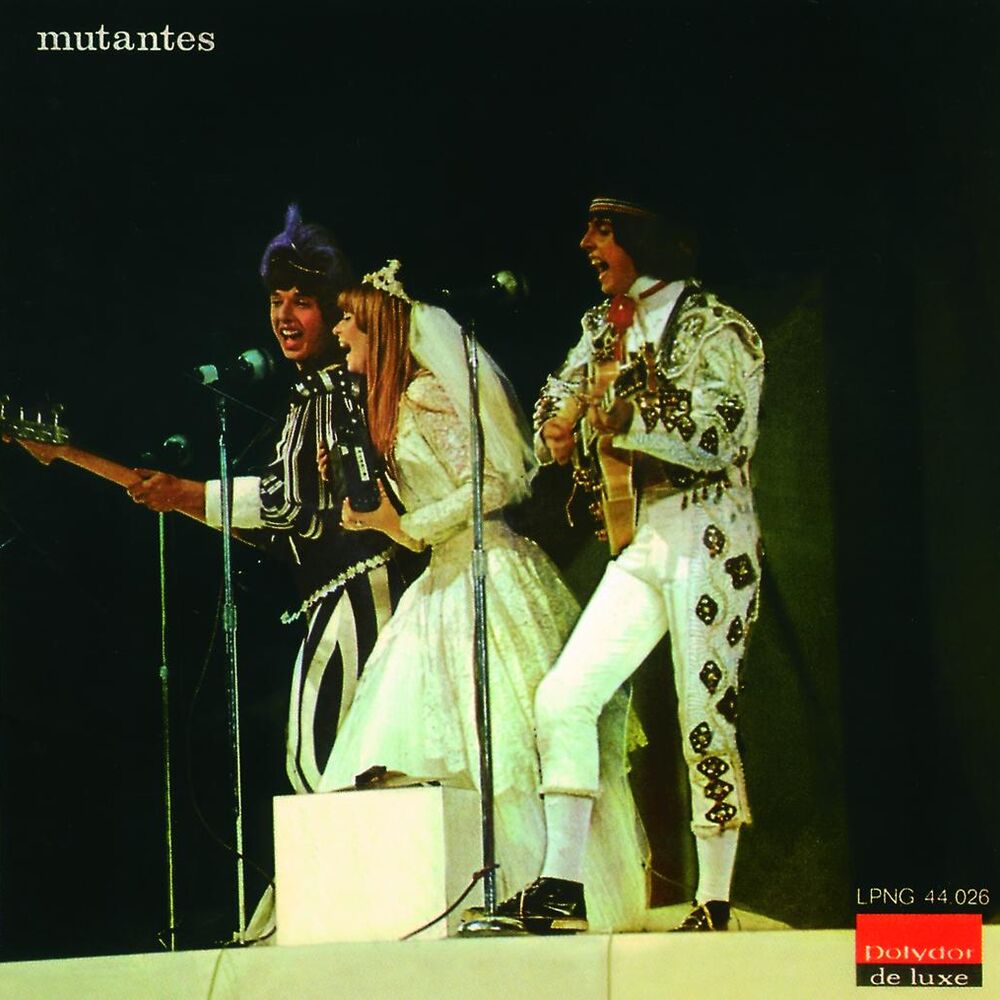
Os Mutantes, the debut album by the eponymous band, is a cornerstone in the history of Brazilian music, released in June 1968. Its relevance lies in the audacity of a sound innovative for its time, which fused the essence of Brazilian music with the effervescence of psychedelic and experimental rock. The work stands out for its mastery in incorporating diverse studio techniques, forging a unique and distinctive sound. An integral part of the Tropicalista movement, the album not only reflects the avant-garde spirit of that period but also propels it forward, presenting a cultural hybrid that challenged conventions. The fusion of diverse elements, from more traditional Brazilian musicality to global rock trends, solidified Os Mutantes as a landmark of creativity and boldness in an effervescent scene. It is an essential listen for understanding Brazil's avant-garde sound.

Os Mutantes distance themselves from Caetano and Gil and clarify that they are far beyond being a 'backing band' for the movement.
Marcus Preto · Rolling Stone Brasil
Context
Before their debut album, Os Mutantes had already begun to shape their musical identity on television programmes, such as O Pequeno Mundo de Ronnie Von, on TV Record. The group was responsible for the soundtrack, reinterpreting classical compositions for rock and hits by bands like The Beatles, demonstrating their versatility and inclination towards experimentalism from an early stage. The year 1967 marked a crucial turning point with the meeting of Gilberto Gil, at the suggestion of conductor Rogério Duprat. This partnership resulted in significant collaborations, such as the songs 'Bom Dia' and 'Domingo no Parque', the latter presented at the III Festival de Música Popular Brasileira, where the group, alongside Gil, secured second place. From then on, Os Mutantes delved deeper into the Tropicalista movement, participating in emblematic moments, such as the performance of 'É Proibido Proibir' at the III Festival Internacional da Canção and the programme Divino, Maravilhoso, as well as contributing to the manifesto album Tropicalia ou Panis et Circencis and collaborating on albums by Gilberto Gil and Caetano Veloso, solidifying their position in the cultural scene of the era.
Recording
The album was recorded in early 1968, under the production of Manoel Barenbein and with the innovative arrangements of Rogério Duprat. The recording is a testament to the band's experimentalism, marked by the exploration of numerous studio techniques. Among the notable approaches are the changes in rhythm, the use of distorted guitars, the incorporation of noises and sound effects, and the inventiveness in using unconventional objects to simulate instrument sounds, such as the use of an insecticide pump on the track 'Le Premier Bonheur du Jour'. This avant-garde approach to production contributed significantly to the album's unique and distinctive sound.
Songs
The music on Os Mutantes is deeply influenced by psychedelic rock and the English band The Beatles, but it distinguishes itself through its ability to weave these elements with Brazilian musical genres. Clear examples of this fusion include samba in 'A Minha Menina', candomblé present in 'Bat Macumba', and the cadences of baião in 'Maria Fulô'. The tracks reveal particular stories and inspirations. The album opens with 'Panis et Circenses', a collaboration between Gilberto Gil and Caetano Veloso, composed in a short space of time. 'A Minha Menina' originated from a request by Rita Lee to Jorge Ben. The track 'O Relógio' is a tribute from Rita Lee herself to her personal object, while 'Maria Fulô', suggested by her to 'Brazilianise' the group's sound, is a song already known to her mother. 'Senhor F' draws strong inspiration from a Beatles song, and 'Le Premier Bonheur du Jour' is a French song that Rita Lee had already performed with her previous group, Teenage Singers.
Legacy
Since its release, Os Mutantes has been acclaimed as a pioneering work, widely recognised by global critics. The fusion of psychedelic rock with Brazilian elements, catalysed by the influence of Tropicalismo, resulted in a type of music unprecedented in Brazil, moving away from the then-dominant iê-iê-iê. Critics like John Bush, from Allmusic, considered the band's debut album their best, describing it as an 'incredibly creative trip assimilating orchestral pop, lunatic psychedelia, musique concrète, and found sounds' and stating that it is 'Far more experimental than any of the albums produced by British or American bands of the psychedelic era'. The impact and relevance of Os Mutantes are confirmed by its presence on various prestigious lists. It was ranked 9th on Rolling Stone magazine's list of the 100 greatest albums in Brazilian music. Additionally, MOJO magazine named it one of the 50 most experimental albums in history, surpassing names like The Beatles, Pink Floyd and Frank Zappa. Al Borde magazine included it in 21st position on its list 'Los 250: Essential Albums of All Time Latin Alternative - Rock Iberoamericano', making it the highest-ranked Brazilian album, solidifying its status as a cultural and musical landmark.
Tracks
Credits
Arnaldo Baptista, Rita Lee, Sergio Dias
Os Mutantes
Olivier Perroy
Podcasts
Discoteca Básica Podcast · Parasol Storytelling
O MAIOR ÁLBUM BRASILEIRO DIANTE DO PLANETA - Três garotos paulistanos absorvem o mundo de 1968 e devolvem nossa grande contribuição para o pop internacional. Convidado do episódio: John Ulhoa (Pato Fu) Assinante do Clube Discoteca Básica tem conteúdo complementar. No episódio desta semana a gente fala sobre Os Mamíferos, banda pioneira ativa entre 1966 e 1971 que fez a sua própria versão antec
Videos
Os Mutantes - Mutantes (1969) | ALBUM REVIEW
Som de Peso
MUTANTES (1969): PROF. DR. EDUARDO GUERREIRO LOSSO - CURSO DE EXTENSÃO DOZE LPS MAIS UM BÔNUS
Literaturas, Linguagens e Contextos - UFRRJ
Maniçoba Podcast #28 - Mutantes - Os Mutantes (1969)
Maniçoba Podcast
Films

Books
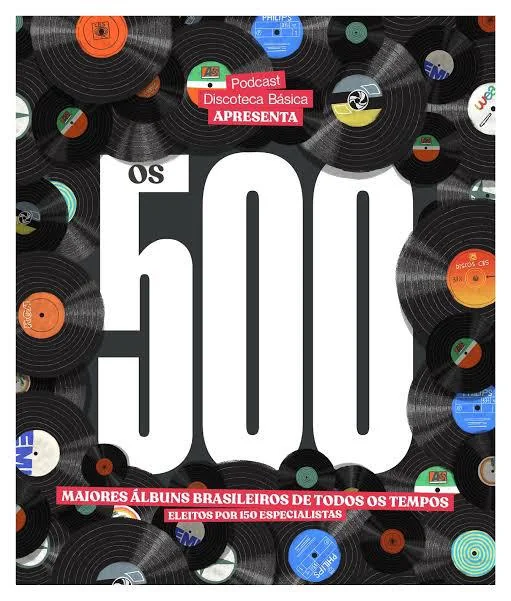
Os 500 Maiores Álbuns Brasileiros de Todos os Tempos
Ricardo Alexandre · 2022
The largest Brazilian music election ever conducted: 162 specialists, spanning journalists, critics, musicians, producers and podcasters, each nominated 50 essential albums, supported by a masterlist of more than 2,000 works. Led by Ricardo Alexandre with tabulation by Sérgio Jomori, it was published in December 2022 as a 200-page hardcover book with graphic design by Fernando Pires.
Discobiografia Mutante - Álbuns que revolucionaram a música brasileira
Chris Fuscaldo · 2021
This book thoroughly explores the Mutantes' discography, analysing how their albums made a difference and influenced Brazilian music. It covers the group founded by Arnaldo Baptista, Rita Lee, and Sérgio Dias, and its members in various line-ups, as an example of counter-culture.
A divina comédia dos Mutantes
Carlos Calado · 1995
The result of two years of research and 200 interviews, this book reconstructs the trajectory of the band Os Mutantes, from its formation in 1966 until its dissolution in 1978. It presents a detailed portrait of the era, covering the period of the 1969 album 'Mutantes'.
Analyses
Mutantes – Wikipedia
Wikipedia, the free encyclopaedia
Mutantes – The 100 Greatest Albums of Brazilian Music
Marcus Preto · Rolling Stone Brasil
Os Mutantes distance themselves from Caetano and Gil and clarify that they are far beyond being a 'backing band' for the movement.
Os Mutantes "Mutantes" 1969 | Rising Storm Review
therisingstorm.net
Any Mutantes record is a mind-blower and this one makes an unforgettable introduction. The music and voice of Os Mutantes transcends any language barrier such that even the most literary of music fans can still fall deep for these dazzling sounds. David Byrne, who reissued an anthology of the Mutants on his Luaka Bop label, seems to back this sentiment up in the fantastic liner notes to Stop ...
Mutantes (1969) by Os Mutantes - by Bombay Rickey
bombayrickey.substack.com
Maybe it's the sunny, warm weather or the relentless chaos of the world, but recently in my car (often occupied by myself, my wife and our 5 year old son), the most requested music has been Os Mutantes' sophomore album, Mutantes. We love it because it is catchy, hilariously-absurd and packed with fascinating twists and turns.

Discos Fundamentais: Os Mutantes - Mutantes 1969 (Brazil, Psychedelic ...
discosfundamentais.blogspot.com
The idea is to talk about an album I consider fundamental, but this is a very particular list, aiming only to help beginners orientate themselves in their searches and those who already know the albums in question to criticise my choices, by commenting, as this is extremely important to know if the idea is good.