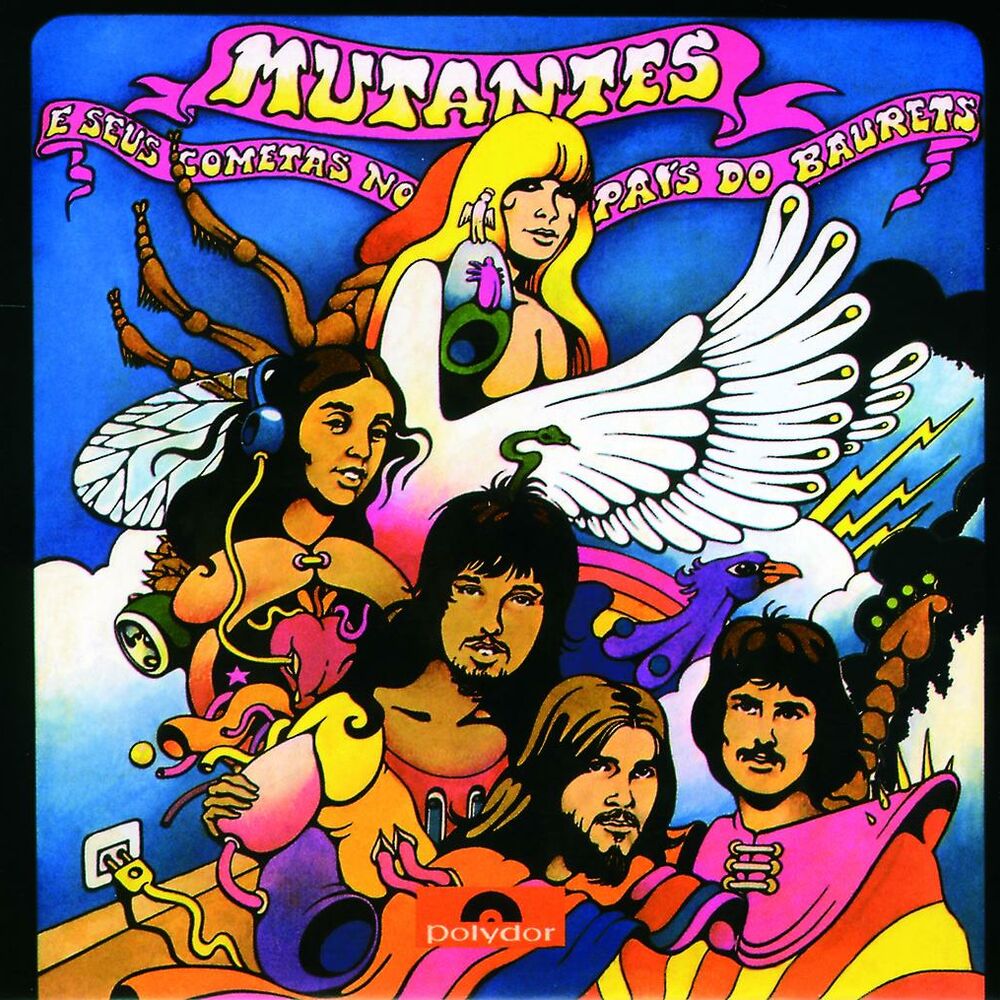
Mutantes e Seus Cometas no País do Baurets
Os Mutantes
1972
Rankings
Why This Album Matters
Mutantes e Seus Cometas no País do Baurets, released in 1972, occupies a unique place in Os Mutantes' discography, marking the band's last official album to feature the iconic vocalist Rita Lee. This work reflects a phase of transition and experimental deepening for the group, which had already been exploring audacious sounds since its earliest records. Far from being just a final record of an era, the album is a sonic document of Os Mutantes' incessant search for new musical horizons. Musically, the album moves between psychedelic and progressive rock, incorporating elements of rock and roll and, at times, nods to rockabilly. The title, with the slang term "baurete" referring to a marijuana cigarette, captures the countercultural spirit of the era and the irreverence that has always permeated Os Mutantes' work, signalling a creative freedom that translates into complex arrangements and innovative sonic textures. The album is a testament to the trio's genius in blending Brazilian sensibility with sonic experimentation, utilising studio tricks and electronic instrumentation in a pioneering way.
Context
In the early 70s, Os Mutantes had already established themselves as one of the pillars of Tropicália, a movement that challenged Brazil's musical and social conventions under the military dictatorship. After the peak of Tropicalismo and the exile of Gilberto Gil and Caetano Veloso, the band continued its trajectory of experimentation, releasing albums that deepened its dive into psychedelic and progressive rock. In 1971, with the official inclusion of Liminha (bass) and Dinho Leme (drums) in the line-up, the group solidified a more robust instrumental phase, which allowed even greater freedom for sound exploration. The political and cultural climate of the time, marked by repression but also by a strong youth counterculture movement, found an echo in Os Mutantes' subversive music. The very choice of the album's title, with its veiled reference to marijuana, underlines this challenging stance and the quest to expand consciousness and artistic boundaries. This period represented a turning point, as the band prepared for an even more progressive rock-oriented phase after Rita Lee's departure.
Recording
The album was recorded between October and November 1971 and released in May 1972, under the Polydor label. Production was handled by Arnaldo Baptista himself, a fundamental member of the band known for his experimental streak, with João Fritz as the recording engineer. The line-up that recorded the album included Arnaldo Baptista on keyboards and vocals, Rita Lee on vocals and synthesisers, Sérgio Dias on guitars, sitar, and vocals, Liminha on bass and backing vocals, and Dinho Leme on drums. The instrumentation used in the recording reflects the group's experimental phase, with the significant presence of keyboards, organs, and the Moog operated by Rita Lee, as well as Sérgio Dias's sitar. These elements contributed to the album's rich and multifaceted sound, blending psychedelia with more complex passages and detailed arrangements, indicating an increasing inclination towards progressive rock structures.
Songs
Mutantes e Seus Cometas no País do Baurets presents a collection of songs that float between joviality and deep experimentation. The most well-known track, and one that has stood out over time, is "Balada do Louco", a composition by Rita Lee and Arnaldo Baptista which, with its captivating melody and poetic lyrics, evokes the musical universe of The Beatles. Other notable tracks include "Posso Perder Minha Mulher, Minha Mãe, Desde que Eu Tenha o Rock and Roll", which already in its title expresses an adoration for the genre, and the version of "Rua Augusta", which demonstrates the group's versatility in reinterpreting a 60s hit. The title track, almost ten minutes long, is a strong example of the band's foray into progressive rock, with organ and guitar solos unfolding into jazzy improvisations and complex atmospheres. The album's lyrics, often composed by Rita Lee, Arnaldo Baptista, and Sérgio Dias, address themes ranging from individual freedom to social observation, with the poetic sensibility and sarcastic humour that are trademarks of Os Mutantes.
Legacy
Despite its retrospective importance, Mutantes e Seus Cometas no País do Baurets had a modest commercial performance upon its release, with few songs achieving success in the charts of the time. However, over the years, the album gained cult status, being re-evaluated and acclaimed by critics and fans as one of the highlights of Os Mutantes' initial phase. Its influence became evident as the band's discography came to be recognised nationally and internationally as an important act of the psychedelic era. The album's posthumous recognition is exemplified by Ney Matogrosso's 1986 re-recording of "Balada do Louco", which brought the song to the attention of a vast audience unfamiliar with the original version, solidifying its place as a classic of Brazilian music. The record is frequently cited in lists of best albums and is considered a landmark in the band's transition to a more progressive sound, which would be explored in subsequent works after Rita Lee's departure.
Tracks
Credits
Os Mutantes
Arnaldo Baptista
Arnolpho Lima Filho, Liminha
Dinho Leme, Ronaldo P. Leme
João Kibelkstis
Joaquim Figueira
Alain Voss, Alain Voss
Videos
MUTANTES E SEUS COMETAS NO PAÍS DO BAURETS: O ÚLTIMO DISCO COM RITA LEE | ALBUM REVIEW
Som de Peso
O "último disco" dos Mutantes | Mutantes e Seus Cometas no País do Baurets
Pitadas do Sal
Rita Lee - Discografia Comentada | Mutantes e seus cometas no país dos baurets (1972)
Rita Lee Discografia Comentada
Amigo Disco # 07 - Mutantes e Seus Cometas no País dos Baurets - MUTANTES | com Antídoto
Péricles Garcia
Films

Books
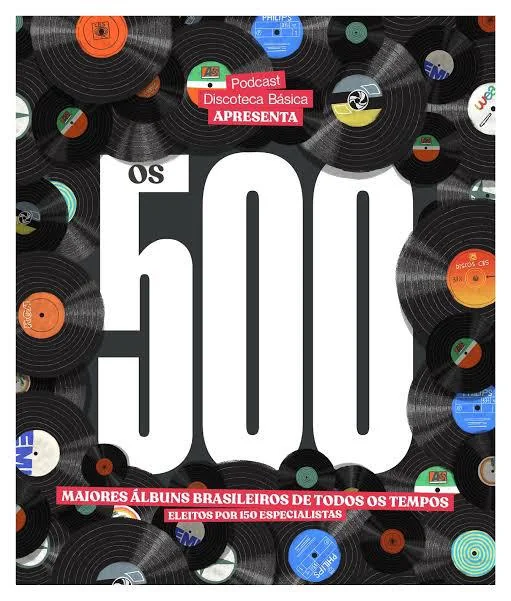
Os 500 Maiores Álbuns Brasileiros de Todos os Tempos
Ricardo Alexandre · 2022
The largest Brazilian music election ever conducted: 162 specialists, spanning journalists, critics, musicians, producers and podcasters, each nominated 50 essential albums, supported by a masterlist of more than 2,000 works. Led by Ricardo Alexandre with tabulation by Sérgio Jomori, it was published in December 2022 as a 200-page hardcover book with graphic design by Fernando Pires.
Discobiografia Mutante - Álbuns que revolucionaram a música brasileira
Chris Fuscaldo · 2021
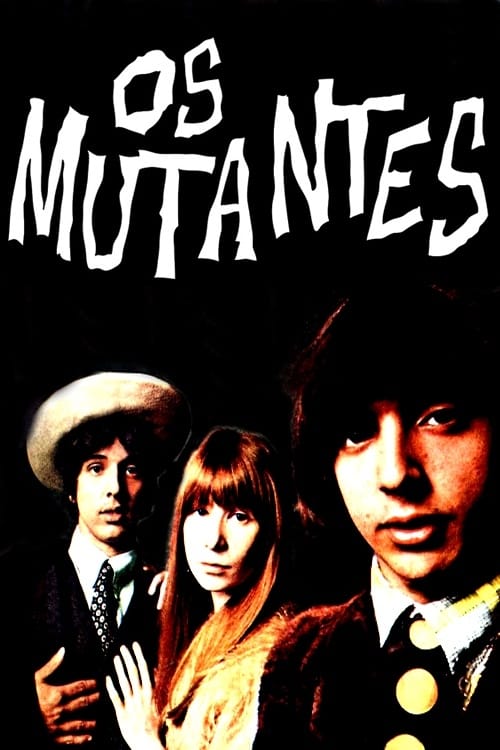
This book traces the discobiography of Os Mutantes, showing how the group founded by Arnaldo Baptista, Rita Lee, and Sérgio Dias – and which featured Dinho Leme, Liminha, and other great musicians in its various line-ups – represented counterculture in its form and content. It analyses how their albums made a difference and influenced Brazilian music.
A divina comédia dos Mutantes
Carlos Calado · 1995
The result of two years of research and 200 interviews, this book is considered the definitive biography of the band Os Mutantes. It reconstructs the trajectory of the most original Brazilian rock group from its creation in 1966 until its dissolution in 1978, offering a detailed portrait of the era and the cultural scene in which Arnaldo, Rita, and Sérgio operated.
Analyses
Mutantes e Seus Cometas no País do Baurets – Wikipedia
Wikipedia, the free encyclopaedia
Os Mutantes - Mutantes e Seus Cometas no País do Baurets [1972]
musicasdonordeste.net
Playing with names of bands from the era, such as Bill Haley and His Comets, the book "Alice No País das Maravilhas", and the word "baurete", invented by their friend Tim Maia, Os Mutantes arrived at an unusual title for their fifth album: "Mutantes e Seus Cometas no País do Baurets".
Maravilhas do Mundo Prog: Mutantes - Mutantes e Seus Cometas no País ...
consultoriadorock.com
Over time in Cantareira, Os Mutantes began to compose new songs, recorded on the band's fifth and most controversial album, Mutantes e Seus Cometas no País dos Baurets, released in May 1972.