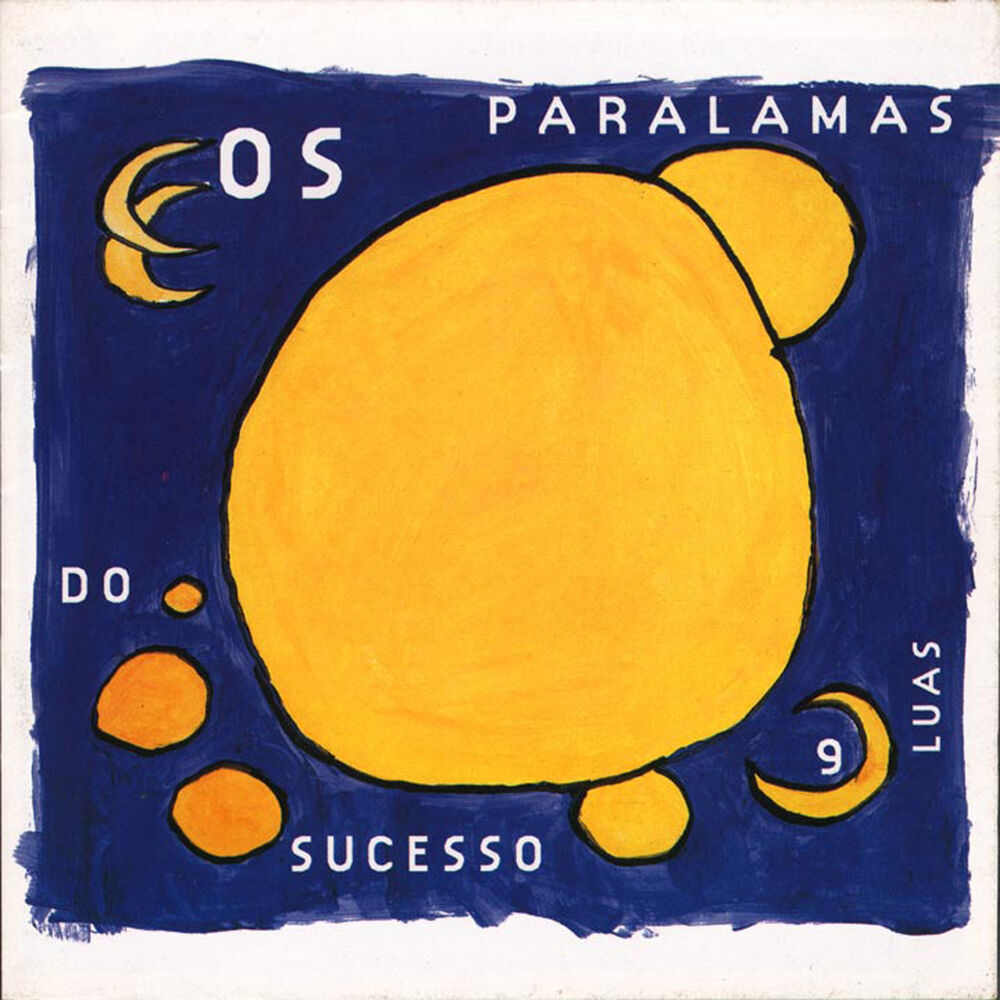
9 Luas
Os Paralamas Do Sucesso
1996
Rankings
Why This Album Matters
9 Luas, released in 1996, marks a significant return to the essence of Os Paralamas do Sucesso, following the complexity explored in its predecessor, Severino. The album recaptured the melodic simplicity and direct communication of their origins, without sacrificing the lyrical and instrumental maturity the band had accumulated over the years. This balance between the familiar and the renewed ensured that 9 Luas stood out as a cohesive and accessible work. The record is a testament to Os Paralamas' ability to reinvent themselves and reconnect with their audience. The songs demonstrate a band confident in its identity, which knew how to translate experiences and observations into vibrant and captivating tracks. The focus on a more uncomplicated sound, combined with lyrics that range from everyday life to deeper reflections, solidified 9 Luas as a high point in their discography.
Context
Severino, from 1994, represented an experimental phase for Os Paralamas do Sucesso, characterised by a denser sound and Spanish lyrics, which initially made it less accessible to the wider Brazilian public. The album, produced by Phil Manzanera, delved into experimentalism and Northeastern influences, with social and political themes, which generated a mixed critical reception and a commercially weaker performance than expected in Brazil, despite its recognition in the Latin market. With 9 Luas, released in 1996, the group of Herbert Vianna, Bi Ribeiro and João Barone opted for a reunion with their melodic roots and the conciseness of their compositions. It was a strategic and natural move for a band that, by the mid-1990s, already had a trajectory marked by successes and well-executed experiments. The album emerged as a response to the yearning for a more direct musicality, reflecting the maturity of three musicians who, even while constantly evolving, recognised the strength of their original sonic identity, once again approaching pop rock.
Recording
The production of 9 Luas was handled by Carlos Savalla and Os Paralamas do Sucesso themselves. Savalla, an experienced engineer and sound technician, had previously worked on recording albums for major Brazilian artists, which contributed to the polished and modern sound of the album. The mixing, in turn, was handled by Brad Gilderman, a renowned professional known for his versatility in mixing multi-platinum records across various genres, lending the work high technical quality. The recording process featured the participation of backing musicians who enriched the compositions. João Fera played keyboards, Eduardo Lyra handled percussion, and Chico Neves contributed samples on the track "Busca Vida". Also noteworthy are the horn contributions from Senô Bezerra, Demétrio Bezerra and Monteiro Júnior, who added layers of nuance and sonic textures, deepening the arrangements, such as the string arrangements on "Na Nossa Casa" by Senô Bezerra and Adriano Machado.
Songs
The songs on 9 Luas reflect a search for a more direct and captivating sound, a characteristic that manifests itself in tracks such as "Lourinha Bombril". This song, which became one of the album's biggest successes, is a cover of the track "Parate y Mira" by the Argentinian band Los Pericos, but with completely new lyrics by Herbert Vianna that address themes such as miscegenation, culture and globalisation in Brazil. "La Bella Luna", with its engaging melody and the double-tracked vocals of Herbert Vianna, stands out for its romantic atmosphere and poetic lightness. Other hits such as "Capitão de Indústria", a reinterpretation by Marcos and Paulo Sérgio Valle, and "Busca Vida" reinforce the album's thematic diversity, addressing everything from veiled social critiques to existential reflections. The sonic richness is complemented by horn and string arrangements in songs like "Na Nossa Casa", adding depth to the compositions. The album also includes "De Música Ligeira", a Portuguese version of the original song by the Argentinian band Soda Stereo.
Legacy
With sales exceeding 600,000 copies, 9 Luas achieved significant commercial success, further solidifying Os Paralamas do Sucesso's position in the Brazilian music scene. Critical reception was equally positive, with Folha de S.Paulo highlighting the album as the 'missing link between 80s rock and the new national pop', an observation that underlines its importance in the transition and evolution of pop-rock music in Brazil. The impact of 9 Luas transcended its release period. The album not only generated radio hits that became band classics, such as "Lourinha Bombril" and "La Bella Luna", but also reaffirmed Os Paralamas' ability to remain relevant and influential. Its longevity is proven by the vinyl release by the label and magazine Noize in 2018, a testament to the continued appreciation for the work and its relevance for new generations of listeners and collectors.
Tracks
Credits
Carlos Savalla, João Augusto, Os Paralamas Do Sucesso
Pedro Ribeiro
Herbert Vianna
Bi Ribeiro
João Barone
João Fera
Eduardo Lyra
Monteiro Jr
Senô Bezerra
Demétrio Bezerra
Afonso Tostes, Barrão, Beatriz Milhazes, Daniel Senise, Ione Saldanha, Lygia Pape, Raul Mourão, Victor Arruda
Steve Hall
Brad Gilderman
Dave Hancock, Mark Kaim
Marcio Gama
Ben-Hur Corrêa, Marcelo Hoffer, Marquinho & Marquinho
Alexandre Saieg
Helder Vianna
Cláudia Stancioli
Gringo Cardia, Pedro Ribeiro
Patricia Fernandes
Leonardo Eyer
José Fortes
Maurício Valadares
Analyses
9 Luas – Wikipedia
Wikipedia, the free encyclopaedia
9 Luas Explained
everything.explained.today
9 Luas (Portuguese for 9 Moons) is the eighth studio album by Brazilian rock band Os Paralamas do Sucesso, released in 1996. With this album, the Paralamas definitely abandon their previous new wave / ska / reggae rock style and adopt a more pop rock sonority, however without abandoning the Latino influences.
vinylfanatics.com - Vinyl Record Reviews, News and Forum
vinylfanatics.com
Review **Os Paralamas Do Sucesso - 9 Luas** ★★★★☆ By the time Os Paralamas Do Sucesso entered the studio to record their sixth album in 1996, Brazilian rock had weathered the storm of the early '90s economic turmoil and was ready for reinvention.

"9 Luas" (EMI,1996), Os Paralamas do Sucesso
discosessenciais.blogspot.com
And the results speak for themselves: it was very well received by music critics and a commercial success. Released in July 1996, 9 Luas maintained Os Paralamas Do Sucesso's partnership with producer Carlos Savalla, the same since Bora-Bora (1988).
Os Paralamas do Sucesso - 9 Luas (1996)
ahistoriadodisco.com.br
Get ready, dear reader, for I bring you one of the greatest albums by one of the greatest national bands of all time. Yes, I am talking about the band Os Paralamas do Sucesso, and the album 9 Luas, a great classic among all the band's albums released to date.