O Futuro é Vortex
Os Replicantes
1986
Rankings
Why This Album Matters
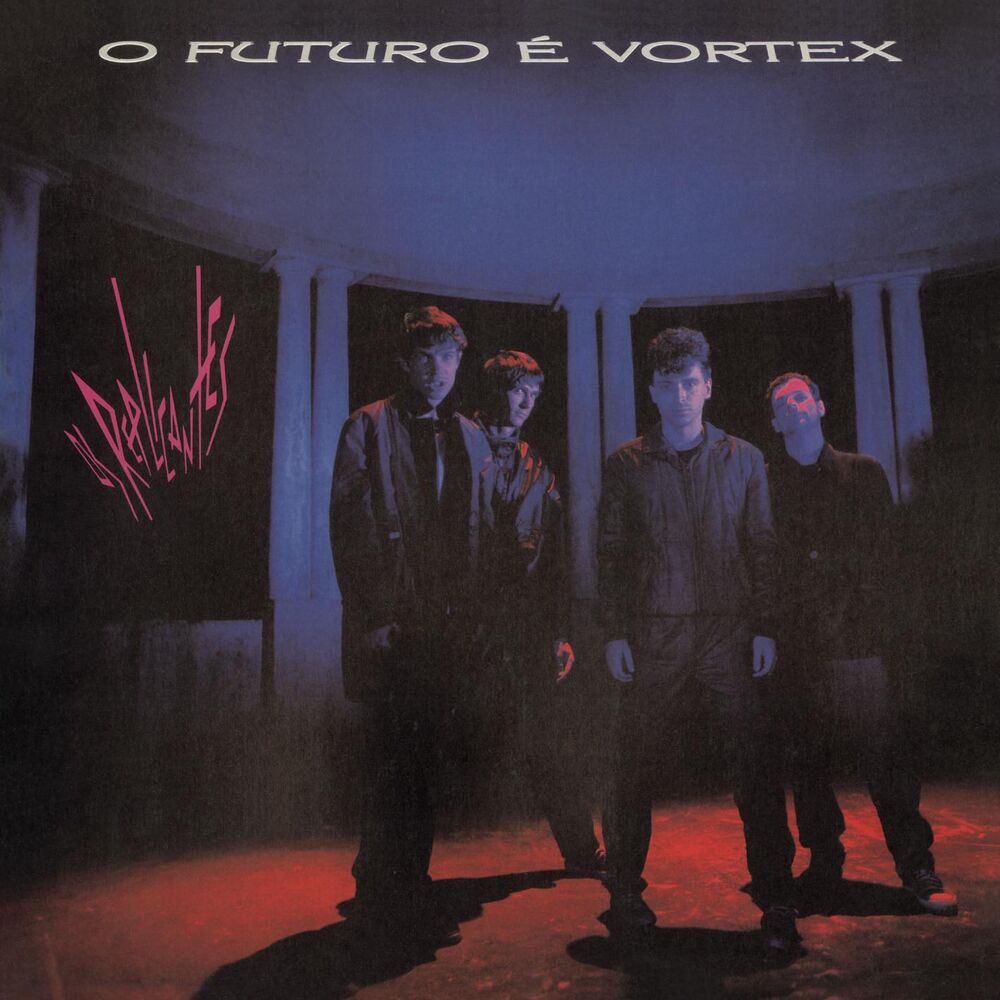
Released in 1986, O Futuro é Vortex marks the phonographic debut of Os Replicantes, one of the most seminal bands in Brazilian punk rock. The album quickly consolidated its status as a landmark, not only for its raw and direct energy, but also for its lyrical and musical approach that set it apart from other groups in the genre. The album's sound draws from bands like Ramones and Sex Pistols, adding a Californian punk streak, resulting in a vigorous and authentic work. This album is special for its ability to be accessible without losing its punk ferocity. It features intelligent lyrics full of irony, which deviate from the common pamphleteering archetype found in some punk of the era, offering provocations and rebellions in a more astute way. With tracks that became anthems, such as the iconic "Surfista Calhorda", O Futuro é Vortex captured the attention of a wide audience, proving that Gaúcho punk had a particular and innovative flavour.
Context
Os Replicantes was formed in Porto Alegre in 1983, with the band's name being a direct reference to the androids from the 1982 film Blade Runner. Before the release of their first LP, the band had already gained notoriety in the independent scene. In 1984, they recorded the song "Nicotina", and in 1985, they released a double single with four songs, including "Nicotina", "Rock Star", the title track "O Futuro é Vórtex", and "Surfista Calhorda". This single, independently distributed by the band's own label (the Vortex label), sold approximately two thousand copies, and the tracks "Nicotina" and "Surfista Calhorda" were played on Gaúcho radio stations, preparing the ground for national success. The year 1986, when the album was released, placed Brazil at the end of the military dictatorship and amidst the so-called economically "lost decade", creating a "schizophrenic" cultural environment. In this context, punk rock in São Paulo tended to be more politicised, while in other regions, such as Rio Grande do Sul, the focus was on an attitude of not waiting for political changes. The release of O Futuro é Vortex occurred during an effervescent period for Brazilian rock, contemporaneously with albums such as Titãs' Cabeça Dinossauro and Plebe Rude's O Concreto Já Rachou, consolidating the punk scene alongside other important works by Lobotomia and Ratos de Porão.
Recording
O Futuro é Vortex was recorded entirely in São Paulo in 1986. Initial distribution was handled by the RCA record label, which later became BMG. Curiously, the band demanded and achieved autonomy in the production and promotion of the material when signing with RCA, which demonstrates the creative control Os Replicantes maintained over their work from the outset. The album, with a total duration of 33 minutes and 18 seconds, is listed as being produced by the band themselves, although there is also a mention of Guti Carvalho as production director and Luiz Carlos Maluly as executive producer.
Songs
With a total of 14 tracks, O Futuro é Vortex presents a collection of songs that, despite their hard-hitting punk rock sound, address a variety of themes with intelligence and sarcasm. Lyrics like "Boy do Subterrâneo" delve into the fears of the Cold War and the nuclear threat of the time. The title track "O Futuro é Vortex" describes a dystopian future, with violence as a necessity and persistent social inequalities, also using the term "Vortex" as a reference to an 80s pinball machine to symbolise a chaotic environment. "Surfista Calhorda" became one of the album's biggest hits and a band anthem, with a raw vocal and lyrics that, ironically, criticised a specific social type. Other notable songs include "Hippie-Punk-Rajneesh" and "Ele Quer Ser Punk". The album also became known for the controversy surrounding tracks like "Porque Não", which criticised MPB icons, and others such as "Mulher Enrustida" and "Choque", which were censored at the time for containing "foul language", with the RCA label itself opting to cut sections from "Porque Não". The album's lyrics, written primarily by Carlos Gerbase and Cláudio and Heron Heinz, incorporated local expressions from Porto Alegre, adding a regional identity to national punk rock.
Legacy
O Futuro é Vortex is not only Os Replicantes' debut album, but a work that left an indelible mark on the Brazilian rock scene. In 2016, Rolling Stone Brasil magazine elected it as the 8th best punk rock album in Brazil, consolidating its status as an essential classic of the genre. The track "Surfista Calhorda" transcended the boundaries of Gaúcho rock, becoming a hit on radio stations across the country and one of the band's biggest successes. The album was an integral part of the important compilation Rock Grande do Sul, alongside bands like DeFalla, Engenheiros do Hawaii, and TNT, demonstrating the strength of the region's musical movement at the time. Its influence and relevance are evidenced by various re-editions, including a remastered and limited vinyl version released in 2024. The "Vortex" concept became so intrinsic to the band's identity that it was reused in the name of their independent label, on a VHS tape, and even in their own bar, solidifying the dystopian and futuristic aesthetic associated with the work.
Tracks
Credits
Luiz Carlos Maluly
Guti Carvalho
Wander Wildner
Heron Heinz
Carlos Gerbase
Claudio Heinz
Miguel Plopschi
Books
Analyses
O Futuro é Vortex – Wikipedia
Wikipedia, the free encyclopaedia

MUSICA&SOM: Os Replicantes - "O Futuro é Vortex" (1986)
tabernanovostempos.blogspot.com
A few years later, when deciding what our first LP would be called, someone suggested (probably me, but I'm not sure) that the album should be called "O Futuro é Vortex". It was a good choice. It was full of science fiction songs, and this title was a good summary.
MUSICA&SOM: Os Replicantes - O Futuro É Vortex [1986]
tabernanovostempos.blogspot.com
O Futuro é Vortex is a work of unparalleled importance for Brazilian rock. Direct lyrics, short songs, the best of punk's punch, and the most acidic humour shape this seminal work.
Discos Fundamentais: Os Replicantes - O Futuro é Vortex (1986)
collectorsroom.com.br
O Futuro é Vortex is a work of unparalleled importance for Brazilian rock. Direct lyrics, short songs, the best of punk's punch, and the most acidic humour shape this seminal work.
Indicação de Álbum - O Futuro é Vortex (1986) - Bastter.com
bastter.com
The band's name Os Replicantes is a reference to the androids from Ridley Scott's film Blade Runner (1982), in which the film's replicants were very similar to human beings, yet stronger and more agile.