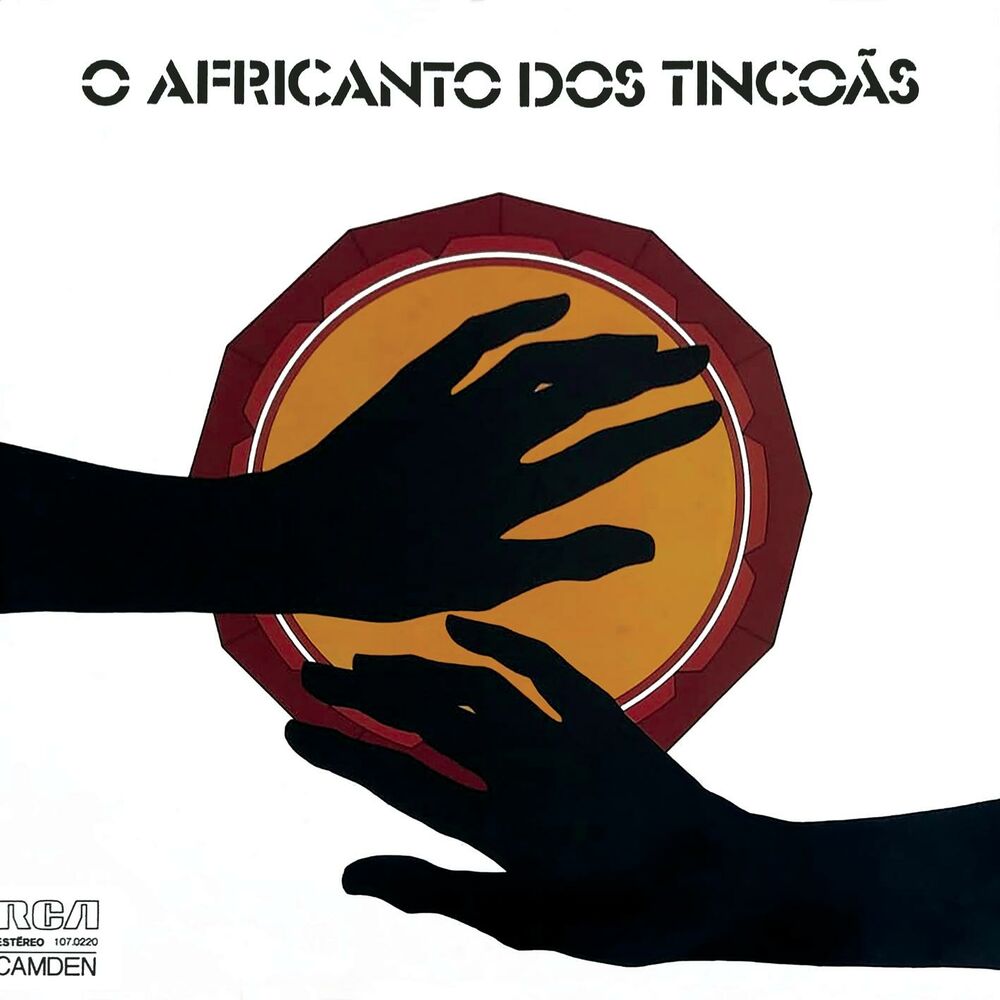
O Africanto dos Tincoãs
Os Tincoãs
1975
Rankings
Why This Album Matters
O Africanto dos Tincoãs, released in 1975, is a seminal work in Brazilian music, distinguished by its visionary and innovative approach. The album revolutionised the music scene by harmonising Afro-religious chanting, with celestial vocal harmonies and percussive rhythms deeply rooted in candomblé traditions. This unique work reflects Afro-Brazilian syncretism in an organic and moving way, addressing themes of suffering, exile, and hope. Its sound is marked by a gentle and rhythmic beauty that makes it a landmark in the exploration and dissemination of African roots in Brazil's musical culture.
Context
The trio Os Tincoãs, formed in 1961 in the city of Cachoeira, Bahia, by Dadinho, Heraldo do Monte, and Erivaldo, initially performed boleros. However, in 1963, with the arrival of Mateus Aleluia in place of Erivaldo, the group underwent a significant transformation, delving into their Afro-Brazilian roots. They began to incorporate religious chants from candomblé, traditional samba, and sacred Catholic elements, which would become the foundation of their unique sound. The album was recorded during a period of intense political repression in Brazil, under the military dictatorship. In this context, the trio's music, which openly celebrated Afro-Brazilian traditions and African-derived religions, assumed a role of subtle resistance and cultural affirmation, an act of devotion and resilience in difficult times.
Recording
O Africanto dos Tincoãs, the Bahian trio's third album, was originally released in 1975 by RCA Victor. Musical production and studio direction were handled by Adelzon Alves, who played a crucial role in the group's career, producing them since 1973. The arrangements featured the collaboration of João Donato and Oberdã. The album's instrumentation is deliberately sparse, creating ample space for the trio's extraordinary vocal interplay. It makes use of acoustic guitar, atabaque, agogô, and xequerê, instruments that create a rhythmic and melodic foundation directly linked to candomblé traditions.
Songs
The songs on O Africanto dos Tincoãs are deeply evocative, invoking orixás, ancestors, the ocean, and the feeling of exile. Among the standout tracks are "Promessa Ao Gantois", "Homem Nagô", "Salmo", "Oxossi Te Chama", and "Ogum Pai", which exemplify the group's characteristic sound. The track "Dora" is a notable exception, being a composition by Dorival Caymmi, one of the great masters of Bahian music. The compositions, often adapted from the duo Mateus and Dadinho, utilise falsettos that float over two-part vocal harmonies, with a call and response structure derived directly from candomblé rituals, lending a spiritual and authentic character to the music.
Legacy
Although Os Tincoãs' commercial success at the time was modest, the album O Africanto dos Tincoãs is today considered a "holy grail" of Brazilian music and an essential work. The trio played a fundamental role in preserving and elevating the musical traditions of the Baian Recôncavo, adapting candomblé chants and rhythms for the Brazilian Popular Music scene. In recent decades, the work of Os Tincoãs, including O Africanto dos Tincoãs, has experienced a resurgence in appreciation among younger artists and a wider audience, driven by reissues and dissemination on streaming platforms. It is recognised as a luminous work of devotion, resilience, and cultural affirmation, especially for having been recorded during a period of persecution of Afro-Brazilian religions.
Tracks
Credits
João Donato, Oberdan Magalhães
Carlos Guarany
Luiz Roberto
José Oswaldo Martins
Luiz Carlos T. Reis
Adelzon Alves
J. C. Ortiz
Ivan Klingen
Videos
O AFRICANTO DOS TINCOÃS - OS TINCOÃS || ANÁLISE DO ÁLBUM
Octávio Furtado
Analyses
Os Tincoãs - O Africanto Dos Tincoas (LP) - Soundohm
soundohm.com
The third album by the legendary Bahian trio, originally released in 1975 on Odeon and finally back on vinyl. One of the most spiritually charged records to emerge from Brazil during the military dictatorship years. Hold on to your hats.
O Africanto Dos Tincoãs | Os Tincoãs
os-tincoashm.bandcamp.com
Os Tincoãs still got that magic that makes you wonder why we ever listen to anything else. Like seriously, half these albums are just people trying to be them without admitting it.

Blog do Brenno: Analisando Discografias - Os Tincoãs: Parte 3
obrenno.blogspot.com
Two years later, Os Tincoãs release their third studio album, Africanto dos Tincoãs. After the monumental self-titled album released in 1975, Heraldo died unexpectedly, surprising the other two members.