Os Cães Ladram mas a Caravana Não Pára
Planet Hemp
1997
Rankings
Why This Album Matters
Released in 1997, Os Cães Ladram mas a Caravana Não Pára is the second and emblematic album by the Rio de Janeiro band Planet Hemp, consolidating their innovative sound and incisive lyrical stance in the Brazilian music scene. The record deepened the fusion of rap, rock, funk, hardcore, jazz, bossa nova and samba, genres that were already the group's trademark, resulting in a work of sonic and social impact that resonates to this day. The album's title, an Arabic proverb, was not chosen by chance: it served as a direct and defiant response to those who doubted the band's resilience in the face of judicial persecution and arrests due to their discourse advocating the legalisation of cannabis. Beyond the cannabis theme, the album expanded its scope to address pressing social problems such as police violence and the inequalities faced by the most disadvantaged communities in Rio de Janeiro, affirming Planet Hemp not just as a musical phenomenon, but as a vibrant manifesto for freedom of expression and the discussion of taboos in a Brazil still redefining itself after the end of the military dictatorship.
Context
The release of Os Cães Ladram mas a Caravana Não Pára followed the resounding success of Usuário, Planet Hemp's 1995 debut album, which had already sold over 150,000 copies and solidified the band as a prominent voice in the Brazilian music scene. With Usuário, the group had already provoked strong reactions with its explicit stance in favour of cannabis legalisation, attracting criticism from conservative sectors of society. At the end of 1996, after the conclusion of the Usuário tour, the band entered the studio to shape their new work. Brazil was experiencing a period of cultural effervescence in the 90s, with a rich musical diversity emerging and artists eager to express themselves freely in the post-dictatorship era. However, the social context was still marked by profound inequalities and violence, themes that found direct resonance in Planet Hemp's lyrics, which became a mirror of the reality of their time.
Recording
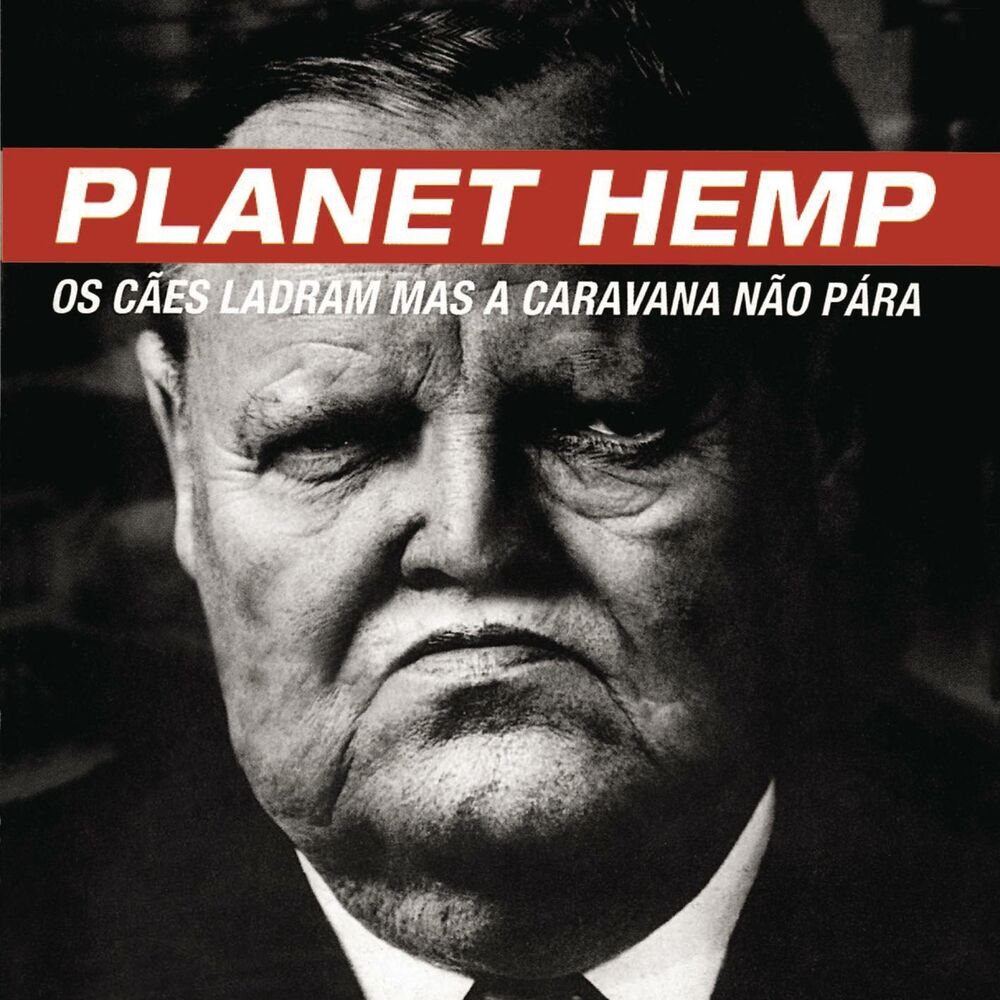
The production of Os Cães Ladram mas a Caravana Não Pára was overseen by Mario Caldato Jr., a renowned Brazilian producer based in the United States, known for his work with artists such as Beastie Boys, Björk, and Beck. The meeting between Caldato and Marcelo D2 occurred in 1996, during a Beastie Boys tour in Brazil, and their musical affinity quickly led to an invitation for Caldato to produce Planet Hemp's second album, marking his first official venture into the Brazilian music scene. During the recording process, vocalist BNegão temporarily stepped away from the group to focus on his band The Funk Fuckers, but still contributed to a large part of the album's tracks, such as "Zerovinteum" and "Adoled". To fill the void, long-time collaborator, Gustavo Black Alien, was integrated into the vocal team. The album's visual concept was also notable, with the cover art created by artist Muti Randolph. The central image is a face composed by the fusion of various photographs of post-war German politicians, a creative solution to avoid copyright issues and, at the same time, convey the band's intention to represent the urban chaos of Rio de Janeiro.
Songs
The album features 16 tracks that explore Planet Hemp's complex sonic tapestry, transitioning between hardcore, rap, samba, hip-hop, and rock, while maintaining the lyrical intensity that became their trademark. The lyrics continued to address central themes such as cannabis legalisation, social problems, urban violence, and inequality. Tracks like "Zerovinteum" open the album with funk beats and samples from Fernanda Abreu's "Veneno da Lata", offering a raw portrait of Rio de Janeiro's afflictions and 'malandragem' (street smarts/hustle), with the title directly referencing the city's area code (DDD). "Queimando Tudo" became one of the highlights, an explicit anthem in defence of cannabis legalisation. The album also features "Adoled", a heavy, groove-laden version of Led Zeppelin's "The Ocean", and "Se Liga", which incorporates samples from Luiz Bonfá's "Jacarandá" and reveals a hidden instrumental track at the end, a jam blending jazz and samba rock, characteristic of the group's previous works. "Nega do Cabelo Duro" is a cover reinterpreted with sophisticated arrangements, alluding to Elizeth Cardoso's "Eu Bebo Sim". The track "12 Com Dezoito" exemplifies the band's resistance and social criticism, using the American Constitution's "first amendment" as a metaphor for musical revolution and denouncing hypocrisy and cultural repression.
Legacy
With an immediate impact, Os Cães Ladram mas a Caravana Não Pára sold 150,000 copies in just one month of its release, and subsequently reached the mark of 500,000 copies sold, a tremendous success for the time. The album's repercussion, however, went beyond the numbers. During the album's tour, on 8 November 1997, the band was arrested in Brasília on charges of drug advocacy after a show, an incident that became a landmark in the history of Brazilian music and further amplified the group's visibility. The five-day imprisonment generated a movement of support, including visits from then-federal deputies such as Fernando Gabeira and Eduardo Suplicy. Ironically, the judge responsible for the arrest warrant was later removed due to suspected involvement with drug traffickers. This event solidified Planet Hemp's image as icons of counter-culture and freedom of expression. The album is today considered a classic of Brazilian music and a fundamental record of the “boom” of national rock in the 90s, with its unique blend of rap and rock and its defiant discourse that remains relevant.
Tracks
Credits
Ronaldo Viana
Andréa Alves, Ronaldo Caldas Pereira
Mario Caldato Jr., Planet Hemp
Marcelo D2
Formigão
Na Moral Produções
Bacalhau
Rafael Crespo
Renata Paes
Kleber França, Mario Caldato Jr.
Muti Randolph
Marcelo Lobatto, Ronaldo Caldas Pereira
Daniela Dacorso, Jornal Povo Do Rio, Luis Morier, Marco Antonio Teixeira, Muti Randolph, Paulo Nicocella
Podcasts
Falamos sobre OS CÃES LADRAM MAS A CARAVANA NÃO PÁRA, segundo disco da banda Planet Hemp!Nos siga!https://www.instagram.com/gustavodaschagas/https://www.instagram.com/sergiofilhogt/https://www.instagram.com/mateus_simoes_/
Films

Books
Analyses
Os Cães Ladram mas a Caravana Não Pára – Wikipedia
Wikipedia, the free encyclopaedia

"Os Cães Ladram, Mas A Caravana Não Pára" (Sony Music, 1997), Planet Hemp
discosessenciais.blogspot.com
As with the previous album, in Os Cães Ladram, Mas A Caravana Não Pára, Planet Hemp continues its discourse in defence of marijuana legalisation and touches upon sensitive issues such as police violence and the social problems experienced by the poorest strata of society in the city of Rio de Janeiro.
Cliquemusic : Disco : OS CÃES LADRAM MAS A CARAVANA NÃO PÁRA
cliquemusic.com.br
OS CÃES LADRAM MAS A CARAVANA NÃO PÁRA Planet Hemp (1997) 1997 Chaos/Sony Music 758.326/2-479461

"Os Cães Ladram, Mas A Caravana Não Pára" (Sony Music, 1997), Planet Hemp
tabernanovostempos.blogspot.com
As with the previous album, in Os Cães Ladram, Mas A Caravana Não Pára, Planet Hemp continues its discourse in defence of marijuana legalisation and touches upon sensitive issues such as police violence and the social problems experienced by the poorest strata of society in the city of Rio de Janeiro.